Reviewed · MUSEUMS
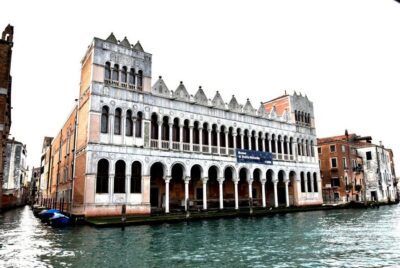
Da Vinci Interactive Museum Venice Scuola di San Rocco
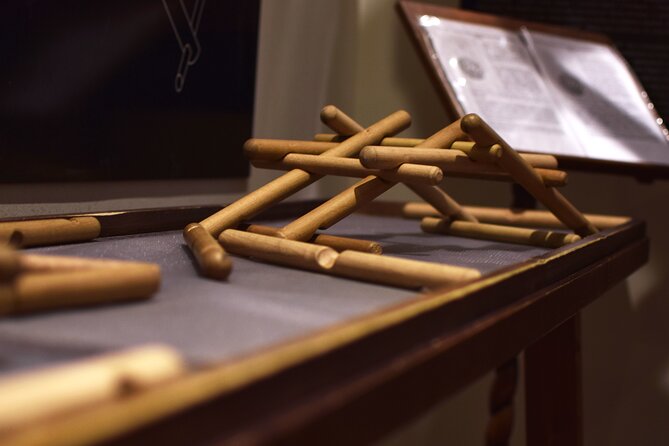
Leonardo da Vinci in Venice is already a great story, but this museum adds the fun part by letting you interact with his designs. I love the hands-on working replicas, and I also like the backlit copies of his paintings, which make his artistic and scientific ideas easier to see.
The main thing to consider is that it is a small, self-paced museum. If you want big-gallery originals or a heavy, guided-style experience, you may find you finish faster than you expect.
Key things worth knowing before you go
- Four themes (Earth, Water, Air, Fire) that keep the visit moving instead of feeling random
- Working replicas built from Leonardo’s designs, with adjusted proportions when needed
- Backlit high-resolution painting copies designed for close, clear viewing
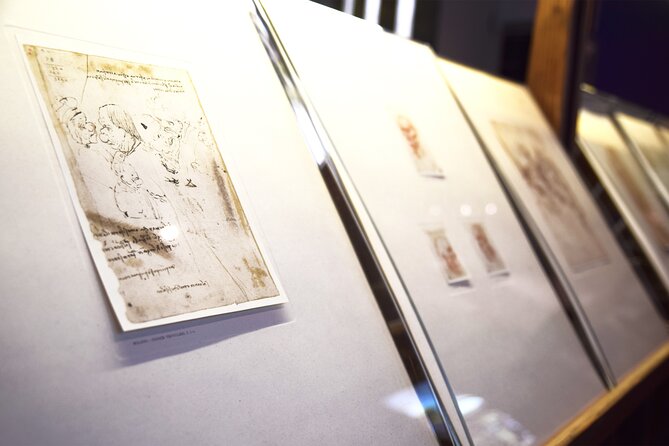
- Anatomy studies that connect his art with how he observed the human body
- Multilingual descriptions in Italian, English, French, German, Spanish, and Russian
- Audio option available at the entrance, if you request it
Where this da Vinci museum fits in Venice
If you like to walk Venice in short bursts, this stop works beautifully. The museum is set up so you can enter and explore during opening hours, without needing to wait around for a specific start time. That makes it easy to slot in between other sights, especially if your day is already packed with churches, canals, and museum detours.
You will be in the general San Rocco area, and many people bundle this with nearby sights in the same neighborhood. The practical win here is simple: you do not have to plan your whole day around one strict schedule, and you can return later if you are still in the mood.
One more smart detail: the museum is family-friendly, and it is designed to spark curiosity rather than just deliver facts. That does not mean it is only for kids. It just means the pacing is built for people who learn by doing.
More museums and galleries in Venice:
- Venice: Leonardo Da Vinci Museum Entrance Ticket
★ 4.5 · 3,560 reviews - Venice’s Best: Basilica, Doge’s Palace, Gondola & History Gallery
★ 4.5 · 2,478 reviews - Venice: Vivaldi’s Four Seasons Concert & Music Museum Visit
★ 4.8 · 2,065 reviews
Price and timing, and what 45 minutes really means
The ticket price is about $10.21 per person, which is a big reason this works for a lot of budgets. For that money, you are getting a self-paced visit, interactive models, multilingual labels, and several display types, including backlit art reproductions and study materials.
The official duration is about 45 minutes. In real life, that range often depends on how much you pause to operate the mechanisms and how closely you read the explanations. Some visitors move quickly and treat it as a stop you check off. Others take their time with the interactive sections and end up staying closer to an hour or more.
Plan around the museum’s hours: it runs daily from 10:30 AM to 4:30 PM, with last entrance at 4:00 PM. If you want a calmer experience, I would aim earlier in the day. Also, there are steps and the museum spans more than one level, so if you have mobility concerns, give yourself a little extra time and go at an easy pace.
The museum layout: four themes that keep you focused
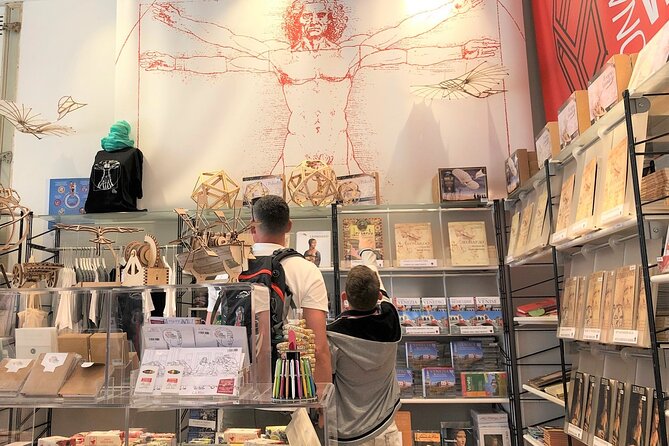
The exhibition is organized into four sections: Earth, Water, Air, and Fire. I like this approach because it acts like a guided structure without needing a formal guide. Instead of wandering through random inventions, you move through a clear theme and see how Leonardo’s curiosity spreads across different parts of the natural world and human problem-solving.
Each section connects back to the idea that Leonardo did not treat art and engineering as separate lanes. You keep seeing the same mindset: observe carefully, test ideas, build models, and refine.
The museum also uses multimedia displays on Leonardo’s life and work, with descriptions available in multiple languages. That matters for value. When the labels are clear and repeat the key context across languages, you spend more time looking at the exhibits and less time figuring out what you are seeing.
Interactive machines you can operate, and what to expect
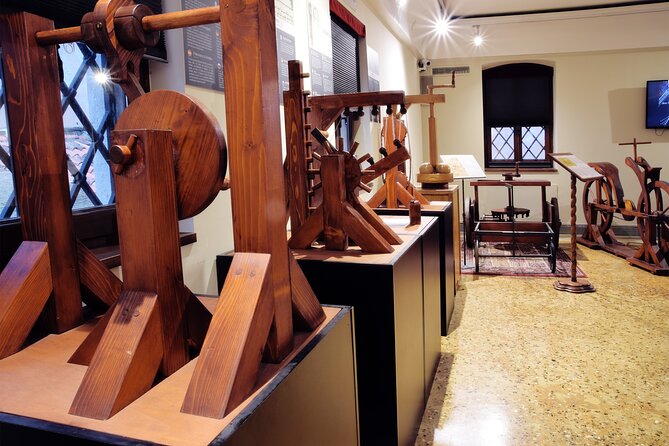
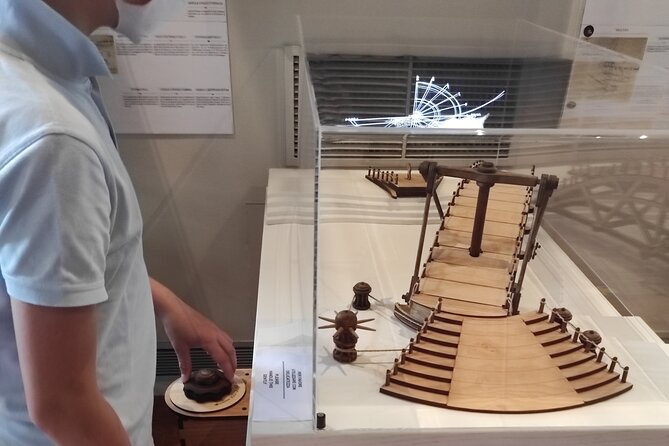
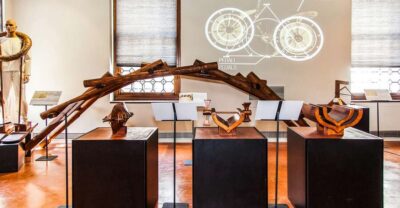
This is the heart of the experience. The museum features working replicas built according to Leonardo da Vinci’s designs. The display notes that the machines were constructed following his design, and when changes were necessary, the original proportions were maintained.
What does that mean for you? You are not just looking at a static diagram. You get the satisfaction of turning, trying, or interacting with mechanisms based on Leonardo’s concepts. That is why families tend to enjoy it so much. It turns learning into a small experiment you can control.
In practical terms, expect a few different “styles” of interactivity: some exhibits are more hands-on with equipment-like feel, while others are more interactive through how you explore the concepts presented beside the models. Either way, the museum is set up for curiosity, not for rushing.
If you are visiting without kids, you can still have a great time here. You just want to go with the right mindset. Think of it like a workshop built around Leonardo’s notebook style. You are looking at an inventor’s logic, not at a modern special effects show.
Same city, a very different kind of day on the water:
- Venice: Doge’s Palace Reserved Entry Ticket
★ 4.6 · 42,716 reviews - Venice: Grand Canal Gondola Ride with App Commentary
★ 4.1 · 18,908 reviews - Boat Trip: Glimpse of Murano, Torcello & Burano Islands
★ 4.3 · 15,699 reviews - Venice: Grand Canal by Gondola with Live Commentary
★ 4.1 · 13,681 reviews
Backlit painting copies that make Leonardo’s vision easier to see
Leonardo is famous for paintings, and this museum handles that side of him with a smart trick: high-resolution backlit replicas. They are designed for prime viewing, which helps you see details more clearly than you might with a regular print displayed in normal lighting.
This part is especially useful if you are trying to understand why Leonardo’s art is not just about beauty. The museum pairs the visuals with explanations about his work and how his approach linked to his studies.
Even if you already know the headline names, you will likely come away with a better sense of how broad his interests were. The Mona Lisa is only one chapter of Leonardo’s mind. The museum pushes you to consider the bigger question: how did he observe the world so thoroughly that he could translate it into both engineering and painting?
Anatomy studies: where art and science meet
One of the most interesting sections is the access to Leonardo’s major studies of anatomy. You can explore how he approached the human body, and the exhibit ties those studies into both his medical curiosity and his artistic practice.
This is where the museum can feel more meaningful for adults, because it moves past the novelty of machines. You start seeing Leonardo as someone who treated knowledge like a single connected project. You also get a more grounded view of what he was trying to do beyond inventing clever mechanisms.
If you are the type of traveler who likes museum stops that leave you thinking, this anatomy portion tends to do that. It gives you a specific angle on his method: careful observation, repeated study, and a deep respect for how bodies function.
The short film and how to use it well
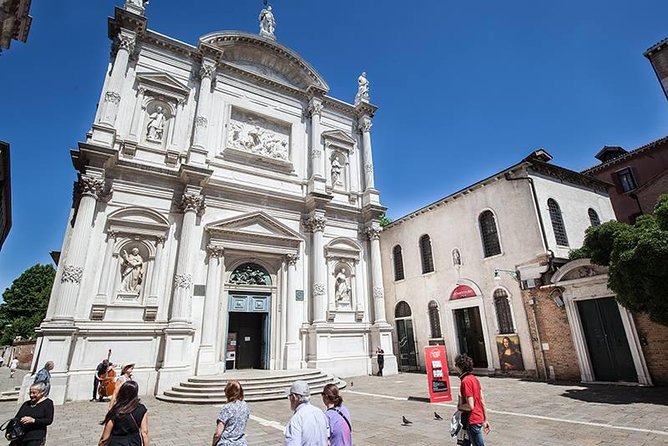
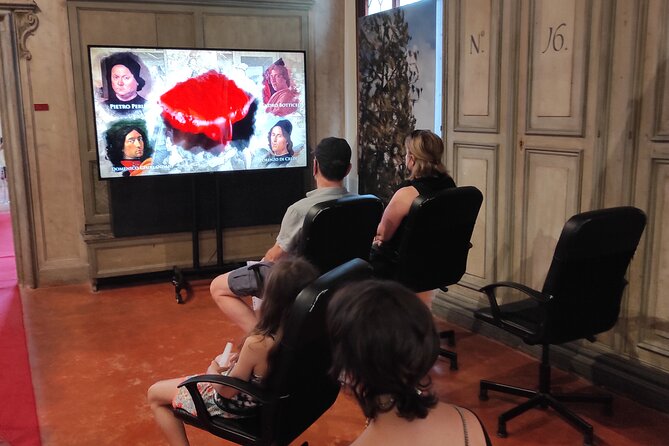
There is a short film in the experience. It gives a condensed introduction to Leonardo’s life and work, which is helpful if you want a quick entry point before you start pushing buttons on machines.
Here is my tip: watch the film if you are new to Leonardo, but do not let it replace the rest of the museum. A lot of the value is in the physical exhibits and the backlit art copies. Think of the film as seasoning, not the main meal.
If you have limited time, you can still get value without watching every second of video. The exhibits are the real draw, and they reward you for slowing down.
The bookshop and the easiest way to leave smarter
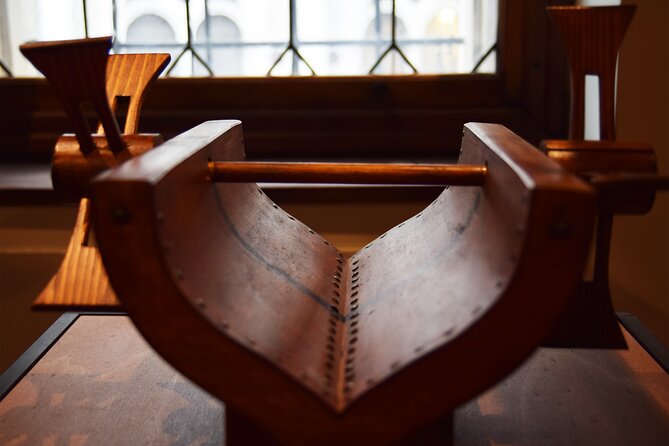
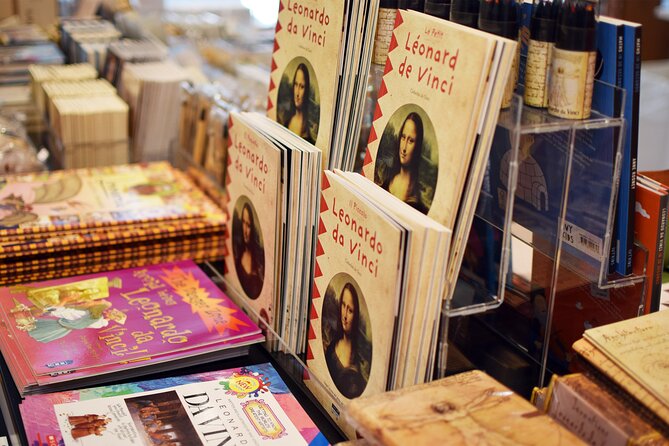
The museum has a well-stocked bookshop and supporting displays that provide more context on Leonardo’s life and work. I like these because they help you keep the ideas going after you leave the museum and walk back into Venice.
If you want a simple souvenir that also improves your understanding, this is where to do it. You can flip through and choose something that matches your interests, whether that is engineering-style Leonardo, art analysis, or his broader curiosity.
Also, you are in Venice, so it is nice to end your visit with something you can carry away. The museum experience is compact, which makes it easier to pair with wandering outside afterward.
Staff help, audio guides, and the small things that matter
One small detail can make your visit smoother: audio guides. The museum audio option is available free of charge upon request at the entrance to the exhibition.
If you like having narration while you look at objects, ask for the audio when you arrive. It can help you connect the dots between what you see and why it matters, especially when you are moving through the four sections.
You should also expect staff to be present and helpful. The museum is interactive, so having someone point you toward the right exhibits or remind you about exhibit rules can save time.
Speaking of rules: food, chewing gum, and beverages are prohibited in exhibit areas. That is normal for a museum, but it is worth remembering because you will be tempted to snack if you are pairing this with a long day of walking.
Comfort, layout, and accessibility considerations
This museum is not huge, and it spans multiple levels with steps. If you are traveling with anyone who struggles with stairs, you can still go, but be ready for that physical rhythm.
The visit is also self-paced. That is a benefit for most people because you can spend time where you care most. It also means you might want to avoid planning too many other museum stops back to back. This one works best when you give it room to breathe, especially if you want the interactive parts to feel satisfying rather than rushed.
Value check: is it worth it for different kinds of travelers?
This is where I think this museum hits hardest.
If you are traveling with kids, this is one of the easier museum choices. Interactive machines and family-friendly pacing help kids burn curiosity without feeling like they are stuck in a classroom. You also get the bonus of art and anatomy, which quietly broadens what your children are learning beyond inventors and drawings.
If you are an adult who loves Leonardo, the museum can be a fun way to connect the dots between his art and science. The backlit painting copies and anatomy studies give you meaning, not just mechanics. The machines provide a different kind of appreciation: seeing that his ideas were meant to be tested.
If you are expecting a big immersive theater-style production or a gallery-heavy exhibition of original masterpieces, you might feel underwhelmed. This is more like a focused, interactive museum built around replicas and studies. It is still worth doing, but manage expectations.
Should you book the Da Vinci Interactive Museum in Venice?
I would book this if you want a compact, interactive stop that mixes hands-on replicas, backlit painting copies, and Leonardo’s anatomy studies in one visit. At around $10.21, it tends to be good value, and the schedule is flexible because you can enter anytime during opening hours.
I would think twice if you only want originals, or if you strongly prefer professional guiding throughout the whole visit. A professional guide is not included, so you rely on the exhibit explanations and available audio. Also, because the museum is small, it can feel like a short visit if you were planning a long museum day.
If you want a museum that fits Venice style, quick walking days, and family-friendly energy, this one is a solid choice. Just go in expecting a science and art sandbox, not a massive art hall.
FAQ
How long does the museum visit take?
It’s listed at about 45 minutes (approx.), though your time may vary depending on how long you spend with the interactive models.
Is a professional guide included with the ticket?
No. A professional guide is not included.
Is there an audio guide option?
Audio guides are available free of charge upon request at the entrance to the exhibition.
What are the opening hours and last entrance time?
The museum is open daily from 10:30 AM to 4:30 PM, with last entrance at 4:00 PM.
Can I visit any time during opening hours?
Yes. You can visit the Leonardo da Vinci Museum at any time during opening hours.
Are food and drinks allowed in the exhibit areas?
No. Food, chewing gum, and beverages are prohibited in exhibit areas.
Recently reviewed around Venice
- Skip the Line St. Mark’s Basilica Tour★ 3.5 · 5 reviews
- One-Day Venice: Skip-the-Line St. Mark’s Basilica, Walk & Gondola★ 4.0 · 20 reviews
- Shared Departure Transfer: Venice Hotels to Venice Train or Bus Station★ 3.5 · 73 reviews
- Another Side of the City: Discovering Authentic Venice★ 5.0 · 57 reviews
- Self Guided Tours Venice With 100 Captivating Audio Stories★ 5.0 · 3 reviews
- Secret Venice, an unusual walk – Private Walking Tour★ 5.0 · 61 reviews
- The Secret Venice + Cicheti & Wine Private Tour★ 5.0 · 21 reviews
- Venice Walking Tour with Audioguide on Your Smartphone★ 4.0 · 19 reviews
Museums, compared.
Venice’s Best: Basilica, Doge’s Palace, Gondola & History Gallery
Read our review →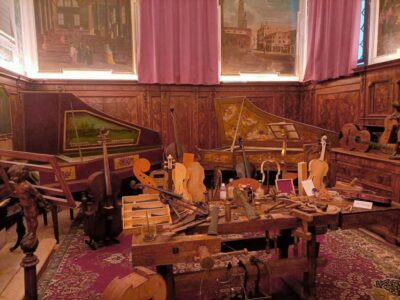
Vivaldi’s Four Seasons Concert & Music Museum Visit
Read our review →
Charming Gondola Ride on the Grand Canal & Gondola Gallery™
Read our review →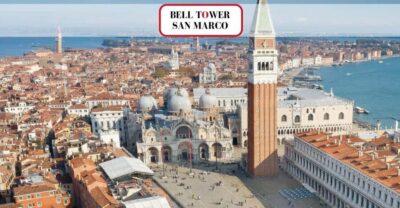
Bell Tower & St Mark’s Square History Gallery Ticket
Read our review →
Venice Museum Pass & Doge’s Palace Entrance Ticket
Read our review →
Basilica, Doge’s Palace, History Gallery & Bell Tower Option
Read our review →