Reviewed · MUSEUMS
Venice: Leonardo Da Vinci Museum Entrance Ticket
The Venice Leonardo da Vinci Interactive Museum is interesting because it turns da Vinci ideas into working, touchable experiences, not just glass cases. I especially like the Earth, Water, Air, Fire invention sections, and the museum’s hands-on style that makes you think like an engineer.
One thing to consider up front: it is small, so if you’re expecting a huge, multi-hour scholarly museum, you may feel done faster than you planned.
For reference, I went in looking for a quick stop and walked out feeling like da Vinci made sense in real life, not just in schoolbook sketches. I also liked the mirror-room effects and the way the exhibits mix art with engineering in one easy circuit. The main drawback is that there’s no guided tour, so you’ll get the most if you are comfortable reading labels and using any on-site media.
Key highlights worth your time
- Earth, Water, Air, Fire sections that group machines by concept, not by random themes
- Working, interactive models that help you understand how ideas connect
- Mirror-room experiences that make the museum feel more like a science playground
- Human anatomy studies paired with high-resolution backlit painting replicas
- Family-friendly activities, including puzzles and child-focused creative stations
- Photo-friendly interior and a 10% shop discount for souvenirs
Why this Leonardo da Vinci museum feels different in Venice
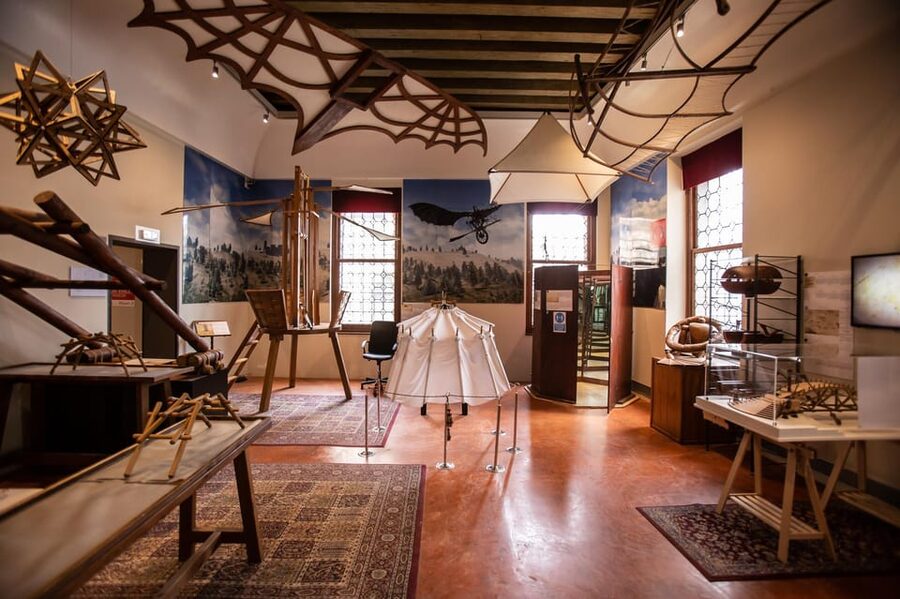
If Venice has you stuck in museums made for looking and walking, this one changes the rhythm. Here, you’re encouraged to try the exhibits, so da Vinci becomes something you can operate and test, not just admire from a distance. It also gives you a smart break from crowds, since it’s a calmer indoor stop.
What I like most is how the exhibits connect art and engineering. You see da Vinci as both a maker of machines and a careful observer of the human body. That pairing makes the whole visit feel less like a single subject display and more like a portrait of how his mind worked.
The museum is family-friendly without feeling watered down. Kids get enough interaction to stay busy, while adults still have plenty to read and figure out. And it’s a good option when you want something focused that doesn’t swallow your entire day.
More museums and galleries in Venice:
- Venice’s Best: Basilica, Doge’s Palace, Gondola & History Gallery
★ 4.5 · 2,478 reviews - Venice: Vivaldi’s Four Seasons Concert & Music Museum Visit
★ 4.8 · 2,065 reviews - Charming Gondola Ride on the Grand Canal & Gondola Gallery™
★ 4.0 · 1,313 reviews
Where the ticket takes you: Campo San Rocco meeting point reality
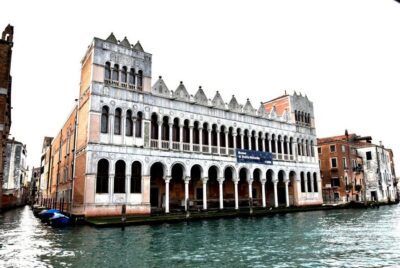
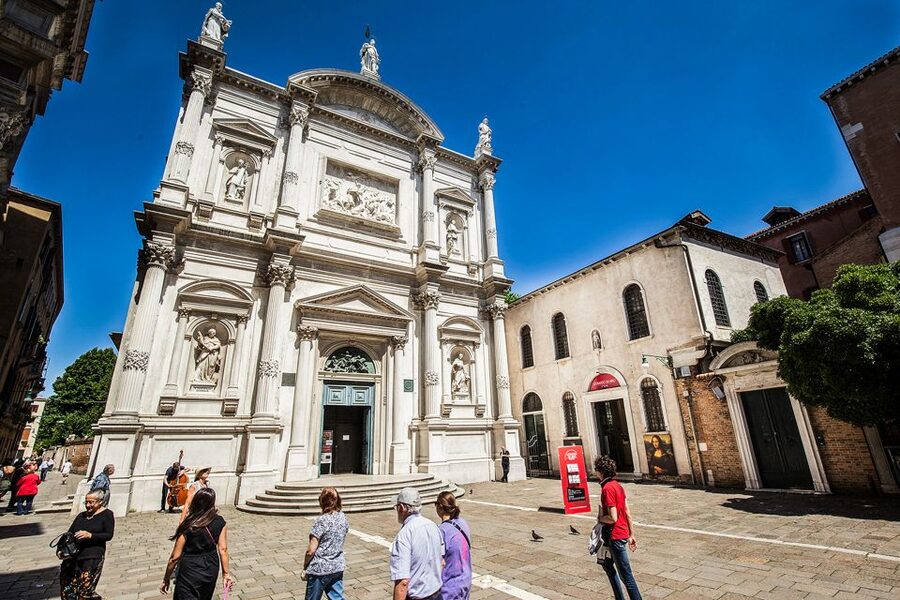
The address you want is Leonardo da Vinci Interactive Museum, CAMPO SAN ROCCO, 3052 VENEZIA. The museum is in the Edificio SCOLETTA DI SAN ROCCO, facing the Scuola Grande di San Rocco and behind the Chiesa dei Frari.
One practical tip: don’t overthink the meeting point. You go to the museum itself, show your ticket at reception, and then enter. That saves time, especially if you’re navigating Venice streets with lots of similar-looking facades.
Also, plan your route to arrive with a bit of margin. The museum uses time slots, and the rule is that last entry is one hour before closing time. If you roll in late, you may lose access to some parts.
Earth, Water, Air, Fire: the invention zones that guide your visit
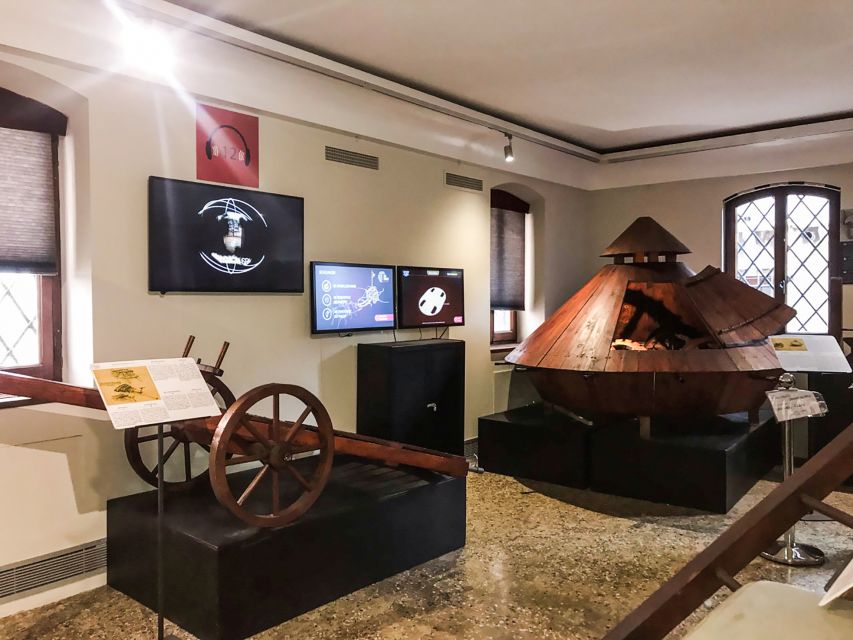
The museum is organized into four big sections: Earth, Water, Air, and Fire. Each zone is like a different lens on da Vinci’s thinking. Instead of wandering aimlessly, you can follow the sequence and see how his engineering concepts shift depending on what he’s studying.
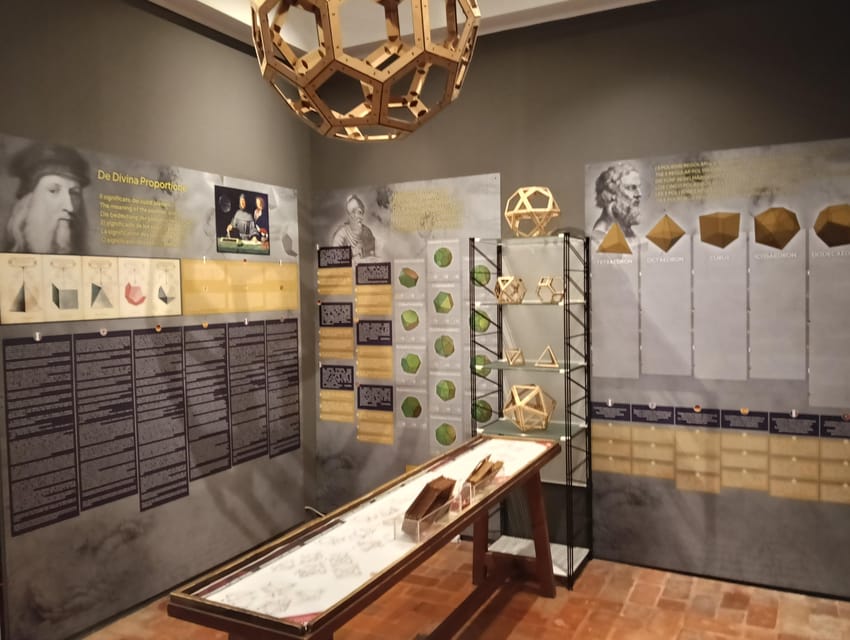
In each section, expect reproductions and machines built according to da Vinci’s designs. The exhibit notes that rebuilding follows the original designs unless something had to be changed for necessary proportions. That matters, because it means the models are trying to stay faithful while still being workable for visitors.
This setup is helpful even if you are not a technical person. The sections give you a “what am I looking at and why” framework. You end up remembering the experience because your brain has categories.
The hands-on machines: what you actually do inside
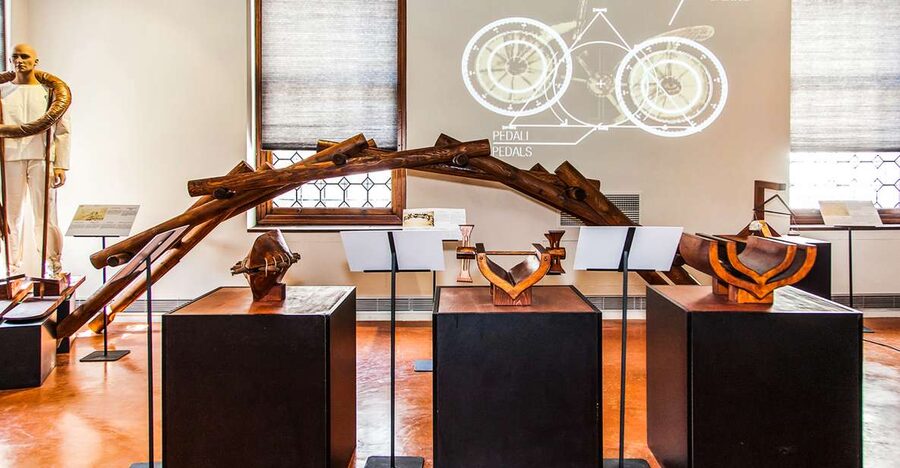
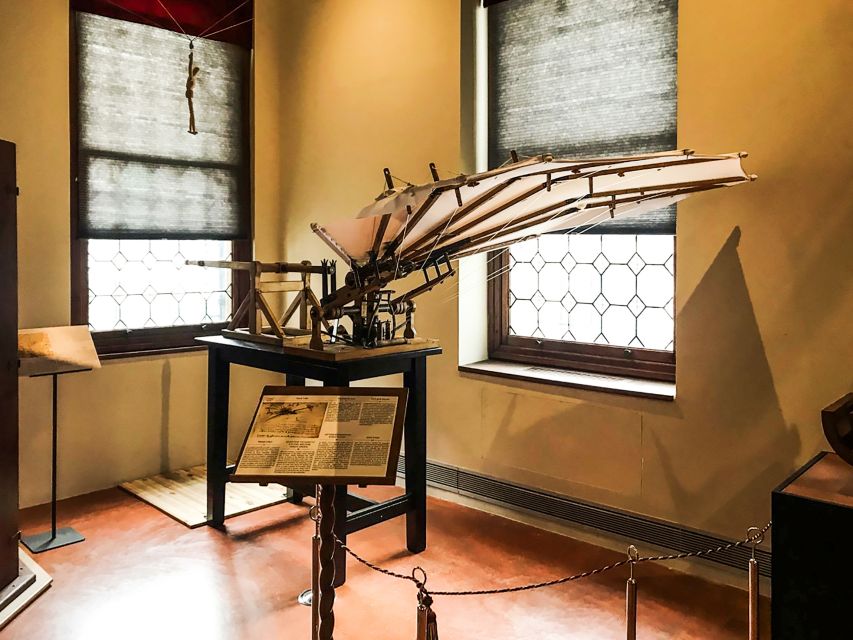
This museum earns its name: the exhibits are interactive, and many of the models look built to be used. You’ll find working reproductions of da Vinci’s machines, and the point is to help you understand how the mechanisms work through manipulation and observation.
A standout detail from inside the museum is the wooden bridge puzzle on the second floor. If you like tinkering, this is the kind of stop where you slow down and focus. It also helps to have someone else with you, since puzzles move faster when you can trade ideas in real time.
You’ll also see other hands-on elements, including puzzles for different ages. Some kids do well with “try, fail, adjust” activities, while adults tend to enjoy the logic of how parts interact.
One more thing I appreciate: you can take photos inside. That may sound basic, but it changes how you remember the day. You can take a quick picture of the labels, then snap the machine, then compare later when you’re sitting in a café.
A few more Venice tours worth comparing
- Venice: Doge’s Palace Reserved Entry Ticket
★ 4.6 · 42,716 reviews - Venice: La Fenice Opera House Entry Ticket with Audio Guide
★ 4.6 · 11,742 reviews - Venice: St. Mark’s Basilica & Doge’s Palace Tour with Ticket
★ 4.7 · 3,375 reviews - Venice: Palazzo Contarini del Bovolo Entrance Ticket
★ 4.3 · 1,991 reviews
The mirror room experience that turns the museum playful
Some museums put you in “look only” mode. This one builds in a visual trick that keeps things fun. There’s a 360-degree mirror room experience, and visitors also mention a mirror box on the ground floor that shows reflections from different angles.
What this does for the visit is simple: it creates a moment of wonder in the middle of learning. You move from reading to experimenting with your own perspective. It also makes the museum feel like a modern space, not only a historical display.
If you’re visiting with kids, this can be the exhibit that gets everyone aligned. Adults tend to enjoy it too, because it’s not just for photos, it changes how you see the room and yourself inside it.
Anatomy studies and backlit painting replicas that add depth
You don’t just get machines. The museum also includes da Vinci’s anatomy studies, which is a key reason this place feels more complete than a pure engineering exhibition. You’ll learn about his medical work and artistic accomplishments, so you see the connections between how he observed bodies and how he painted.
Another major element is high-resolution backlit replicas of his major paintings. This is a smart choice for a museum setting. It’s easier to view detail without needing you to lean in too close or squint over lighting.
Put together, the anatomy content and the art replicas help you see da Vinci as a whole person. He’s not one idea. He’s investigation, observation, and experimentation, applied to both the body and the canvas.
Languages and multimedia: how to follow the story without getting lost
The museum uses descriptions in multiple languages: Italian, English, French, German, Spanish, and Russian. That’s great because it means you can actually understand what you’re looking at, without needing to guess from a single wall panel.
The exhibits also include multimedia displays about da Vinci’s life and works. There’s even a video component that gives background in a compact way. If you want a little context before you start touching machines, that media helps.
There’s also mention of a QR code audio guide. If you’re offered that option on-site, scan it early so you don’t have to backtrack later.
Family-friendly stops: puzzles, iPads, and rules for kids
This is a family-friendly museum, and it shows in the way the interactive pieces are built for different ages. Kids can participate in hands-on activities, and there are creative stations where children can draw. Some visitors specifically mention iPads available for drawing like da Vinci.
The museum also works for multi-age groups because not every activity requires the same skill level. Some are more about problem solving, others are more about getting hands-on with mechanisms.
One important rule to plan around: children under 15 can only enter if accompanied by an adult. If you’re visiting with younger kids, make sure you have an adult in the group so entry isn’t a surprise issue.
If you have very energetic kids, this is a place where you’ll want to set expectations. Many exhibits are touch-first by design, but the museum still needs visitors to treat the equipment with care.
How long to plan: from quick stop to satisfying hour-and-a-half
Realistic visit time depends on your pace, but the experience is built to fit into a shorter window. Many people suggest 30 to 60 minutes if you focus on the key exhibits. Others report about 1.5 hours, especially if you do hands-on activities and read more labels.
I’d plan about 90 minutes if you want the best mix of machines, mirror experiences, and anatomy plus some time at the book shop. If you’re visiting with kids or you like puzzles, 90 minutes is usually the sweet spot where nobody feels rushed.
Remember last entry is one hour before closing, so build in travel time through Venice streets. That’s not glamorous, but it saves you from rushing through the exhibits.
Photos, souvenirs, and the book shop with a real discount
You can take photos inside, and the museum includes a book shop with Leonardo-themed gifts and souvenirs. There’s also a 10% discount on book shop purchases, which is a nice bonus if you want something to remember the visit.
If you enjoy leaving museums with a small artifact, plan a few minutes for the shop. It helps you turn the learning into something you can bring home, whether that’s a book, a themed item, or a gift you can share later.
Also, the museum’s location is convenient if you’re doing a broader Venice route. You can go from this calmer indoor stop back out to the streets without committing to a full-day plan.
Comfort and staff: small details that make the day easier
A few reviews highlight comfort, including that the museum has air conditioning. In Venice, that can matter more than you think, especially in warmer months.
Staff also come through as helpful. There’s at least one note about staff accommodating and looking after suitcases while a group visited. If you travel with bags, it’s worth asking if there’s a storage option on arrival, since Venice walking can be heavy.
Even though it’s not a guided tour, staff friendliness still matters. You’ll likely get quick help with entry questions, the best way to start, or where to find on-site media.
Is the lack of a guided tour a problem?
No guided tour is included. That means the visit is mostly self-paced. For some people, that’s a plus. You move when you want, linger where you’re curious, and skip what doesn’t grab you.
For me, self-guided is best when I’m ready to read labels and follow the exhibit flow. If you prefer someone to explain every mechanism like a live classroom, you might want to pair this ticket with another guided experience during your Venice stay.
Still, the museum provides multimedia support and multilingual descriptions, so you’re not left completely on your own.
Price and value: why a $10 ticket can feel like more
At $10 per person, this ticket is priced for a practical visit, not a big production. The value comes from how much interaction you get in a short time window.
You get:
- entry to the four invention sections
- machines built from da Vinci designs
- anatomy studies and art replicas
- interactive elements for both adults and kids
- photo access inside
- a 10% discount at the book shop
If you’re trying to balance Venice costs with meaningful experiences, this is one of the easier calls. It’s also a smart way to spend time when you want a break from outdoor walking and you still want learning.
The main value warning is space. Because the museum is compact, you’ll only feel “worth it” if you enjoy interactive exhibits and da Vinci’s crossover between art and engineering.
Who should book this Leonardo da Vinci museum ticket
This ticket is a great fit if you:
- like interactive, hands-on learning
- enjoy da Vinci beyond the famous paintings
- want something family-friendly with enough for adults and kids
- need a focused indoor activity that won’t eat your whole day
- appreciate short, self-guided experiences with clear exhibit organization
It may be less satisfying if you want:
- a large, museum-sized collection across many galleries
- an in-depth guided lecture style tour
- a fully academic, research-library vibe
If you’re on a tight schedule in Venice, this museum is also a good “time-smart” option.
Should you book the Venice Leonardo da Vinci museum ticket?
Yes, I’d book it if your goal is a lively, hands-on da Vinci experience that fits neatly into a Venice day. The price is reasonable, the exhibits are built for interaction, and the combination of machines, mirror effects, anatomy studies, and art replicas gives you a well-rounded story in a compact setting.
Don’t expect a huge building or a long day. Instead, expect focus, tinkering, and a couple of wow moments that make da Vinci feel real. If that sounds like your kind of museum, this is an easy yes.
FAQ
Where is the Leonardo da Vinci Interactive Museum in Venice?
The museum is at CAMPO SAN ROCCO, 3052 VENEZIA. It’s in the Edificio SCOLETTA DI SAN ROCCO, facing the Scuola Grande di San Rocco and behind the Chiesa dei Frari.
How much does the ticket cost?
The ticket price is $10 per person.
How long is the experience?
The ticket is valid for 1 day, and the visit itself is typically planned in shorter time windows depending on your pace.
Is this a guided tour?
No. A guided tour is not included with this ticket.
What can I expect to see inside?
You’ll explore interactive exhibits themed around the four elements: Earth, Water, Fire, and Air, plus exhibits about da Vinci’s human anatomy studies and backlit replicas of paintings.
Are photos allowed inside the museum?
Yes. The ticket includes the opportunity to take photos inside.
What about kids, are there any age rules?
Children under 3 can enter free. Also, children under 15 can only enter if accompanied by an adult.
What languages are available for the exhibits?
Descriptions are available in Italian, English, French, German, Spanish, and Russian.
Are there time limits for entering?
Yes. Last entrance is 1 hour before closing time.
Is there a discount in the museum shop?
Yes. There is a 10% discount on book shop purchases.
Recently reviewed around Venice
- Skip the Line St. Mark’s Basilica Tour★ 3.5 · 5 reviews
- Shared Departure Transfer: Venice Hotels to Venice Train or Bus Station★ 3.5 · 73 reviews
- One-Day Venice: Skip-the-Line St. Mark’s Basilica, Walk & Gondola★ 4.0 · 20 reviews
- Another Side of the City: Discovering Authentic Venice★ 5.0 · 57 reviews
- Self Guided Tours Venice With 100 Captivating Audio Stories★ 5.0 · 3 reviews
- Secret Venice, an unusual walk – Private Walking Tour★ 5.0 · 61 reviews
- The Secret Venice + Cicheti & Wine Private Tour★ 5.0 · 21 reviews
- Venice Walking Tour with Audioguide on Your Smartphone★ 4.0 · 19 reviews
Museums, compared.

Venice’s Best: Basilica, Doge’s Palace, Gondola & History Gallery
Read our review →
Vivaldi’s Four Seasons Concert & Music Museum Visit
Read our review →
Charming Gondola Ride on the Grand Canal & Gondola Gallery™
Read our review →
Bell Tower & St Mark’s Square History Gallery Ticket
Read our review →
Venice Museum Pass & Doge’s Palace Entrance Ticket
Read our review →
Basilica, Doge’s Palace, History Gallery & Bell Tower Option
Read our review →