Reviewed · TICKETS
Venice: Ticket to Scuola Grande San Giovanni Evangelista
Venice has a lot of famous sights. What makes this one interesting is that a simple ticket gets you inside the Scuola Grande San Giovanni Evangelista, a place that packs 800 years of art and architecture into one visit.
I especially love the way you can see multiple styles side by side, from Gothic spaces like the Columns Hall to later Renaissance and Baroque rooms. One thing to consider is that because this site is quieter than Venice’s headline attractions, you may need to slow down and pay attention to get the most from the art.
Ticket Highlights You Can Plan Around
- Second oldest scuola (laid brotherhood) founded in 1261, so you’re walking through centuries, not a single era
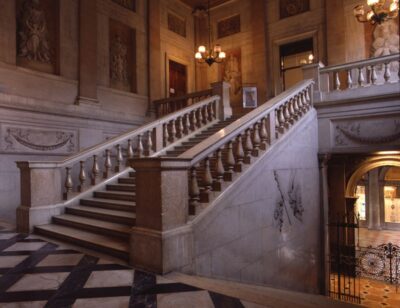
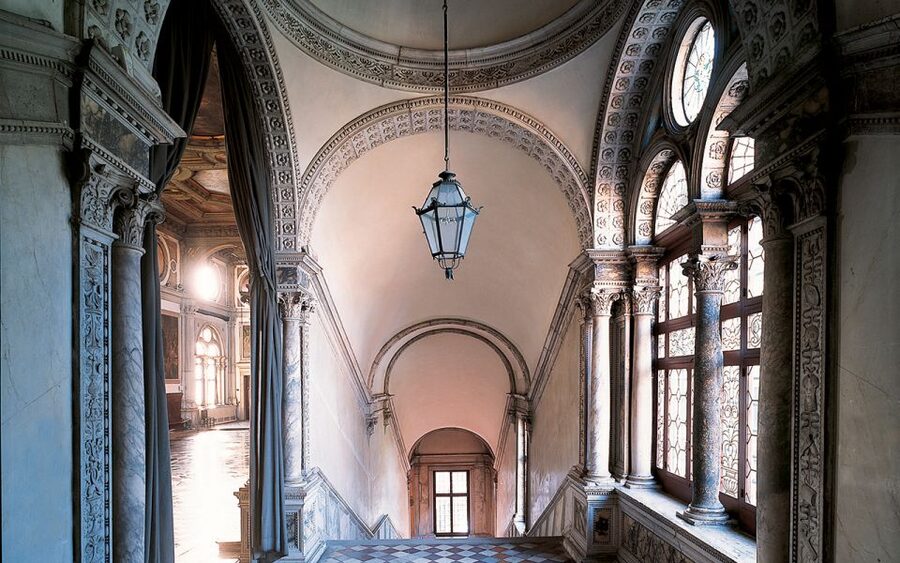
- Mauro Codussi’s monumental Renaissance staircase, added in 1498, is the big vertical wow moment
- Gothic Columns Hall and Chapter Hall, designed for assemblies of brothers and pilgrims
- Marble septum, a distinctive architectural feature that helps set the tone for the visit
- Oratory Hall with the relic of the True Cross (1369) and its inspiration for a Cycle on the Miracles of the Cross
- Important names of painters appear on the Baroque side, including Domenico Tintoretto, Giandomenico Tiepolo, and Jacopo Marieschi
A Quieter Venice Stop Where Styles Stack Up
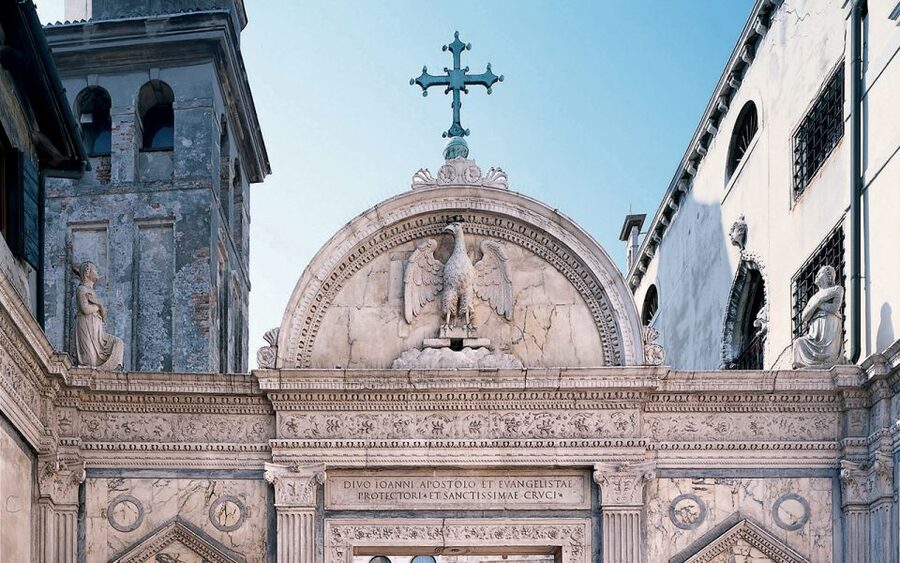
If Venice feels like a nonstop parade, this is a helpful change of pace. The Scuola Grande San Giovanni Evangelista is not trying to compete with the big postcard stops. Instead, it gives you something more satisfying for many travelers: a slower interior experience, where architecture and painting tell the story of religious life and civic identity over centuries.
The building’s structure does a lot of the work for you. You move through spaces that shift in mood and design, so even without a guide, you can follow the logic of the place. The standout feature is that you are not looking at one style in isolation. You’re seeing transitions, layers, and upgrades over time.
I like that this is both visual and meaningful. Yes, there’s stunning design. But there’s also a sense of purpose, because the scuola was created for the community, and its halls were built for gatherings connected to faith and devotion.
A few more Venice tours worth comparing
- Venice: Doge’s Palace Reserved Entry Ticket
★ 4.6 · 42,716 reviews - Venice: La Fenice Opera House Entry Ticket with Audio Guide
★ 4.6 · 11,742 reviews - Venice: Leonardo Da Vinci Museum Entrance Ticket
★ 4.5 · 3,560 reviews
What a “Scuola” Was in Venice, and Why 1261 Matters
A scuola in Venice was a lay brotherhood, a community group tied to spiritual life, charity, and public worship. The Scuola Grande San Giovanni Evangelista traces back to 1261, which makes it the second oldest of this kind in Venice. That date is more than trivia. It tells you that the building you’re touring is rooted in a very old tradition.
When you visit a place like this, the big win is perspective. Venice can feel like it only remembers itself in Renaissance and Baroque. But here, the foundation is medieval, and the later art and architecture start from that earlier base.
You’ll see that idea reinforced as you move through the building. Gothic elements set an early tone. Later changes, like the Renaissance staircase added in 1498, show how the same community kept updating the spaces as tastes and artistic ambitions evolved.
Your Ticket Value: $9 for One of Venice’s Most Focused Interiors
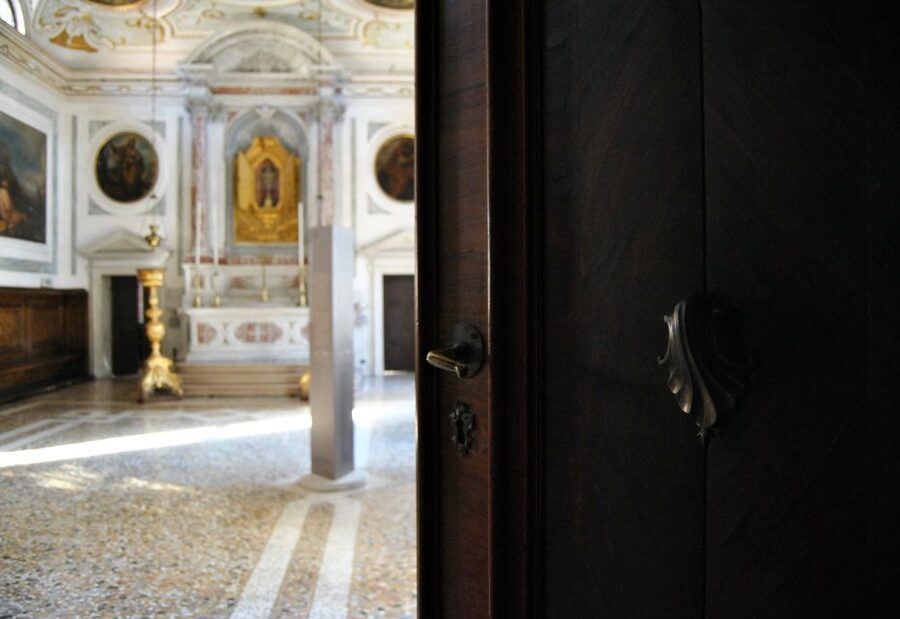
For $9 per person and a one-day ticket, the value is strong, mainly because you get an inside tour of a site with multiple major spaces. You’re paying for access to the building itself, and the structure is the attraction. This is not just a room with a few artworks. It’s a sequence.
That matters in Venice, where prices for “one room and a goodbye” can creep up. Here, the building gives you a full arc: marble details, Gothic halls, a dramatic staircase, then the Baroque side of the program, ending with the Oratory space and the True Cross relic.
Also, since a guide is not included, you’re relying on the building, the art, and what the staff can help explain if you ask. That can be a drawback for some people, but it also makes the visit feel more personal. You can take your time, and you can choose what to focus on.
Where to Go, and How to Keep the Visit From Feeling Rushed
Your starting point is straightforward: show your ticket at Scuola Grande San Giovanni Evangelista di Venezia. The experience includes an Italian or English host or greeter, so if you have questions about where to go next, you’re not completely on your own.
Because this is a self-directed ticket, your best strategy is pacing. Venice is tiring. Indoors is better, but only if you slow down enough to see what changes as you move. Give yourself time between rooms. Look up at architectural details. Don’t just treat it like a hallway.
If you want the visit to feel effortless, I suggest you decide in advance what your priorities are:
- the staircase moment
- the Gothic halls
- the relic and religious pieces
- the Baroque paintings and specific artists
That simple list keeps you from wandering aimlessly and helps you remember what you saw.
Same city, a very different kind of day on the water:
- Venice: Grand Canal Gondola Ride with App Commentary
★ 4.1 · 18,908 reviews - Boat Trip: Glimpse of Murano, Torcello & Burano Islands
★ 4.3 · 15,699 reviews - Venice: Grand Canal by Gondola with Live Commentary
★ 4.1 · 13,681 reviews - Doge’s Palace & St. Mark’s Basilica with Terrace Access Tour
★ 4.7 · 10,697 reviews
Marble Septum and the Gothic Columns Hall
One of the earliest highlights is the marble septum, a significant interior element that helps define how the space is organized. Even if you don’t know the rules of every historical function, you’ll feel the intention: this was built for religious gathering and ritual movement.
Right after that, you’ll come into the Gothic Columns Hall. This room was designed for welcoming assemblies of the brothers and pilgrims. That is key context. This isn’t just an art gallery stop. The architecture is meant for people, and the columns and hall layout support gathering and ceremony.
As you stand in a Gothic hall, notice how the space directs attention. Vertical lines tend to pull your eyes upward. It’s an architectural way of guiding you, and it helps you understand why this style was chosen for religious community life.
If you like buildings where function and design match, you’ll appreciate this part a lot. And since this site is less crowded than Venice’s top landmarks, you may find it easier to actually look at the hall, rather than having to photograph over someone’s shoulder.
The Big Wow Moment: Mauro Codussi’s Renaissance Staircase
The visit’s dramatic turn comes when you ascend Mauro Codussi’s monumental Renaissance staircase, which was added in 1498. This is the moment where the building stops feeling like a medieval setting and starts feeling like a stage for Renaissance ambition.
What makes the staircase such a strong highlight is its scale and clarity. You see the structure immediately. You’re not hunting for it. It is the kind of feature that makes you slow down without trying.
For many visitors, this is the only “must-see” moment they truly plan around. If you’re short on time in Venice, this is the part that justifies the ticket on its own. Even if you only remember one scene, you’ll remember climbing up through this space and feeling how the building changes above.
And once you’ve made that ascent, everything after it reads differently. The later halls feel like a continuation of that upward shift, not a separate stop.
Chapter Hall and the Baroque Side of the Story
After the staircase, the route continues into the Chapter Hall, where you can spot Baroque splendor tied to major painters. This is where the visual energy increases.
The names associated with the Baroque section are worth catching if you like art history details without getting lost in facts:
- Domenico Tintoretto
- Giandomenico Tiepolo
- Jacopo Marieschi
Even if you only recognize one or two of those names, the art program is still understandable. Baroque art often leans into emotional intensity and strong storytelling. In a building like this, it makes sense, because you’re moving from a community gathering space into rooms where spiritual narrative and devotion take center stage.
The Chapter Hall also reinforces that the scuola was not only about worship as a private matter. It was social. It was communal. It was organized enough to have spaces built for specific functions.
If you want to enjoy this section fully, don’t just skim the paintings. Take a minute, then step back. Look at the whole room arrangement. It’s easier to understand the art when you understand the space around it.
Oratory Hall and the True Cross Relic (1369)
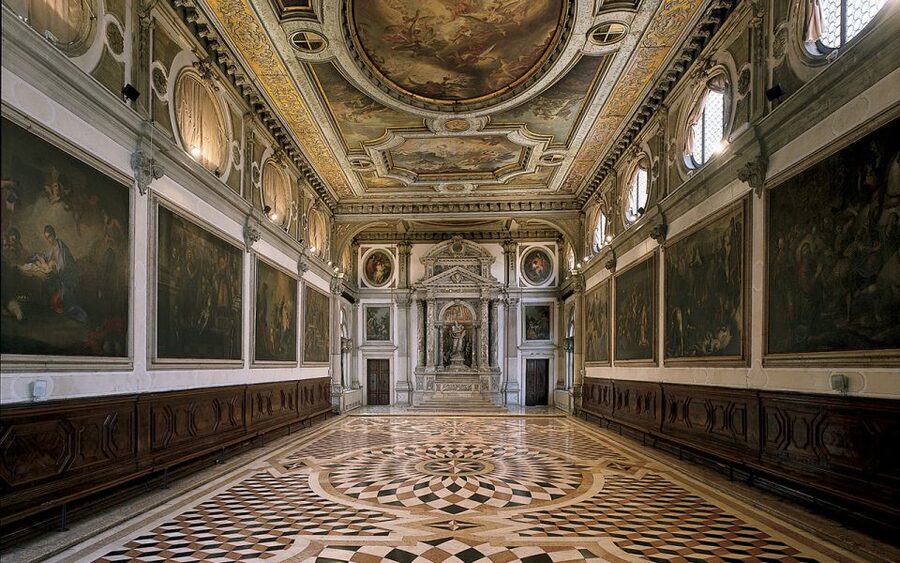
The emotional high point for many people is the Oratory Hall. Here you’ll see the relic of the True Cross, dated 1369. That date matters. It signals continuity and long-term importance, not a temporary display.
The relic is also tied to the Cycle on the Miracles of the Cross, which the building’s display is meant to reference. Even if you don’t read every line of explanation, you can grasp the idea: the site is structured so devotion and storytelling are connected.
This is also where the visit becomes most “faith-forward.” Some travelers come for art and architecture. Others come for the religious element, and this is where that focus is clear.
A practical note: if you tend to move quickly through museums, try to slow down here. It’s the best place to pause and let the atmosphere work on you. The building is designed to feel serious in this part, and that seriousness is part of the experience.
Seeing It Well Without a Guide
Since a guide is not included, your experience depends on what the signage and staff help you with. The good news is that there is an Italian, English host or greeter, and that kind of support can be surprisingly useful in a place like this. If you’re unsure where to go next, asking one clear question can save you time and keep your route logical.
Here are a few ways to get more out of it without needing a guide:
- Pick one painting name you want to find, like Domenico Tintoretto, then compare what you see with the surrounding context.
- Spend extra time on architecture. The building is part of the story, especially the marble septum, the Gothic hall layout, and the staircase scale.
- Use your phone for gentle fact-checking if you like, but keep your eyes on the room first. This place works best in real space, not as a caption hunt.
Who This Visit Fits Best
I think this ticket works especially well if you like Venice for the things many people skip:
- architectural transitions across time
- inside spaces that feel built for real community use
- art stops that are meaningful instead of just famous
You’ll also enjoy it if you’ve been to Venice’s big attractions already and you want a different kind of day. The building’s mix of Gothic, Renaissance, and Baroque means you can satisfy different tastes in one go.
If you only want the most famous artworks or you prefer to be guided step-by-step, this might feel too self-directed. Still, it’s worth considering because the main architectural moments do not require interpretation to land.
Book It or Skip It: My Honest Take
Book this ticket if you want a compact Venice day with a lot of visual variety, and you like the idea of a 1261 origin story inside a building that grew and changed over time. At $9, the value is hard to argue with, because you’re paying for access to a whole sequence of major spaces, not one quick stop.
Skip it only if you’re looking for a tightly scripted guided experience, or if you want strictly the most famous Venetian sights. If you’re open to quieter places and you’ll slow down to notice architecture, this ticket is a smart use of your time in Venice.
FAQ
How much does the ticket cost?
It costs $9 per person.
How long is the experience?
The ticket is valid for 1 day.
Where do I show my ticket?
Show your ticket at Scuola Grande San Giovanni Evangelista di Venezia.
Is a guide included?
No, a guide is not included.
What will I be able to see inside?
You can see Gothic, Renaissance, and Baroque architecture and artworks, including the Gothic Columns Hall and Chapter Hall, the Renaissance staircase by Mauro Codussi, and the Oratory Hall with the relic of the True Cross (1369).
Which artists are associated with the Baroque art you’ll see?
The experience description highlights artworks linked to Domenico Tintoretto, Giandomenico Tiepolo, and Jacopo Marieschi.
What is the monumental staircase?
The staircase is the Mauro Codussi Renaissance staircase, added in 1498.
Are there languages available?
Italian and English.
Is there free cancellation?
Yes, you can cancel up to 24 hours in advance for a full refund.
Can I reserve and pay later?
Yes, you can reserve now and pay later.
Final Decision
I’d book it if you want a Venice day that is indoors, art-forward, and historically layered, without the pressure of the biggest crowds. The staircase, Gothic halls, and the True Cross relic give you clear reasons to be there, even without a guide. If you prefer famous guided highlights only, then choose something else.
Recently reviewed around Venice
- Yummy Cooking Class In Venice★ 4.9 · 122 reviews
- VIRTUAL MUSEUM: Creature di Gomma – Venice Vintage Toys★ 4.7 · 3 reviews
- Venice: City Tour & Skip the Line for St. Mark’s Basilica★ 4.1 · 84 reviews
- Your evening in Venice – Legends&Ghosts&Aperitif★ 4.7 · 79 reviews
- Venice: Watercolor Painting Class at the Prisons Palace★ 4.7 · 27 reviews
- Walking Tour to Uncover the Hidden Venice★ 4.4 · 34 reviews
- Wine Tasting in Venice★ 4.6 · 42 reviews
- Venice Walking Tour from St. Mark’s to Rialto Bridge★ 4.5 · 12 reviews
Tickets, compared.
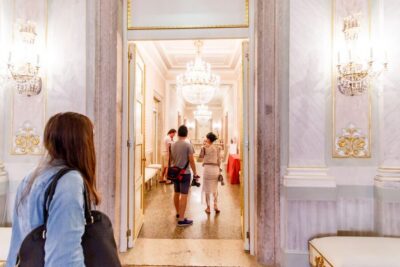
La Fenice Opera House Entry Ticket with Audio Guide
Read our review →
St. Mark’s Basilica & Doge’s Palace Tour with Ticket
Read our review →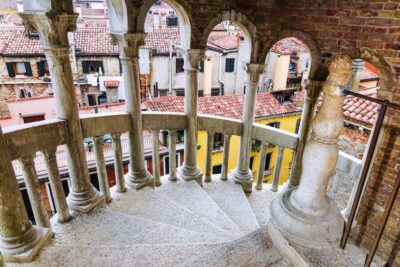
Doge’s Palace & St. Mark’s Basilica Tickets + Tour Options
Read our review →