Reviewed · PRIVATE
Venice for First-Timers: Essential Private Tour
Venice can feel like a maze of canals and big sights. This private tour is different because it teaches you the forces that control the city, starting with the Venetian lagoon and moving into the science behind acqua alta. You also get a tour built around real landmarks, not just random streets.
What I like most is the small size, capped at eight travelers, so you get time for questions instead of racing on. The other standout is the local, guide-led approach from Valerio Coppo, where the walk stays practical and human, with lots of small context you can actually use.
One possible drawback: it is about 2 hours, so you will not see every famous square, museum, or church. If you want a full checklist of top sights, this works best as day one orientation, then you follow up on your favorite areas.
Key Things That Make This Tour Worth Your Time
- Up to 8 travelers means real conversation, not a lecture while you drift behind the group
- MOSE and acqua alta explained with clear, cause-and-effect storytelling
- A lagoon-focused Venice view that helps first-timers understand what they are looking at
- Tide math in plain language including why 80 cm is a turning point and 140 cm hits harder
- Real-world extremes from the 1966 acqua granda and the 2019 events
- Local tips after the walk for food, drink, and what to do next
A First-Timers Venice Tour That Starts With What Controls the City
If you are new to Venice, the hardest part is often not navigation. It is understanding why the city behaves the way it does. One minute the streets look normal, the next you are stepping around water, and somehow it always feels tied to the tide but never quite to the weather you expected.
This tour is designed to fix that. You start with the lagoon itself, and you learn how the lagoon connects Venice to the Adriatic Sea. Then you connect that to the patterns behind flooding, including how high water can rise to the point where it becomes a problem for the city.
The best part is that it is not just information for the sake of information. You leave with mental hooks. You begin to notice the rhythms, and you understand that the city is dealing with tides, wind, and pressure, not simple rain.
A few more Venice tours worth comparing
- Murano & Burano Islands Guided Small-Group Tour by Private Boat
★ 4.5 · 7,580 reviews - From Venice: Murano & Burano Guided Tour by Private Boat
★ 4.7 · 4,170 reviews - Private 3 hrs Venice Tour: St Mark’s, Walking tour & Boat tour
★ 4.0 · 3,372 reviews
The Lagoon Story: How Venice’s Past Shaped the Water You Walk Through
Your first stop is the Laguna di Venezia, where you get a guided explanation of how the lagoon has been shaped over centuries. The focus is on the Republic of Venice and the way it created major barriers from the sea, while also redirecting rivers and keeping a careful balance between human intervention and natural events.
This matters for first-timers because it changes how you look at the water. Instead of thinking of the lagoon as background scenery, you start seeing it as an engineered system that Venice depended on for survival. When you later hear about modern barriers like MOSE, the story feels connected, not random.
You will also get a sense of time moving quickly. The tour uses these lagoon stops to jump across centuries, so you understand why Venice cared so much about controlling access to water and protecting the city.
Three Inlets, Tides, and Why the Lagoon Has a Pulse
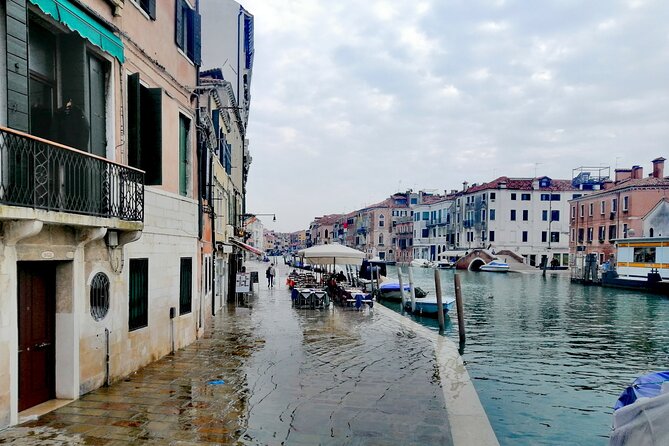
Next you shift into Venice and the way the lagoon exchanges water with the Adriatic Sea. You learn about how the lagoon is connected through three port inlets, which allow water to enter and exit in the rhythm of the tides.
This is a big deal because it is the practical reason Venice is always working with rising and falling water. It also explains why a flood day rarely feels like an isolated disaster. It feels like an event with a pattern that keeps returning, with different intensity each time.
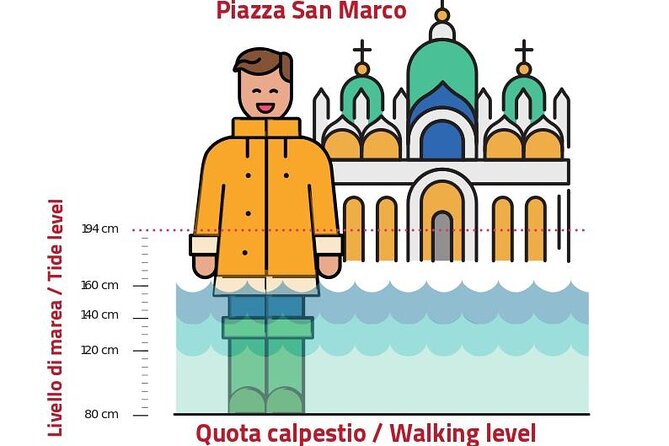
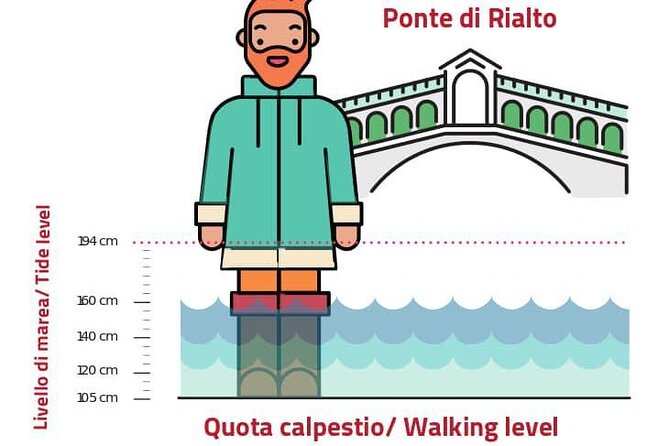
You also get a key threshold concept: high tide becomes a problem for Venice when it exceeds 80 cm. Beyond that point, you are in acqua alta territory. That one detail turns a vague idea into something measurable, and it helps you follow what is going on when you check conditions during your trip.
Acqua Alta in Plain Terms: Rain Isn’t the Main Actor
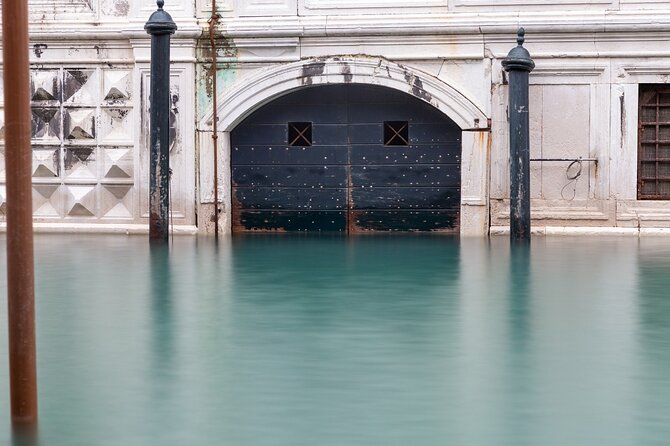
One of the most useful parts for first-timers is the explanation of why acqua alta happens the way it does. You get a clear breakdown of the mix of phenomena behind high water, and you also learn which factors matter and which ones do not.
This tour specifically points out that rain has nothing to do with it, and that lunar phases and astronomical tides matter more. It also emphasizes strong winds and low pressure as important drivers.
If you have ever looked at a forecast and felt confused about why water levels rose anyway, this section helps you untangle that. You are not just learning names of conditions. You are building a mental model of cause and effect that makes Venice feel more predictable, even when it still surprises you.
The tour keeps the pace tight, with short stop explanations that build on each other. That way, you are not stuck in one lecture. You keep moving, but the ideas stay linked.
Same city, a very different kind of day on the water:
- Venice: Doge’s Palace Reserved Entry Ticket
★ 4.6 · 42,716 reviews - Venice: Grand Canal Gondola Ride with App Commentary
★ 4.1 · 18,908 reviews - Boat Trip: Glimpse of Murano, Torcello & Burano Islands
★ 4.3 · 15,699 reviews - Venice: Grand Canal by Gondola with Live Commentary
★ 4.1 · 13,681 reviews
80 cm vs 140 cm: Why Some Streets Stay Dry and Others Don’t
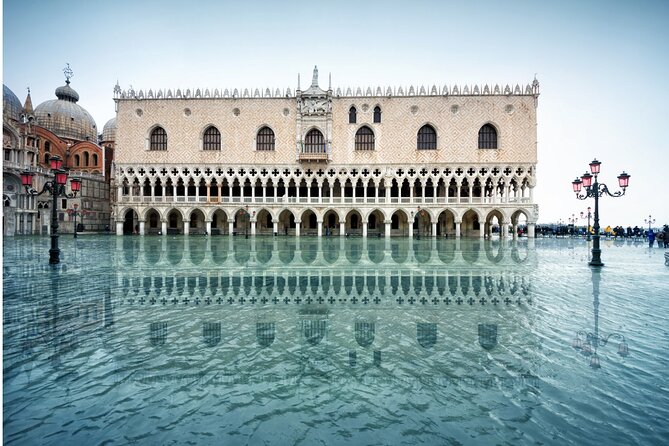
The next explanation focuses on what happens at different tide levels. You learn how it is possible that with 80 cm tides your feet can still keep dry, while a tide of 140 cm affects the city much more.
This is one of those details that sounds small until you experience the contrast. In Venice, “high water” can mean very different things depending on exactly how high it reaches and where you are standing. This tour helps you understand why.
It also makes you more confident when you look at water levels during your own trip. Instead of panicking at one number, you start thinking in ranges and outcomes.
MOSE Floating Flood Barriers: The Protective Idea, Explained
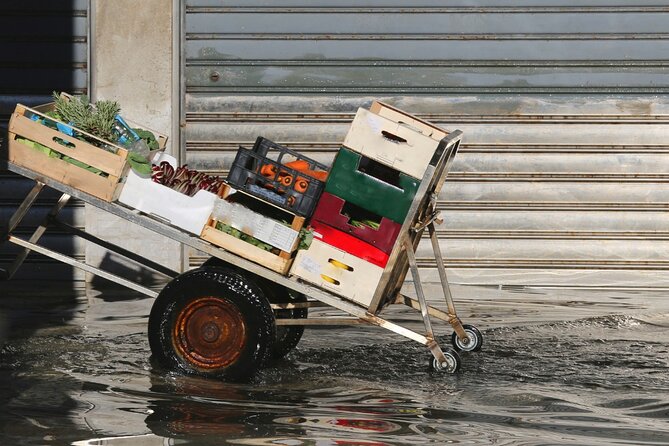
You also learn about the MOSE floating flood barriers and how they might help protect the city. The tour frames MOSE as part of Venice’s ongoing survival strategy, built on centuries of dealing with water and risk.
Even if you do not become a flood-control expert during two hours, you will understand why these barriers matter. You will also understand why Venice needs both planning and real-time reality, because natural forces can align in ways that are not always easy to predict.
For first-timers, that is the goal. You do not need to memorize every term. You need to know why the city prepares, and what kind of threat it is preparing for.
Extreme Floods That Changed Venice: 1966 and the 2019 Events
After the science, the tour shifts into history and modern experience. You visit areas connected to major flood moments, and you connect those events to what residents had to face afterward.
You learn about the 1966 tragedy, when a huge event renamed the acqua granda. The tide reached the highest peak ever recorded in history, after an exceptional wave of bad weather hitting all of Italy. You also learn how this day impacted the development of the city and life of its inhabitants in the decades that followed.
That part is especially effective for travelers who want more meaning than a photo stop. It shows how extreme water events do not just damage buildings. They change long-term decisions, daily life, and how Venice functions.
Then the tour brings you to similar modern events. You hear how Venice experienced a comparable situation in the evening in 2019, linked to global climate change concerns and over-tourism pressures. You also learn about another dramatic situation at the end of 2019, connected to a specific area you visit during the walk.
The key takeaway is not fear. It is context. You understand why the conversation around Venice flooding includes climate, crowding, and infrastructure decisions.
Lido di Venezia and Campo Santa Maria Formosa: Getting Out of the Usual Bubble
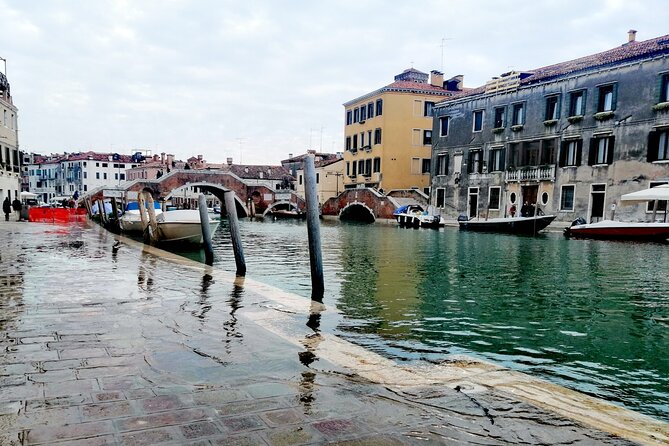
The stops are chosen to make the city feel bigger than the classic postcard route. You visit Lido di Venezia, and you also spend time around Campo Santa Maria Formosa.
What you gain from these places is perspective. Flooding and water management are not abstract topics. They are local, tied to specific neighborhoods, coasts, and streets. The tour uses these areas to make you feel the connection between the lagoon story and the lived experience of water in Venice.
Also, by the time you reach these points, the flood concepts make more sense. You are no longer hearing about tides in theory. You are seeing how Venice’s geography and positioning shape how water shows up around you.
The Guide Makes the Difference: Valerio’s Local Approach
A private tour lives or dies on the guide, and this one is led by Valerio Coppo. The walk is described as friendly, local, and packed with small anecdotes.
You can expect a style that works well for different ages and attention spans. Multiple families mention good energy for kids, including children around early school age. The balance tends to be informative but not overwhelming, with details timed to keep younger travelers engaged.
You also get practical help for the rest of your trip. Valerio’s approach includes tips and recommendations for what to do, where to eat, and what to try, including things like gelato and specific sweet stops such as chocolate shops. Even if you already planned your meals, having a local suggest options can save you time and help you avoid the most tourist-heavy choices.
And there is a quiet advantage with limited group size. When you are asking questions, you are not competing with ten other voices. You get answers that fit your questions, not a generic script.
Price and Value: Why $185.85 Can Make Sense for First-Timers
The price is $185.85 per person for an experience that runs about two hours and is private to your group. That sounds like a lot until you think about what you get.
You are not paying for a generic walk through Venice. You are paying for a guided explanation that connects the lagoon, tide thresholds, and major flood history into a structure that helps you navigate your entire stay. For many first-timers, one good orientation saves hours of wandering and confusion.
The limited group size also matters for value. With up to eight people, you get more time per person, and it is easier to ask follow-up questions like what to watch for during your specific travel dates. That is hard to replicate on a larger group tour.
One more practical point: the tour is commonly booked about 70 days in advance on average. That suggests it fills up, so if you are coming soon, locking it in earlier helps.
Finally, admission tickets are shown as free for the listed stops, so the cost is mostly about the guide and time together, not museum fees.
Pace, Pickup, and Tickets: What You Can Plan Around
This is a private tour, so only your group participates. You are also offered pickup, which can reduce stress if you are dealing with hotel logistics, luggage, or just trying to avoid long, hot walks before you even start learning.
You get a mobile ticket, and the tour runs in English. You will likely appreciate that the stops are short, around 15 minutes each, because it keeps the walk from dragging. You still learn a lot, but the flow stays light enough to stay energetic.
Also, the tour notes that you can be near public transportation. That can be helpful when you are planning your day around multiple activities.
If you are staying outside Venice and visiting for the day, pay attention to the possible €5 access fee on certain dates for day visitors. The guidance points you to the official site for details and exemptions. If you are not sure whether your date triggers it, check before you go so you are not surprised at the last minute.
Who This Tour Best Fits
This tour is a great match if you:
- Want to understand the lagoon and flooding basics early in your trip
- Prefer small-group conversations, not crowded, rushed sightseeing
- Are traveling with kids and want a guide who can explain complex ideas in an approachable way
- Want local restaurant and food recommendations you can use immediately
It is also a good choice if you feel overwhelmed by Venice’s sheer amount of history and want a single clear framework: lagoon, tides, thresholds, past extremes, and why it matters now.
If you are the type who only wants classic, top-sight checkmarks like a checklist, this may not be the only tour you need. It is focused, and it is science-and-history driven.
Should You Book This Venice First-Timer Private Tour?
If you are visiting Venice for the first time and you want more than photos, I think this is a strong booking. The focus on the lagoon, the MOSE protective idea, and the real cause behind acqua alta helps you understand what you will see during your stay. That knowledge makes everything else easier, from choosing where to wander to interpreting water levels.
Choose it especially if you like a guide-led walk where you can ask questions and get practical suggestions for meals and next steps. The small group size and the local energy from Valerio Coppo are the kind of combination that turns a short tour into a lasting starting point.
One caution: because it is about two hours, plan to use it as your launchpad. After this, pick one or two neighborhoods to explore on your own with your new tide-aware perspective, and Venice will feel less like a maze and more like a place you finally understand.
FAQ
How long is the Venice for First-Timers Essential Private Tour?
It runs about 2 hours.
Is this tour private?
Yes. It is private, and only your group participates.
How many people are in the group?
It is limited to eight travelers.
Is pickup available?
Pickup is offered.
What language is the tour in?
The tour is offered in English.
Are there admission tickets included or required at stops?
The listed stops show admission ticket free.
Are there any additional access fees I should know about?
On certain dates, most travelers staying outside Venice who plan to visit for the day may be required to pay a €5 access fee. You should check the official website for which days apply and any exemptions.
Can I bring a service animal?
Yes, service animals are allowed.
What is the cancellation window for a full refund?
You can cancel up to 24 hours in advance for a full refund. If you cancel less than 24 hours before the start time, the amount paid is not refunded.
How far in advance is this tour typically booked?
On average, it is booked about 70 days in advance.
Recently reviewed around Venice
- Skip the Line St. Mark’s Basilica Tour★ 3.5 · 5 reviews
- Shared Departure Transfer: Venice Hotels to Venice Train or Bus Station★ 3.5 · 73 reviews
- One-Day Venice: Skip-the-Line St. Mark’s Basilica, Walk & Gondola★ 4.0 · 20 reviews
- Another Side of the City: Discovering Authentic Venice★ 5.0 · 57 reviews
- Self Guided Tours Venice With 100 Captivating Audio Stories★ 5.0 · 3 reviews
- Secret Venice, an unusual walk – Private Walking Tour★ 5.0 · 61 reviews
- The Secret Venice + Cicheti & Wine Private Tour★ 5.0 · 21 reviews
- Venice Walking Tour with Audioguide on Your Smartphone★ 4.0 · 19 reviews
Private, compared.
Murano & Burano Islands Guided Small-Group Tour by Private Boat
Read our review →
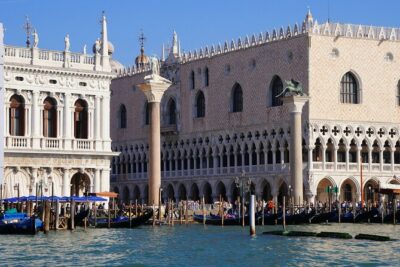
Private 3 hrs Venice Tour: St Mark’s, Walking tour & Boat tour
Read our review →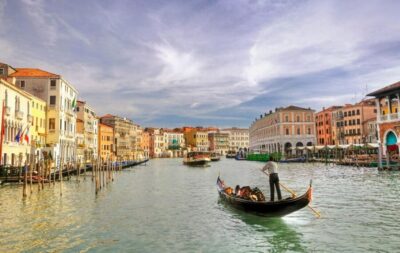
Private Gondola Cruise for up to 5 Passengers
Read our review →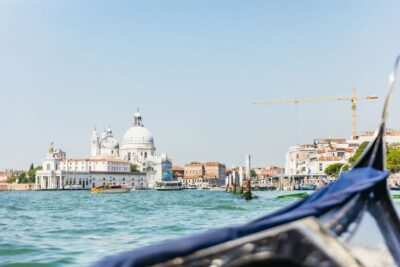
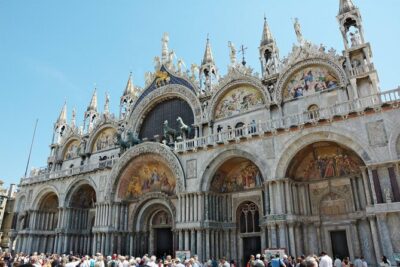
Private Best of Venice Walking Tour with St Mark’s Basilica
Read our review →
Private tour on Murano Island: discover the art of Artisanal Glassblowing
Read our review →