Reviewed · TOURS
Venice Film Tour: Explore Iconic Movie Locations
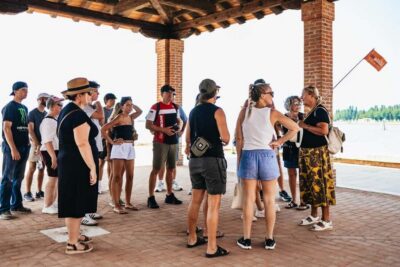
A movie-lover’s way to see Venice, this walk turns famous scenes into real places you can stand in. I especially love the film references that make the city click and the fact that Valerio Coppo tends to route you toward quieter corners instead of only the busiest squares. One thing to consider: it moves quickly, with lots of short stops, so you will do walking and keep your pace up.
You get a licensed guide, commentary in English, and a mobile ticket. The stops are mostly free to enter as listed, and the whole outing is about 2 hours.
Key highlights you’ll feel fast
- Valerio Coppo’s guiding style connects scenes to how Venice actually works as a setting
- Short, story-rich stops so you see many locations without a half day of museum time
- Tablet clips during the walk that help you match what you’re seeing with what was filmed
- Routes that avoid the tightest crowds (a big deal in peak Venice heat)
- A wide mix of classic and modern films so it’s fun even if you don’t know every title
Why Venice Film Locations Work Better Than Postcard Sights
Venice is already theatrical. The canals look staged, the facades look like sets, and even a simple campo can feel like a scene when you know what to look for. This tour gives you that cue, so you stop seeing Venice as just pretty streets and start seeing it as a working film location.
What I like is the balance. You get recognizable landmarks, but you also get the smaller, more specific places that cameras love. If you’re a cinema fan, that matters, because the payoff is mental as much as visual.
Other things people book in Venice:
- Venice: Doge’s Palace Reserved Entry Ticket
★ 4.6 · 42,716 reviews - Venice: Grand Canal Gondola Ride with App Commentary
★ 4.1 · 18,908 reviews - Boat Trip: Glimpse of Murano, Torcello & Burano Islands
★ 4.3 · 15,699 reviews
Price and Time: Is $185.43 a Good Deal for 2 Hours?
At $185.43 per person for about 2 hours, this isn’t a bargain-basement sightseeing walk. But it can still feel like good value if you care about two things: guidance and context.
A licensed guide plus film-focused explanations saves you time. Instead of trying to match movie scenes to the real city yourself, you get it laid out as you go. And because each stop is quick, you cover a lot of ground without committing to a long day.
One small cost thing to watch: there may be a city access fee on certain dates if you’re staying outside Venice. If that applies to your visit dates, it’s an extra line item beyond the tour price.
Valerio Coppo’s Approach: Movie Magic With Practical Walking
This tour is built like a guided “greatest hits” reel. You’re not stuck in one place for long. You move from stop to stop, and the guide ties each location to what was shot there and why it worked on screen.
The guiding style stands out in the way people describe it. They talk about Valerio being fun, outgoing, and making the route feel personal. They also note that he takes people away from the most traditional routes and finds smaller spots that you might miss on your own.
Because it’s a private tour for only your group, you are not getting squeezed in with strangers. That usually makes it easier to ask questions when something sparks your movie brain.
Stop-by-stop: Venice as a real film set
The tour hits a mix of canals, churches, palaces, and major public squares. Most visits are brief, often around 5-15 minutes, so think “look, learn, walk on” rather than “wander and linger.”
Same city, a very different kind of day on the water:
- Venice: Grand Canal by Gondola with Live Commentary
★ 4.1 · 13,681 reviews - Venice: La Fenice Opera House Entry Ticket with Audio Guide
★ 4.6 · 11,742 reviews - Doge’s Palace & St. Mark’s Basilica with Terrace Access Tour
★ 4.7 · 10,697 reviews - Venice: Burano, Torcello & Murano Boat Tour w/Glassblowing
★ 4.4 · 10,245 reviews
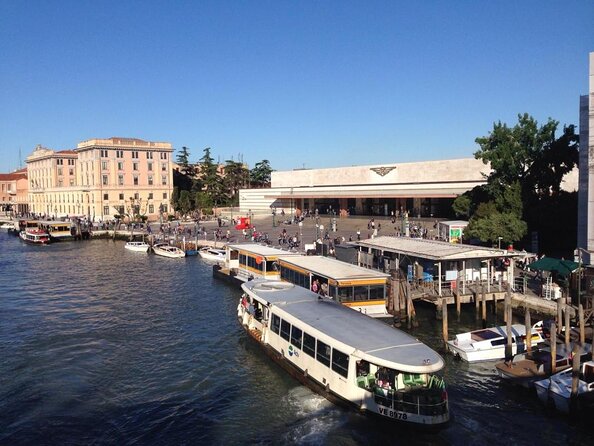
Railway station area, the movie starting line
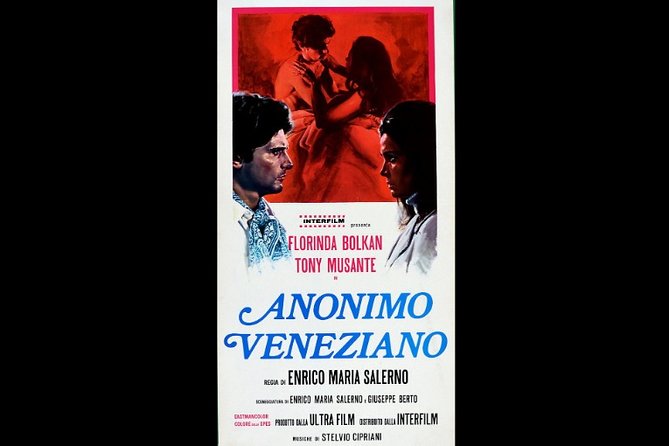
The tour begins at the railway station area, a common filming starting point. It links to scenes from The Anonymous Venetian (1970) and The Tourist (2010), and it’s especially tied to Venice, the Moon and You (1958), where the Italian actor Alberto Sordi connects with foreign tourists in the story.
If you arrive early and need to get your bearings, starting here can be helpful. It’s also a reminder that Venice filmmaking often uses arrival points and departures to set the tone fast.
Campo del Ghetto (In campo del ghetto), Senso begins
Next comes the Campo in the Jewish Ghetto area, tied to Senso (1954). Luchino Visconti sets the passion between Livia Serpieri and Franz Mahler here, and you get a focused start to that narrative.
This stop gives you a quieter, more grounded Venice feel than the postcard zones. Just remember, campi are open-air, so expect wind or sun depending on the day.
Chiesa di San Stae (Eustachio), funeral boats on the Grand Canal
At the church of San Stae, the connection is Don’t Look Back Now (1973). The funeral boats in the film’s final scenes are tied to the view overlooking the Grand Canal, with the church’s imposing Baroque facade as a backdrop.
What to do here: look across the water lines and imagine the camera angle that would make boat movement feel dramatic. Even if you don’t know the scene by heart, the location helps you visualize the mood.
Grand Canal, from early cinema to modern Venice
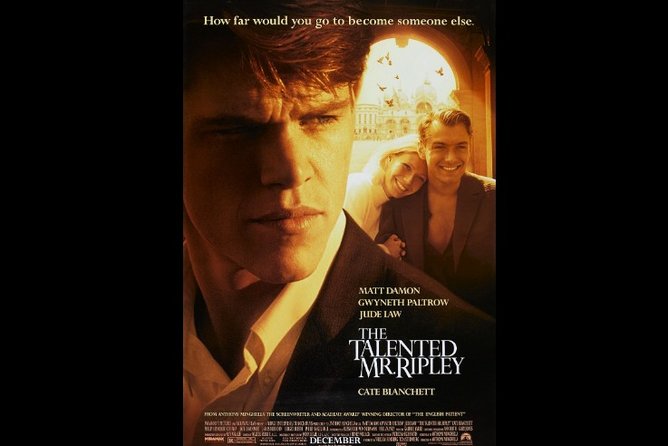
The Grand Canal stop connects to cinema history in a very direct way. Alexandre Promio filmed the first rundown in cinema history from a gondola in 1896, filming boats and men at work. Since then, the canal has appeared in dozens of films, including The Talented Mr. Ripley (1999) and The Merchant of Venice (2004).
You will see what makes the Grand Canal work on screen: the scale, the repetition of facades, and the way boats instantly create motion in a frame. If you only have limited time in Venice, this is one of the best “wow per minute” sections.
Mercati di Rialto, launches and Bond fiction
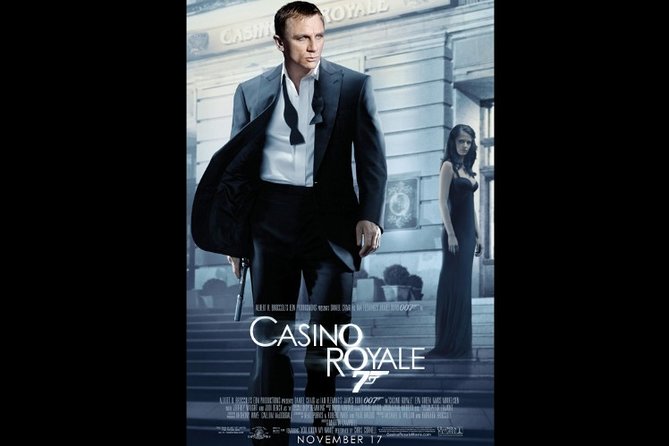
At the Rialto fish market area, the tour ties to The Tourist (2010), where Johnny Depp launches onto a stall from a terrace. Across the canal, the tour also references the palace-collapse storyline in Casino Royale (2006), with the key point that some of what you see on screen is movie fiction.
This is a good stop if you like spotting what’s real versus what’s staged. You get the action beat, without needing to accept everything as literal.
Chiesa di Santa Maria dei Miracoli, art marble meets Othello
This small church is decorated with polychrome marble, and it was selected for the wedding of Otello and Desdemona in Othello (1952). The tour also connects the nearby area to the fictional flower-shop job setting in Bread and Tulips (1999).
Because the church is compact and beautiful, you can take in details fast. That makes it a smart stop in a timed itinerary, and it also helps you appreciate why filmmakers like churches for their look and symbolism.
Scuola Grande di San Marco, modern series location
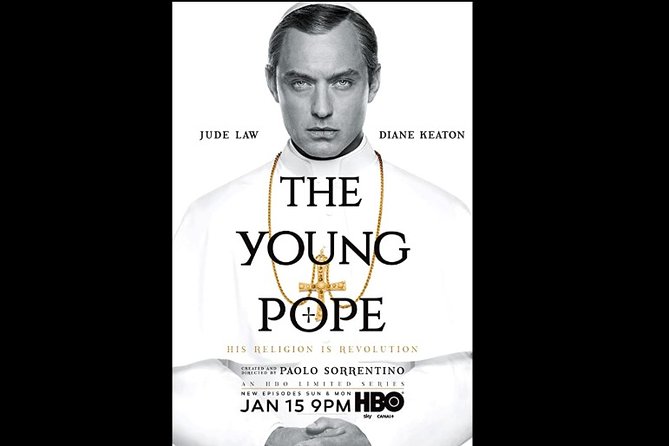
The route includes the Scuola Grande di San Marco, tied to the series The New Pope (2019) directed by Paolo Sorrentino and starring Jude Law.
This stop is a nice contrast. You’re not just tracing old classic cinema. You’re seeing how Venice keeps getting used for new productions, and how the look of historic buildings stays flexible on camera.
Ca’ Rezzonico, a palace that became Drax’s office
Ca’ Rezzonico, a civic museum today, is linked to Moonraker (1979). The palace is the fictional Drax’s office location.
The practical takeaway: you’ll see how filmmakers can transform real interiors and exteriors into a totally different story world. Even if you never step inside, the exterior scale gives you a sense of why it works.
Teatro La Fenice, performance then and now
Teatro La Fenice is connected to the start of Senso (1954), when a performance of Il Trovatore is staged there. The tour notes the theater’s devastating fire in 1996, the rebuild, and its reopening in 2003. It also explains the irony behind the nickname La Fenice, which is related to earlier destruction by fire in 1836.
This is the kind of stop where a little context changes everything. A theater is not just a building, it’s timing, sound, and ceremony. Once you connect it to how films use performance scenes, you’ll understand the choice.
Scala Contarini del Bovolo, a legend tied to Othello
This stop ties to a legend about Desdemona’s home. In Othello (1952), Orson Welles chose the palace as Brabanzio’s home, helping the location gain attention again.
It’s a fun moment because it blends cinema with local storytelling. If you like locations with myths attached, this one hits the sweet spot.
Campo Santa Maria Formosa, Spiderman’s fake damage
Campo Santa Maria Formosa is linked to Spider-Man: Far From Home (2019). The tour explains that the “destroyed” look in the film was fictional, and you get the chance to admire the original beauty of the corner.
This stop helps you see film-making as editing. You’re standing in the real space where the movie illusion was built, and that makes the comparison feel sharp.
Campo San Barnaba, Indiana Jones and a canal accident
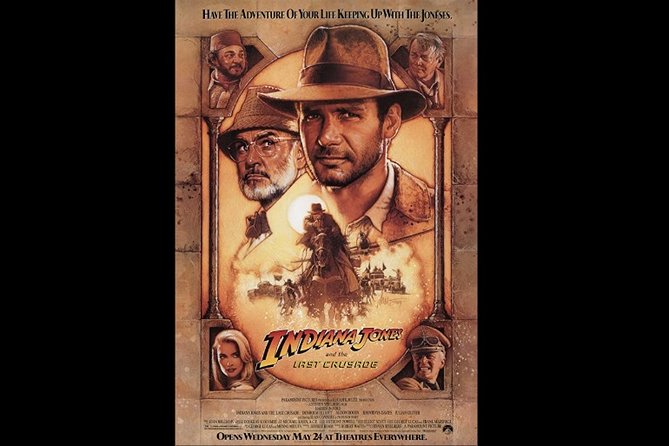
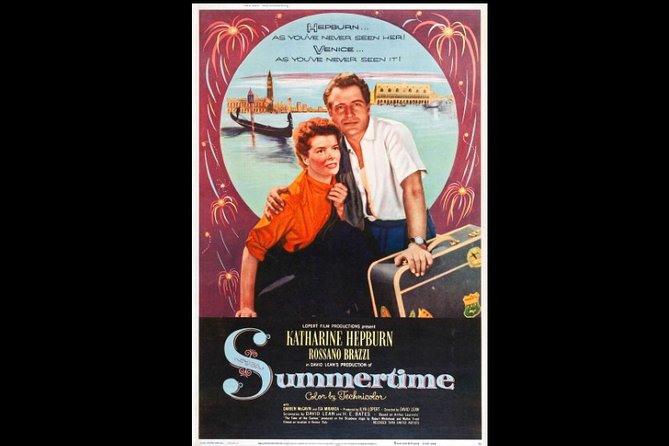
San Barnaba church is tied to Indiana Jones and the Last Crusade (1989), where Indiana Jones finds the X that never indicates the place to dig. The tour also connects the area to Summer Time (1955), in which Jane Hudson accidentally falls into the San Barnaba canal. It even references a later remake tie-in with The Italian Job (2003).
If you’re bringing movie fans, this is a strong “names you recognize” stop. It’s also a reminder that Venice film locations often revolve around entrances, stairs, and water edges.
Gritti Palace, luxury palaces and Woody Allen scenes
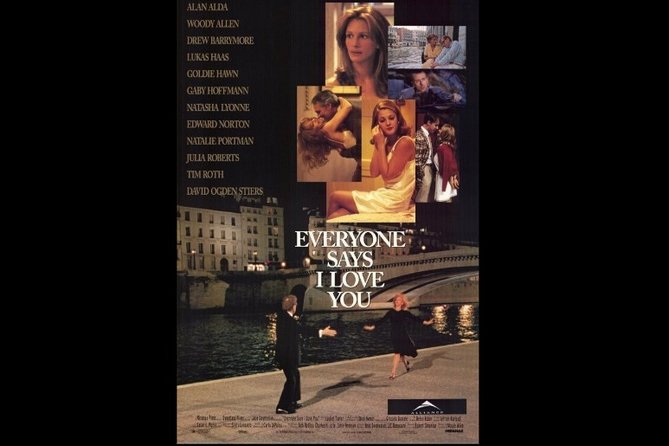
The Gritti Palace hotel is tied to Everyone Says I Love You (1996), chosen by Woody Allen for scenes. The tour also shares its earlier life as a Doge family palace and residence for Vatican ambassadors, plus famous guests like John Ruskin, Ernest Hemingway, and Somerset Maugham.
Even if you never step inside, this stop helps you connect Venice glamour to Venice institutions. It’s where Venice’s elite history shows up as lived space, not just cinematic lighting.
Basilica di Santa Maria della Salute, Tomb Raider confusion made useful
Santa Maria della Salute is linked to Lara Croft: Tomb Raider (2001), where the Illuminati sect gathers in what looks like a specific interior. The tour clarifies that the interior seen was actually the Painted Hall of the Old Royal Naval College in London, not this Venetian church.
That is a useful distinction. You learn how movies blend real exteriors with filmed interiors elsewhere. The stop also ties to The Talented Mr. Ripley (1999), where the church appears behind Ripley during a dialogue, with the terrace of the Hotel Westin Europa and Regina on the other side of the canal.
Piscina Sant’Agnese, jogging and torrid Venice energy
Piscina Sant’Agnese connects to Everyone Says I Love You (1996), where Julia Roberts jogs there. It’s also tied to Summer Time (1955), where Katherine Hepburn freshens up during the Venice portion of the story.
This is one of those Venice details that you might never notice on a normal walk. The setting is practical and real, and it shows how filmmakers use everyday corners for emotional beats.
Hotel Danieli, De Sica, Bond, and a honeymoon gone complicated
Hotel Danieli is referenced in multiple films and also tied to real historic figures like Wolfgang Goethe, Richard Wagner, and Honoré de Balzac. The tour connects Vittorio De Sica’s last movie The Journey (1974) starring Sophia Loren and Richard Burton, plus Moonraker (1979) where it appears as the hotel of Holly Goodhead. It also mentions Viaggi di Nozze (1995), where a first tragicomic wedding night plays out there.
If you like layered stories, this stop delivers. It’s cinema history overlaid on a building that has been part of Venice life for a long time.
Doge’s Palace and San Marco square, Bond, Brabanzio, and Ripley
The final big anchor is Doge’s Palace and the surrounding San Marco square area. The tour ties Moonraker (1979) to James Bond’s unusual gondola-hovercraft moments here. It also references Casino Royale (2006), where Bond’s hotel is shown with a view right on San Marco square, and it connects Orson Welles’s choice for a dramatic dialogue scene from Othello (1952). It also ties The Talented Mr. Ripley (1999) to final scenes at cafe tables in the Piazza and connects Paolo Sorrentino’s The Young Pope series to scenes shot in the square.
This is a fitting ending because it’s the most iconic visual area in Venice. The movie links make it feel less like a tourist stop and more like a set with repeated story themes.
What to expect during the walk (and how to make it better)
This experience is timed. Many stops are around 5-15 minutes, so you will get focused viewing rather than long wandering. If you like to linger and take photos, you’ll want to choose quick angles and keep moving between spots.
Wear shoes that handle old stone and short bursts of walking. Also, plan for sun or wind, since campi and canal-facing viewpoints do not protect you from weather. One family in the experience described an extreme heat day, yet still found the route enjoyable, which tells me the tour works even when conditions are not perfect.
If you care about matching scenes to buildings, watch for the guide’s cues. The tour uses a tablet with clips to help you compare what’s on screen with what you see in front of you.
Who this tour suits best
This tour is built for people who enjoy cinema details and want a way to explore Venice that feels more story-driven than standard sightseeing. It’s also a strong pick if your group spans ages or movie tastes, because the film list runs from classics like Senso and Othello to big modern titles such as Spider-Man and James Bond.
Since it’s a private activity where only your group participates, it also makes sense for couples who want a guided plan without the feel of walking in a large crowd.
Should you book the Venice Film Tour with Valerio?
If you’re choosing between a “see Venice” walk and a “see Venice as cinema” walk, this one leans hard into the second option. The value is in the explanations, the quick stop format, and the way Valerio Coppo connects landmark to scene so you actually notice things you’d otherwise rush past.
I’d book it if you want to cover major areas in about 2 hours and you like the idea of getting film clips paired with real architecture. I would skip it if you want a slow, no-rush stroll or if you’re not interested in movie references at all, because the tour is built around those connections.
FAQ
How long is the Venice Film Tour?
It lasts about 2 hours (approx.).
What language is the tour offered in?
The tour is offered in English.
What does the tour price include?
The tour includes a licensed tour guide. Tips or gratuity are not included.
Is pickup available?
Pickup is offered.
Are admission tickets required for the stops?
Admission tickets are listed as free for the stops included in the route.
Is this a private tour?
Yes. It is a private tour/activity, and only your group will participate.
What if the weather is poor?
This experience requires good weather. If it’s canceled due to poor weather, you’ll be offered a different date or a full refund.
Recently reviewed around Venice
- Yummy Cooking Class In Venice★ 4.9 · 122 reviews
- VIRTUAL MUSEUM: Creature di Gomma – Venice Vintage Toys★ 4.7 · 3 reviews
- Venice: City Tour & Skip the Line for St. Mark’s Basilica★ 4.1 · 84 reviews
- Your evening in Venice – Legends&Ghosts&Aperitif★ 4.7 · 79 reviews
- Walking Tour to Uncover the Hidden Venice★ 4.4 · 34 reviews
- Wine Tasting in Venice★ 4.6 · 42 reviews
- Venice: Watercolor Painting Class at the Prisons Palace★ 4.7 · 27 reviews
- Venice Walking Tour from St. Mark’s to Rialto Bridge★ 4.5 · 12 reviews
Tours, compared.
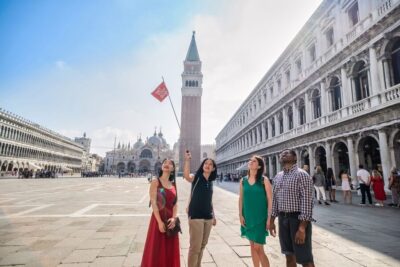
Doge’s Palace & St. Mark’s Basilica with Terrace Access Tour
Read our review →
Burano, Torcello & Murano Boat Tour w/Glassblowing
Read our review →
Murano and Burano Boat Tour with Glass Factory Visit
Read our review →
Murano, Burano and Torcello Half-Day Sightseeing Tour
Read our review →
Murano & Burano Islands Guided Small-Group Tour by Private Boat
Read our review →
Murano & Burano Panoramic Boat Tour w/ Glassblowing
Read our review →
Murano, Burano, Torcello, and Glass Factory Tour
Read our review →