
Reviewed · HIDDEN VENICE TOURS
Secrets of Venice Carnival and Life of Casanova Tour
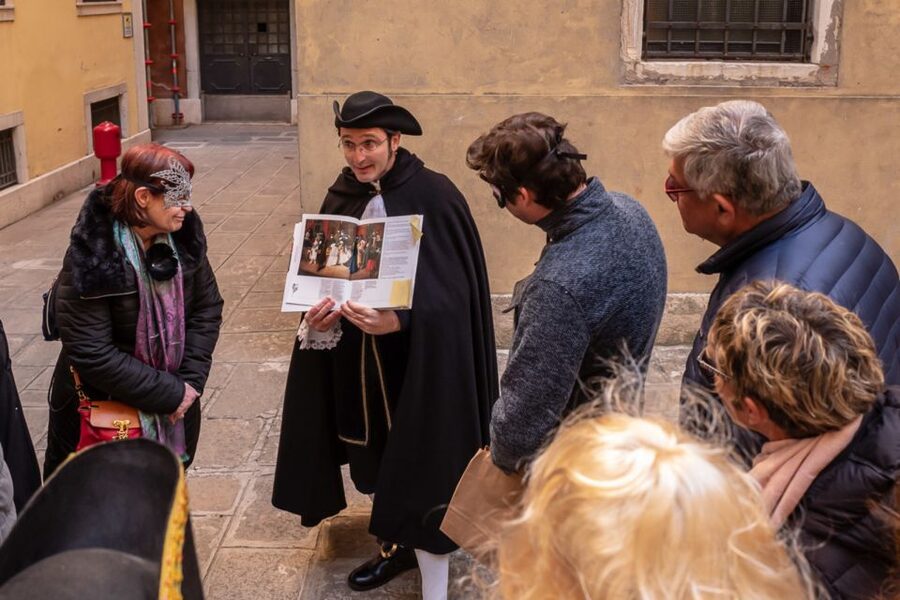
Casanova plus Carnival is an irresistible mix: you get a guided walk that connects 18th-century Venice to the city’s older court life, with Casanova stories flowing right through the alleyways. You also get hands-on mood, since the guide shows up dressed in traditional Venetian Carnival costume, and the tour includes time to talk about masks and how they’re made.
What I like most is how the route stays human sized, with stop-and-story pacing in the back streets around Teatro la Fenice, and how the ending is a real Venetian break with a hot cappuccino and a Carnival-only frittelle. A second win is the mix of characters, from Casanova to Giorgio Baffo, plus context about the Ridotto and the courtesan world that made Venice feel like it never switched off.
One thing to consider: this is a standing-and-walking experience in busy narrow streets. In rain or with larger groups, it can get hard to hear every word, so plan to stay close and keep your group together.
Key highlights that make this tour worth your time
- Casanova storytelling in real locations, including stops tied to his early life in Venice
- Venice Carnival mask history, including why masks were used to hide identity
- How traditional masks are made, explained by your guide during the walk
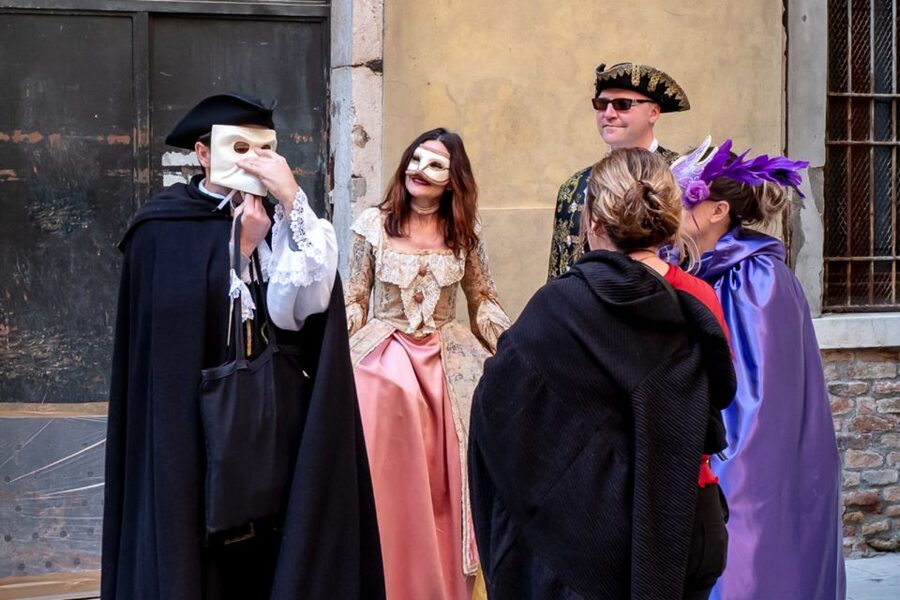
- 17th-century costume spotting, plus glimpses of the grand-ball style crowds in private palaces
- Ridotto and Venetian social life, including the casino atmosphere where Casanova met aristocracy
- A proper food stop at Le Café Venezia, with hot cappuccino and Carnival frittelle
Casanova Meets Carnival: What This 2-Hour Walk Feels Like
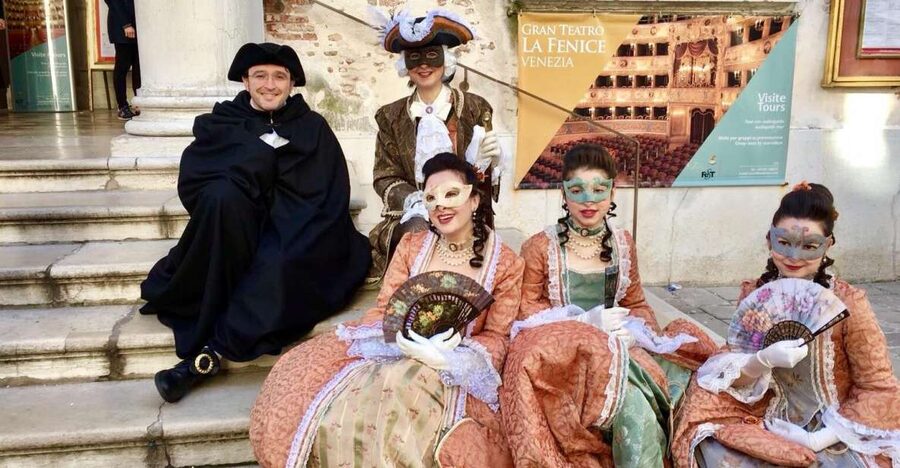
This is a Venice walking tour built around one question: how did Carnival help Venice become a stage for flirtation, disguise, and social power? You start around Teatro la Fenice, then move through small calli (alleys) where the city’s layout does some of the work for the story. The twists and turns make the guide’s history feel less like a lecture and more like you’re moving inside a long-running play.
The tour’s big hook is that it’s not just about fancy masks. It links the Carnival tradition to the 18th-century world of Giacomo Casanova, including the idea that Carnival made anonymity possible, which in turn shaped how people met, gambled, and showed off status. Along the way, you’ll hear how Casanova is portrayed as a lover, adventurer, extravagant figure, and (per the tour’s framing) also a Freemason and connected to institutions of the day.
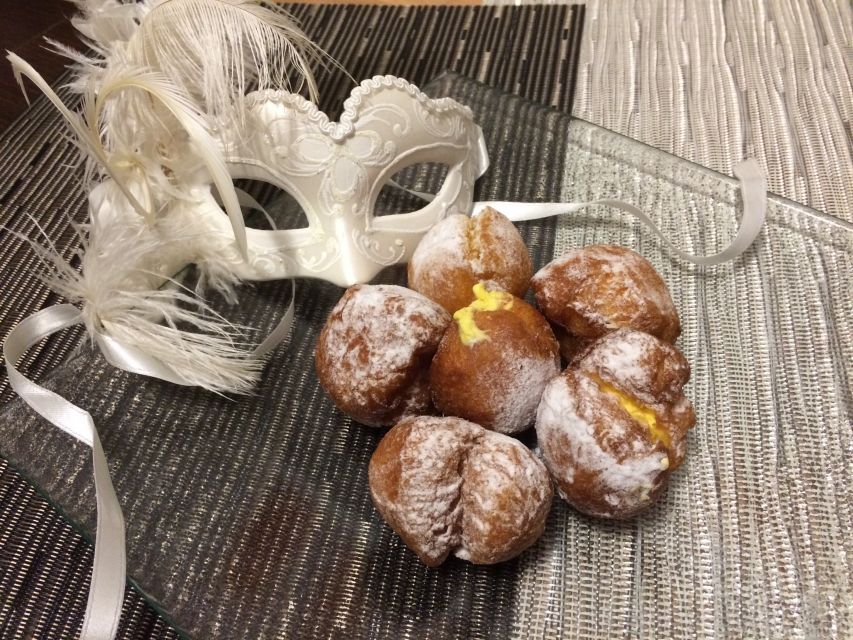
And yes, it ends with a food-and-coffee payoff. A lot of Venice tours stop with a vague suggestion to grab a snack later. Here, you finish in a typical café for a hot cappuccino and a Venetian Carnival cake called frittelle, made only during Carnival season.
More off-the-beaten-path tours of Venice:
- Venice: Rialto Bridge & Offbeat Unusual Venice Walking Tour
★ 4.2 · 3,538 reviews - Tour of The Real Hidden Venice
★ 5.0 · 2,006 reviews - Venice: Off the Beaten Path Private Gondola Ride
★ 4.3 · 703 reviews
Before You Go: Meeting at Campo della Fenice and Getting There Smoothly
Meeting point matters in Venice because signage can be confusing and routes can feel slippery in winter rain. You meet in Campo della Fenice, right in front of Teatro la Fenice. The directions provided are very specific if you’re coming from St Mark’s Square, and they’re worth following carefully.
If you’re starting from St Mark’s Square, the route is essentially:
- Pass under the arches near the Correr museum
- Continue along salisaza san Moisè
- Cross the bridge in front of hotel Bauer, then head onto calle larga XXII Marzo
- Take the second right onto calle della Vesta
- Cross the small bridge, and you’ll see the well in campo della Fenice about 50 yards ahead
For your comfort, bring a jacket you can layer. This isn’t a museum in climate control, and it’s outdoors through narrow streets. Also, oversize luggage isn’t allowed, so travel light.
One more practical note: the tour is not suitable for wheelchair users. The streets and walking segments are too tight and uneven to be friendly for mobility devices based on how these old Venice routes usually work.
Your Guide in Costume: How the Tour Starts and Sets the Tone
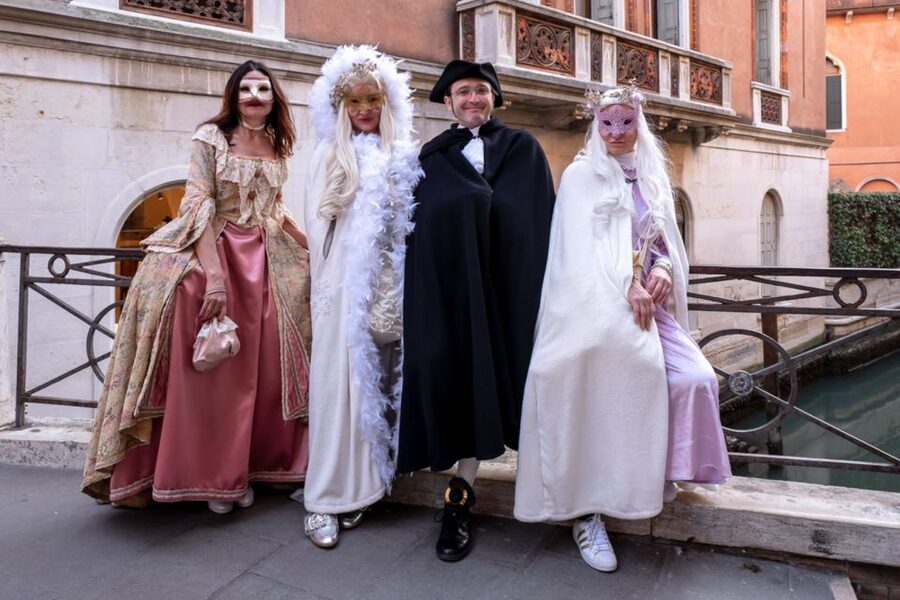
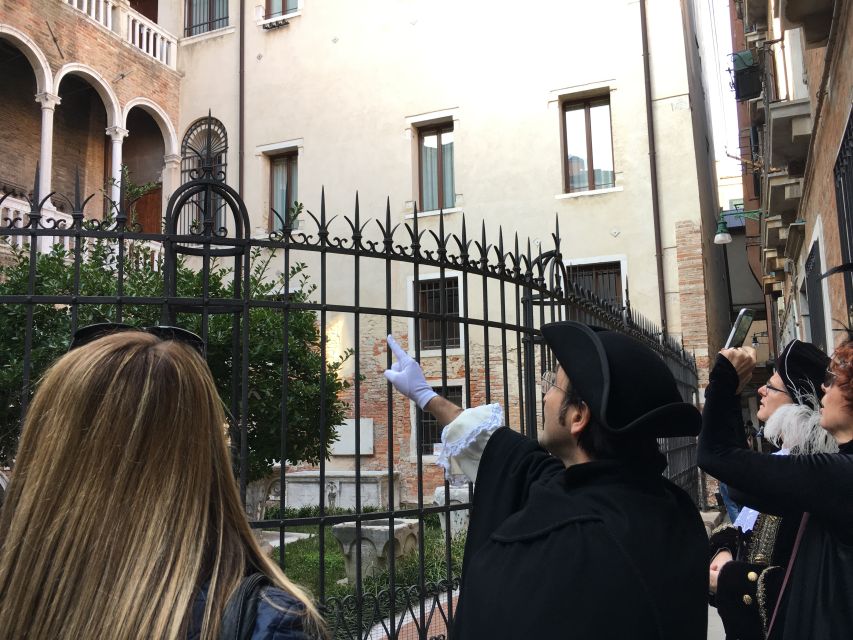
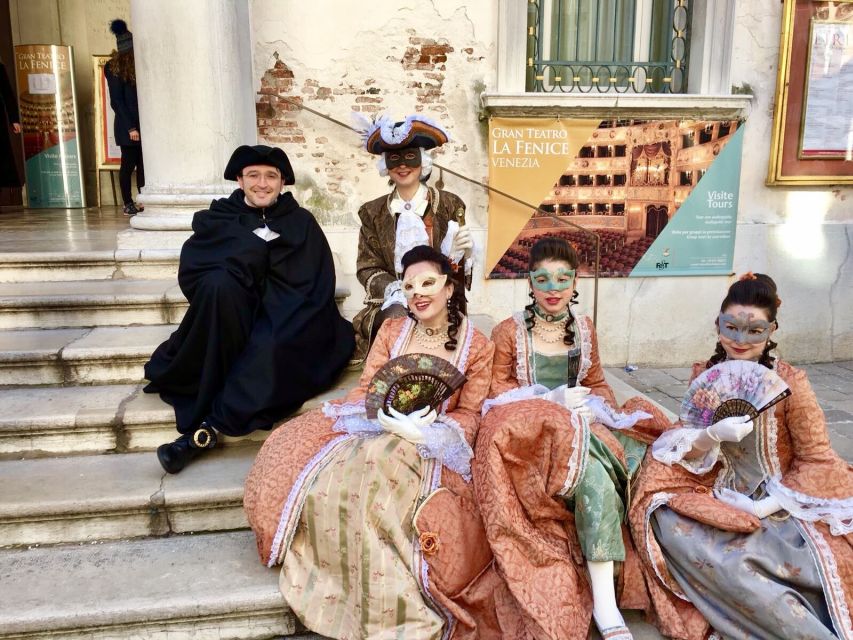
Right away, you’ll know this isn’t a dry history walk. Your English-speaking guide dresses in traditional Venetian Carnival costume to get the atmosphere right from the start. That matters because the tour’s goal is not only facts, it’s the feeling of Carnival Venice: performance, disguise, and social ritual.
Your guide will introduce:
- The story of the Venice Carnival, then and now
- The history of masks, including how they helped hide identities
- A quick look at the kinds of costumes people used to wear for parades and events
You’ll also learn what to watch for as you walk. Carnival isn’t only about pretty faces and feathers. It’s about rules and roles, and those change depending on the setting, whether you’re outside in the streets or inside a private palace for one of the many grand-ball events.
A small detail that helps: your guide’s costume is also a visual anchor. When you’re in Venice crowds, that makes it easier to keep track of who’s leading and where you’re going next.
Following Casanova Through Venice: From San Samuele to the People Who Shaped Him
Casanova is the spine of this tour. The walk follows the path of his life in Venice, including his early years in the San Samuele area. You’ll hear how he moved in circles that valued pleasure, curiosity, and social maneuvering.
Two character connections stand out because they make the story feel local:
- You’ll pass Casanova’s house
- You’ll also pass the house of the poet Giorgio Baffo, who introduced the young Casanova to worldly pleasures
You don’t just hear about these people from a distance. The alleys and the way streets funnel pedestrians help you understand how private life and public life could overlap in a city like Venice. In a place where one wrong turn can feel like you’re stepping into a different decade, these “footsteps” become more than a metaphor.
This is also where the tour’s tone becomes a bit playful. Casanova gets framed as a larger-than-life figure, but with enough context to show why Venice was the right city for that kind of reputation to grow. The guide ties his stories back to Venetian social life, including entertainment and the kind of risk-taking that Carnival encourages.
Same city, a very different kind of day on the water:
- Venice: Doge’s Palace Reserved Entry Ticket
★ 4.6 · 42,716 reviews - Venice: Grand Canal Gondola Ride with App Commentary
★ 4.1 · 18,908 reviews - Boat Trip: Glimpse of Murano, Torcello & Burano Islands
★ 4.3 · 15,699 reviews - Venice: Grand Canal by Gondola with Live Commentary
★ 4.1 · 13,681 reviews
Palazzo Contarini del Bovolo and Campo Santo Stefano: Why These Stops Matter
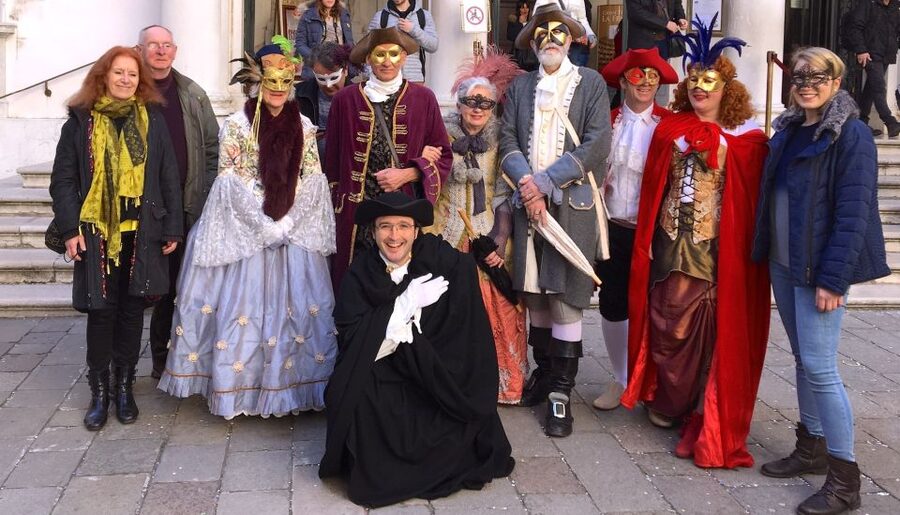
The tour includes guided time at Palazzo Contarini del Bovolo and Campo Santo Stefano. Even without a big museum-style stop, these are the kind of places that help Venice history click into place.
At the palazzo stop, you’ll get a guided look that supports the tour’s theme: Venice as a city where wealth and art architecture shaped how people lived. Since the tour is also talking about grand balls and luxury costumes, that link makes sense. You’re not only hearing about the settings, you’re standing near a piece of the backdrop where those events and social displays would have felt at home.
Then Campo Santo Stefano works as a “reset” space. Campos are open areas in Venice, and they give you a place to breathe and to listen before the next stretch of calli. It’s a useful pacing tool, especially since the tour involves standing at times and moving at a walking pace for a couple of hours.
The main drawback here is simple. Some people find certain stops long enough that you get tired standing. If that’s you, bring a small patience strategy: take micro breaks when your guide pauses, and keep layers handy if the weather is cold.
Masks, Tricks of Identity, and How They’re Made
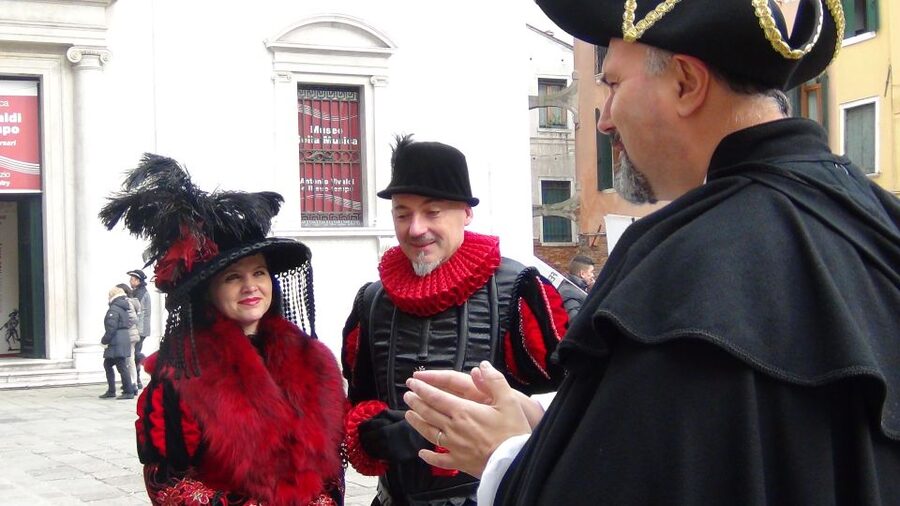
If you only come for the party version of Venice, you’ll miss the most interesting part. Carnival masks were historically about identity hiding, and the tour explains that concept as part of what made Carnival work as a social system.
You’ll learn:
- The history of masks and why they mattered for privacy and anonymity
- How traditional masks are made, with your guide pointing out what to look for as you see examples
This section is valuable because it connects art to social behavior. It’s not only about aesthetics. Masks shaped who could approach whom, how people could test boundaries, and how a city could tolerate a certain level of theatrical behavior in public.
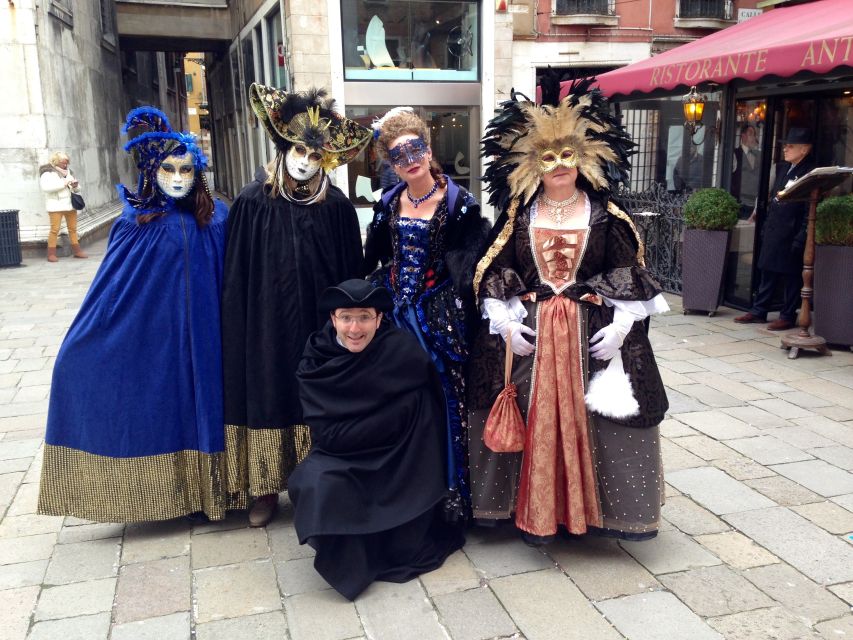
It’s also where the Carnival costumes start to feel less random. When your guide describes the function of masks, the costumes you see along the way stop being just “pretty.” They become part of a code.
Ridotto, Courtesans, and the Social Machine Behind the Fun
One of the tour’s most specific story threads is the Ridotto, described as the first casino in Venice. The point isn’t only that there was a casino. The point is what kind of people went there and what it signaled about Venetian society.
You’ll hear that Casanova met the Venetian aristocracy through this kind of entertainment space. Then the guide adds another layer: the role of courtesans in making the city feel animated and alive.
This matters because it shows you the logic behind Venice’s reputation for pleasure. It wasn’t only nightlife for entertainment’s sake. It was a social marketplace, and Carnival acted like a high-visibility season when roles loosened and stories moved faster.
In a city where tourism sometimes flattens everything into postcard moments, this kind of context helps you read Venice differently. You start noticing how public spaces and private palaces both mattered, just in different ways.
Cappuccino and Frittelle at Le Café Venezia: The Right Kind of Finale
The tour ends at Le Café Venezia, a typical café about a 10-minute walk from St Mark’s Square. This is a smart finish: it gives you a warm landing after walking narrow streets and standing through stories.
What you get is straightforward and worth timing:
- A hot cappuccino
- A Venetian Carnival frittelle, a sweet cake made only during the Carnival period
This end stop also tends to be social in a good way. In past groups, guides have been happy to chat with people after the tour, which is great when you want a few practical tips about where to eat next or how to keep enjoying the city after the crowds.
My one caution is the practical one: since this is the end point and not a return to the original meeting area, don’t assume you’ll be walked back to Teatro la Fenice. Plan your next step from where you finish near St Mark’s.
Price and Value: Is $88 for a 2-Hour Tour Fair?
At $88 per person for about 2 hours, the value comes from the combination, not from any single part.
Here’s what you’re paying for, in plain terms:
- A live English-speaking guide who tells the Casanova and Carnival story while you walk through Venice
- Museum-adjacent context without the museum fatigue, since you’re moving from story stop to story stop
- The Carnival-themed focus (masks, costume styles, and why anonymity mattered)
- A built-in food moment with cappuccino and frittelle, both included
If you only want a quick “see some masks” stop, you may feel like it’s too much. But if you want a real narrative thread through Venice, plus a warm café break at the end, the pricing makes more sense.
One more reality check from experience in Venice: group size can affect how much you absorb. Some past groups found it hard to hear the guide clearly in rain and cold, especially with larger numbers and umbrellas. If audio is important to you, arrive early, stay close to the guide, and keep an eye on the person leading the group rather than getting distracted by street views.
Who This Tour Suits Best (And Who Might Prefer Something Else)
This tour is a strong fit if:
- You like history that feels tied to streets, not just dates
- You’re curious about Casanova, Carnival masks, and the social side of Venice
- You enjoy walking in back streets and want a guided reason to pay attention
It’s less ideal if:
- You dislike standing for parts of a tour
- You need wheelchair access
- You get overwhelmed in busy crowds and want lots of space
If you’re a “museums only” traveler, this might not be your top pick. But if you like stories, costumes, and the kind of Venice that still feels slightly secret, it’s right in the sweet spot.
Should You Book This Secrets of Venice Carnival and Life of Casanova Tour?
I’d book it if you want a Casanova-focused Carnival walk that mixes costume visuals with real context about masks, social life, and the entertainment spaces of Venice. The included cappuccino and frittelle are a genuinely satisfying finish, and starting near Teatro la Fenice makes the whole experience easy to plug into a St Mark’s day.
Skip it only if you know you get frustrated when groups are large or if you hate outdoor walking. And if Carnival weather is rough, dress for the conditions, because you’ll be outside through narrow streets for the full experience.
If you want one practical move before you go: bring a little patience for pacing. This tour works best when you stay with the group and let the guide’s story unfold step by step.
FAQ
Where does the tour meet?
The meeting point is Campo della Fenice, in front of Teatro la Fenice. The tour guide will be looking for you there with a sign showing the tour name.
How long is the tour?
The duration is 2 hours. It includes a Carnival walking tour of about 1.5 hours plus time to finish at the café.
What does the tour include?
It includes an English-speaking guide (dressed in a Carnival costume) and a cappuccino and frittella at the end in a local coffee shop.
Where does the tour end?
The tour finishes at Le Café Venezia. It is about a 10-minute walk from St Mark’s Square.
Is hotel pickup included?
No. Hotel pickup and drop-off are not included.
What food is included at the end?
You’ll get a hot cappuccino and a Venetian Carnival cake called frittella.
Can I wear a Carnival costume or mask?
Yes. It’s encouraged. You can come in Carnival costume, or wear a cape with a mask.
Is the tour suitable for wheelchair users?
No. The tour is not suitable for wheelchair users.
Is there a luggage limit?
Oversize luggage is not allowed.
What is the cancellation policy?
You can cancel up to 24 hours in advance for a full refund.
Recently reviewed around Venice
- Skip the Line St. Mark’s Basilica Tour★ 3.5 · 5 reviews
- Shared Departure Transfer: Venice Hotels to Venice Train or Bus Station★ 3.5 · 73 reviews
- One-Day Venice: Skip-the-Line St. Mark’s Basilica, Walk & Gondola★ 4.0 · 20 reviews
- Another Side of the City: Discovering Authentic Venice★ 5.0 · 57 reviews
- Self Guided Tours Venice With 100 Captivating Audio Stories★ 5.0 · 3 reviews
- Secret Venice, an unusual walk – Private Walking Tour★ 5.0 · 61 reviews
- The Secret Venice + Cicheti & Wine Private Tour★ 5.0 · 21 reviews
- Venice Walking Tour with Audioguide on Your Smartphone★ 4.0 · 19 reviews
Hidden Venice Tours, compared.
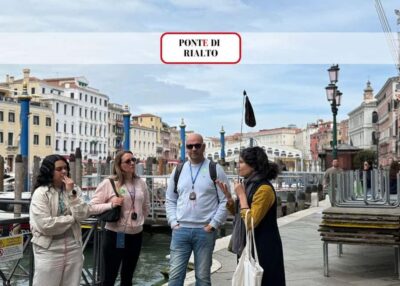
Rialto Bridge & Offbeat Unusual Venice Walking Tour
Read our review →
Venice Private Gondola Ride: Explore Hidden Canals and Sights
Read our review →
Venice 3,5 hrs tour: Doge’s Palace, St Mark’s and Hidden Gems
Read our review →
Local Secrets of Venice Tapas & Wine Walking Tour
Read our review →Browse the lists this tour appears in