
Reviewed · VENICE
Biennale Architettura 2025 Intelligens Naturale Artificiale
This guided look at Biennale Architettura 2025 is interesting because it connects architecture with the real questions behind technology, nature, and collective thinking. I like how the theme is spelled out clearly, Intelligens. Naturale. Artificiale. Collettiva., not just treated like marketing. I also like that you get an expert guide for just the right amount of time. One drawback to plan around: the tour is only two hours, so you have to choose Giardini or Arsenale, then decide if you want to add the second area later.
You’ll start at Giardini della Biennale and spend the bulk of the time on a guided walk through the exhibition spaces, plus a quick stop at the visitor area to get oriented. If you’re short on time, this is the kind of structure that keeps you from wandering in circles and missing the points. If you have plenty of time and want to roam alone, you might feel slightly constrained by the schedule.
Key Things You’ll Get From This Biennale Tour
- A theme you can explain afterward, tying intelligence, nature, technology, and shared decision-making to what you see
- Expert context at the right speed, so national pavilions and installations make sense fast
- Giardini or Arsenale in 2 hours, with an optional add-on if you want both
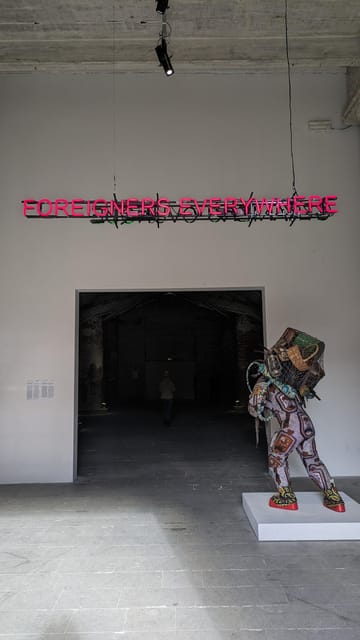
- National pavilions plus big installations, so you see both the curated thinking and the scale
- Private guiding in German, English, Italian, or Spanish, not a one-size-fits-all script
Biennale Architettura 2025 and the real meaning of the theme
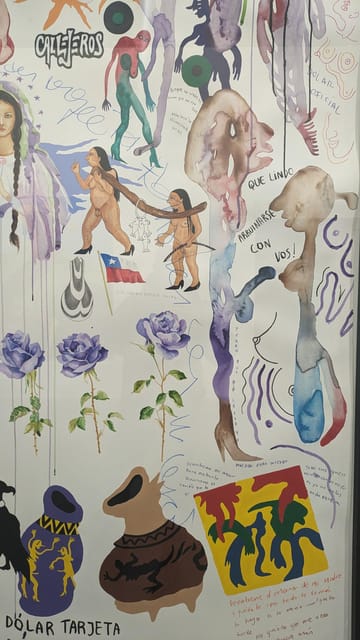
The heart of this tour is the exhibition theme: Intelligens. Naturale. Artificiale. Collettiva. That phrase matters because it frames what you’re walking through. You’re not just looking at buildings and models. You’re looking at how design decisions get made, who gets included, and what happens when tools like AI meet the physical world, like water, land, and materials shaped by human hands.
I find it helpful that the guide treats the theme as a lens. So when you step into a pavilion or an installation, you can ask better questions. Is the project proposing a new way to work with climate and resources? Is it imagining technology as a partner, or a problem? Is it pointing toward shared systems, not just one designer’s idea?
Also, you get a practical education in how the Biennale is organized. That matters more than it sounds, because the site can feel like multiple worlds. Giardini and Arsenale have different vibes, and national pavilions can be easy to miss if you don’t know what you’re looking for.
Other things people book in Venice:
- Venice: Doge’s Palace Reserved Entry Ticket
★ 4.6 · 42,716 reviews - Venice: Grand Canal Gondola Ride with App Commentary
★ 4.1 · 18,908 reviews - Boat Trip: Glimpse of Murano, Torcello & Burano Islands
★ 4.3 · 15,699 reviews
Giardini vs Arsenale: how to choose without wasting time
This tour covers either the Giardini area or the Arsenale area. That’s not a limitation, it’s a time management tool. You get two hours total, and the guide focuses that time on the venue you pick.
If you’re deciding what to do on your Venice day, think in terms of “coverage” versus “energy.” Choosing one venue for the guided portion is smart when you want clarity and direction. You can still explore on your own afterward, but you’ll have a mental map of how the theme connects the pieces.
If you want the full Biennale experience across both sites, you can arrange a visit to the second venue with an additional two hours, either on the same day or another day. That flexibility is especially valuable because Venice travel is rarely predictable. Weather can shift, crowds can spike, and your interest level can change once you start seeing the installations in person.
Where should you go first? If you prefer an introduction that helps you orient quickly, start with the venue that feels more convenient for your day. If one area is farther from where you’re staying, choose the nearer one for the guided tour so you’re not spending energy on logistics.
Your 2-hour flow: visitor orientation, then the real walk
The schedule is built to get you into action quickly. You meet at the main entrance at Giardini or at Arsenale, depending on which venue you selected. Then there’s a short orientation step at the visitor center, about 10 minutes, which is basically your “start here” moment.
That short stop is useful because the Biennale can reward informed looking. The guide can explain what you’re about to see, what “to notice” in the architecture and design, and how the Biennale’s structure works. Without that, you might spend your first 20 minutes thinking, Where am I supposed to look first?
After orientation, the guided portion is a walk of about 110 minutes. This is where the guide adds value. You’re not just moving between spaces. You’re getting meaning assigned to what you see, including how projects connect to sustainability, inclusivity, and innovation in architecture. And because it’s private, the guide can steer the pace based on your interests.
You also get flexibility. The tour is described as personalized private guiding with customization based on your preferences. That means if you care more about the relationship between nature and technology, you can lean into that. If you’re more interested in how designers build collective solutions, the guide can frame what you see accordingly.
What to pay attention to in exhibitions, installations, and national pavilions
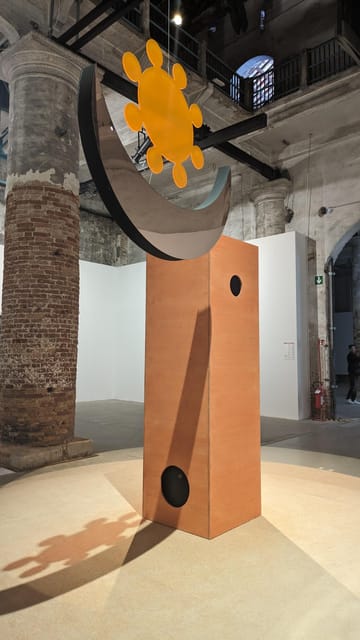
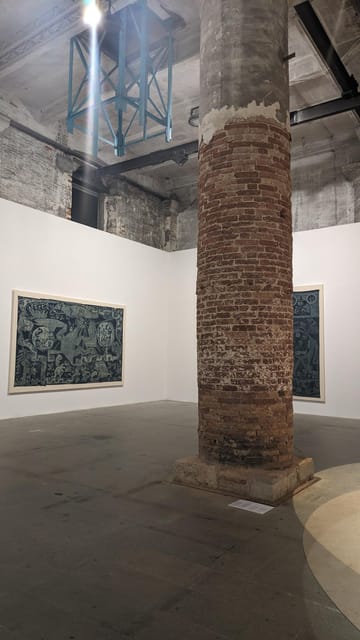
The Biennale Architettura experience here is not only about “pretty stuff.” It’s about ideas you can actually use to interpret modern architecture and design. The tour includes cutting-edge exhibitions at Giardini or Arsenale, plus installations that push beyond what most people expect architecture exhibitions to look like.
One of the biggest practical benefits of a guided structure is that you stop treating each pavilion as an isolated room. Instead, you start connecting them. The guide highlights projects by renowned architects and designers from around the globe, and you get a sense of how international thinking is being translated into place-specific forms.
National pavilions are especially important in this kind of tour because they offer different perspectives on the same theme. You might see one country focusing on technology as infrastructure, while another leans more toward ecology, craft, or social systems. With a guide, you’re more likely to notice patterns and contrasts instead of just collecting photos.
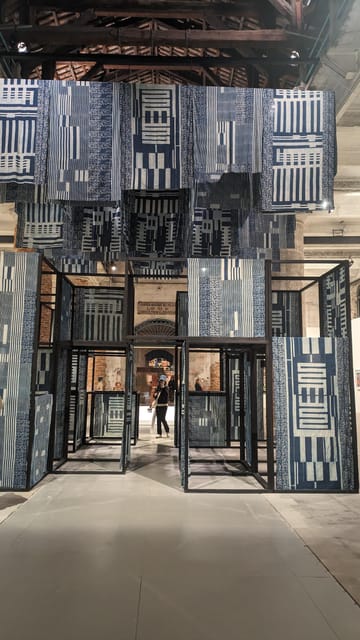
And then there are the monumental installations beyond traditional boundaries of artistic practice. Those pieces can be overwhelming if you don’t know how to approach them. A guide can help you slow down in the right spots, interpret scale and materials, and understand how the installation fits into the larger exhibition conversation.
A simple tactic: when you enter a pavilion space, pick one question to carry with you. For this Biennale, three good ones are: How does this work with nature? How does it use technology, if it does at all? Does it suggest collective thinking, or does it center only individual authorship?
Same city, a very different kind of day on the water:
- Venice: Grand Canal by Gondola with Live Commentary
★ 4.1 · 13,681 reviews - Venice: La Fenice Opera House Entry Ticket with Audio Guide
★ 4.6 · 11,742 reviews - Doge’s Palace & St. Mark’s Basilica with Terrace Access Tour
★ 4.7 · 10,697 reviews - Venice: Burano, Torcello & Murano Boat Tour w/Glassblowing
★ 4.4 · 10,245 reviews
The guide matters: what you can expect from Valerio Coppo (Detourist)
The listed experience provider is Valerio Coppo from Detourist. One past participant experience also highlights what matters most in a short tour: the guide’s communication and ability to transfer context quickly.
That same experience notes that Valerio speaks very good German and is friendly and charming while explaining ideas clearly. It also points out that, in two hours, you can learn what would be much harder to piece together on your own. That’s exactly what you want from a guided Biennale visit: not just facts, but interpretation that helps the exhibition click in your mind while you’re still standing in front of the work.
Of course, language choice matters. The tour can be conducted in German, English, Italian, or Spanish, so you can match the language to your comfort level and understanding. When you can follow the guide easily, you get more out of the theme and the connections.
Pricing and value: is $162 per person actually fair?
The price is $162.00 per person for a two-hour private guided tour. That might sound steep until you remember what you’re buying: time with a licensed local guide, plus private guiding tailored to your interests.
The big value piece is not just that someone talks to you. It’s that you get interpretation in real time. For a Biennale, you can easily lose time. You’ll either wander without context, or you’ll skim and miss the meaning. Paying for a guide is often cheaper than spending half a day confused, then trying to fix it with rushed self-guided wandering.
Also, you’re not paying for “just admission.” The Biennale ticket is not included. You can buy it on-site or online separately. What you are paying for is the guide’s time, expertise, and the focused route through the venue you choose.
If you’re traveling with only one or two people, the private factor can be especially good value because you’re not forced into a large group pace. And because the tour is described as personalized, you’re more likely to get the kind of visit you want rather than a generic pass through the highlights.
Timing and how to get the most from a 2-hour window
You get two hours total, and starting times can vary based on availability. That matters because the Biennale is a place where timing affects your experience. If you pick a slot that keeps you from racing across Venice, you’ll get more from the guide and the exhibitions.
The itinerary is straightforward. You’ll do the short visitor center orientation, then spend most of your time on a guided walk through the selected venue. Because it’s private, you’re not stuck with a fixed group rhythm that ignores your preferences.
One more planning idea: decide in advance whether you want the second venue as an add-on. If you know you’ll come back later, you can keep your first guided tour focused and then return for more exploration. If you only have one day and you’ll be tired later, you might prefer one guided venue now and accept that the second venue will be your “future visit” mission.
Languages, private touring, and wheelchair access
This is a private group experience. In practice, that means it’s just you and your group, and on selected days a small group may be planned instead. That privacy is a big deal for a theme like this, because it’s easier to ask questions and steer the pace when the guide can focus on fewer people.
Language options are German, English, Italian, and Spanish. If you’re even slightly unsure about your ability to follow spoken English or German, choose your strongest language. The Biennale’s ideas can be technical, especially when projects touch technology and sustainability. Better comprehension makes the tour more rewarding, not less.
Wheelchair access is supported. The tour is described as wheelchair accessible, and a wheelchair-accessible private tour can be arranged upon request. If you have any special needs, you should inform the operator beforehand so they can do their best to accommodate. For any museum-style site, that kind of heads-up saves time and stress on the day.
Practical tips so you actually enjoy the Biennale, not just survive it
Here’s how I’d set yourself up for success in a two-hour guided tour of a big festival like this.
First, wear comfortable shoes. A “walk” here is a real walk, around 110 minutes of it, plus the short orientation step. If your feet hurt early, you’ll stop caring about the details the guide is trying to explain.
Second, arrive with at least one personal interest. Architecture and design can branch into materials, social systems, climate planning, and new tech. You don’t need to know everything. Just pick one angle so the guide can aim your route through the pavilion conversation.
Third, be ready to look twice. The first glance helps you place the work. The second glance helps you notice meaning. If the guide points out a theme connection, take 20 seconds to look again at that same space or model. That’s when the ideas usually click.
Fourth, decide how you’ll handle the admission ticket. The guide tour price does not include it, so plan to purchase the Biennale ticket separately either online or on-site. If you wait until the last moment, you risk losing time right when you want to start thinking clearly.
Should you book this Biennale Architettura 2025 tour?
Book it if you want a fast, structured way to understand how the theme Intelligens. Naturale. Artificiale. Collettiva. shows up in real architecture and design. This is a strong choice if you only have a couple of hours, if you want context for the national pavilions, or if you prefer private guiding in your language.
Skip it if you have a full day and you want complete freedom to wander without a route. Also skip it if you plan to spend much longer than two hours in one corner of the exhibition. A guided tour is designed for focus and clarity, not endless roaming.
If you’re on the fence, here’s my practical rule: if you’re willing to choose Giardini or Arsenale and want to understand what you’re seeing within that short window, this tour is good value. If you want to experience everything from scratch with no guidance, you may prefer self-guided tickets and your own pace.
FAQ
Where does the tour start?
The tour meets at the main entrance at Giardini della Biennale or at Arsenale, depending on which venue you choose.
How long is the guided tour?
The tour lasts 2 hours in total.
Do I need a Biennale admission ticket?
Yes. Admission to the Biennale is not included. You can purchase tickets on-site or online.
Is this tour offered in multiple languages?
Yes. The live tour guide can conduct the tour in German, English, Italian, or Spanish.
What’s included in the price?
You get a licensed local guide, a personalized private tour at Giardini OR Arsenale, expert insights into the history of the exhibition and pavillions, and customization based on your preferences.
Is this a group tour or private?
It’s a private group experience, meaning it’s only you and your group. On selected days, a small group may be planned.
Can I visit both Giardini and Arsenale?
The two-hour tour includes a visit to either the Gardens (Giardini) or the Arsenale venues. You can arrange a visit to the second venue with an additional two hours, either the same day or on subsequent days.
Is the tour wheelchair accessible?
The tour is described as wheelchair accessible, and a wheelchair-accessible private tour can be arranged upon request. Inform the operator in advance if you have special needs.
Recently reviewed around Venice
- Skip the Line St. Mark’s Basilica Tour★ 3.5 · 5 reviews
- Shared Departure Transfer: Venice Hotels to Venice Train or Bus Station★ 3.5 · 73 reviews
- One-Day Venice: Skip-the-Line St. Mark’s Basilica, Walk & Gondola★ 4.0 · 20 reviews
- Another Side of the City: Discovering Authentic Venice★ 5.0 · 57 reviews
- Self Guided Tours Venice With 100 Captivating Audio Stories★ 5.0 · 3 reviews
- Secret Venice, an unusual walk – Private Walking Tour★ 5.0 · 61 reviews
- The Secret Venice + Cicheti & Wine Private Tour★ 5.0 · 21 reviews
- Venice Walking Tour with Audioguide on Your Smartphone★ 4.0 · 19 reviews