
Reviewed · WORKSHOPS
Creative Venice: Artisan Excellence and Craftsmen Workshops
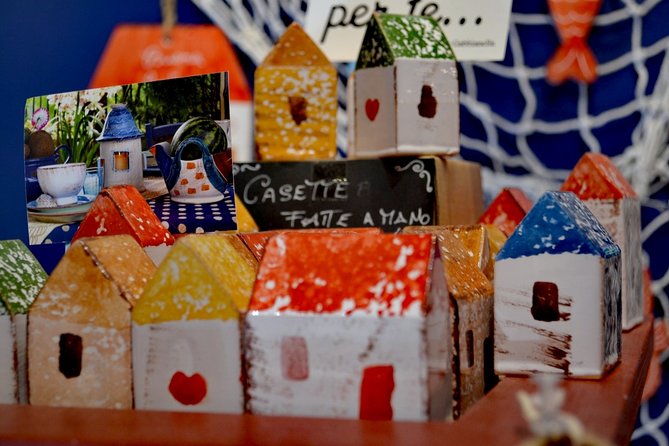
Venice is famous for art, sure, but what I like about this tour is the angle: you get a bottega-to-bottega day inside working places, not just viewpoints. You’ll see how Venetian makers turn raw materials into objects you can actually imagine using every day. The best part is that the guide, Valerio Coppo (deTourist Venice), keeps it lively and practical, so it feels like learning how Venice works.
Two things I really love: the range of crafts covered, from textiles and paper to shoes and Murano glass, and the chance to watch people making things by hand instead of only seeing finished souvenirs. The one possible drawback is that the pace is brisk, with short visits at each stop, so if you want long, slow demonstrations, you may want to follow up with more time in the shops that hit you hardest.
Key Things I’d Prioritize on Creative Venice

- A real maker mindset: You’re not just sightseeing, you’re watching craft choices in action.
- Multiple crafts in one walk: textiles, ceramics, shoes, paper art, jewelry, glass, and more, all in a single route.
- Valerio Coppo’s connections: the tour is designed to bring you places you might not find on your own.
- Short, punchy stops: about 15 minutes per location, so you sample a lot without going all day.
- No hard-sell pressure: the tour is presented as education first, not a shopping mission.
A Walk Through Venice, Built Around Craft Not Crowds
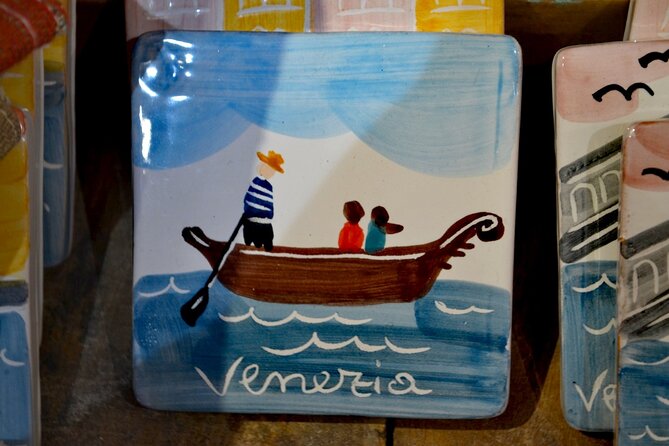
This is the kind of Venice experience that makes you look at everyday items differently. You’ll start in the city center and move through neighborhoods where artisans still build things using methods that are hard to replicate in factories. That shift in focus matters. Venice becomes less about photos and more about process.
What I find smart here is the mix of “you can understand this right away” crafts and “wait, how do they do that?” crafts. A hat shop is easy to grasp on day one. Paper marbling and Murano techniques take a bit more brainpower, but that is exactly why having an in-the-know guide helps.
Also, the tour is set up so you can adjust the pace. It’s described as a flexible private tour, which is a big deal in Venice. You can linger where you’re genuinely curious and move on when you are not.
A few more Venice tours worth comparing
- Venice: Carnival Mask Workshop
★ 4.5 · 1,925 reviews - Venice: Pasta and Tiramisu Cooking Class with Wine
★ 4.9 · 1,010 reviews - Pasta and Tiramisu Cooking Class with Wine in Venice
★ 5.0 · 945 reviews
Timing, Duration, and How the Route Feels in Real Life
The tour runs about 3 hours. With roughly 15 minutes per stop, you’ll get a compact sampler platter of Venetian craftsmanship. Plan for walking between locations, since the route moves across central Venice. You won’t be stuck on a single street the whole time.
You also have to be ready for the Venice reality: narrow lanes, lots of foot traffic, and the occasional tight shop interior. The good news is the tour keeps stops short, so you’re usually transitioning rather than getting trapped in one place.
Language is English, and it uses a licensed tour guide. You also get a mobile ticket, which is handy in a city where you do not want to hunt for paper.
Where You Meet, and Why Campo San Giacomo di Rialto Works
You meet in Campo San Giacomo di Rialto, in front of the church near the fountain in the middle of the square. That’s a strong starting point because it’s central and easy to orient yourself. It also sets the mood for the rest of the walk, since you begin in an area tied to Venice’s earliest layers.
The church at this spot is traditionally considered to be the oldest in town. That detail might sound like trivia, but it becomes useful. It frames the whole tour as a living chain, not a museum timeline.
Tip for your planning: if you want pickup, it is only available for a private group. Otherwise, meet at the main point in Campo San Giacomo di Rialto as directed.
Campo San Giacomo di Rialto: The Old-School Start That Changes Your Lens
At the first stop, you’re not just dropping into a pretty square. You’re using a historic anchor to understand why artisan neighborhoods make sense. Venice grew through trade and craft, so the city center is full of the echoes of that working life.
This start also helps you get your bearings quickly. Once you can picture where you are in relation to the Rialto area, the rest of the walk feels less like wandering and more like a designed circuit.
Because the admission is listed as free here, you’re not paying for the introduction. You’re paying for the guidance and the way the guide ties everything together.
Same city, a very different kind of day on the water:
- Venice: Doge’s Palace Reserved Entry Ticket
★ 4.6 · 42,716 reviews - Venice: Grand Canal Gondola Ride with App Commentary
★ 4.1 · 18,908 reviews - Boat Trip: Glimpse of Murano, Torcello & Burano Islands
★ 4.3 · 15,699 reviews - Venice: Grand Canal by Gondola with Live Commentary
★ 4.1 · 13,681 reviews
Rialto Fish Market: Noise, Ice, and the Real Venice Mood

Next comes Mercato del Pesce al Minuto, the fish market in Rialto, known as the Pescheria. This stop is loud, active, and very direct. You see fish arranged on stalls under thick layers of crushed ice. You’ll also notice the flow of people browsing in the two market halls, a scene that has been happening for centuries.
One of the most valuable parts of this stop is the honesty. Venice can be overly polished for some visitors, but the fish market is the opposite. It reminds you that craft is not just art objects. It is also daily work, sorting, cleaning, arranging, and selling in a place built for function.
Admission is free, and the visit is short. That’s good. You get the atmosphere without getting stuck in the mess longer than you want.
San Polo Ceramics: Table Culture, Not Just Pretty Glaze
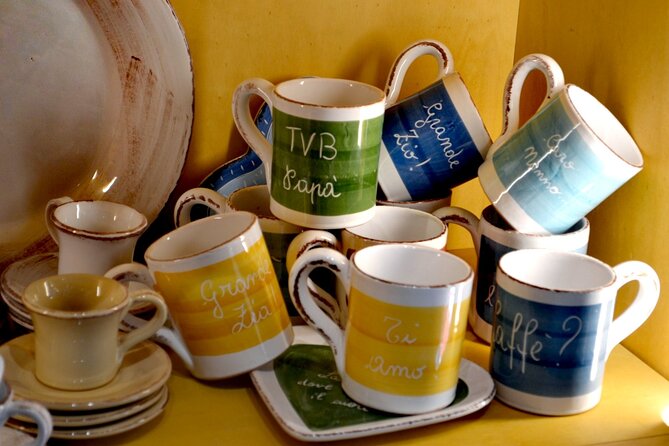
In San Polo, you visit a local artisan focused on traditional rural products. The big idea here is that the craft connects to values: family time, meals shared at home, and celebrations built around food and drink.
You’ll see ceramics with bright colors and lively patterns. The point is not only the look. It’s that the manufacturing techniques are rooted in traditions that can get lost with industrial production. The handmade quality creates an atmosphere that feels rustic, warm, and still refined.
This stop is especially good if you like gifts that feel personal. It’s much easier to choose something you will actually use when you understand the story behind it.
The possible drawback is simple: if you already know you want only performance-based crafts like glassblowing, ceramics might feel slower. But for many people, that contrast is the whole charm.
The Rialto Shoe Stop: Recycling as Craft Philosophy
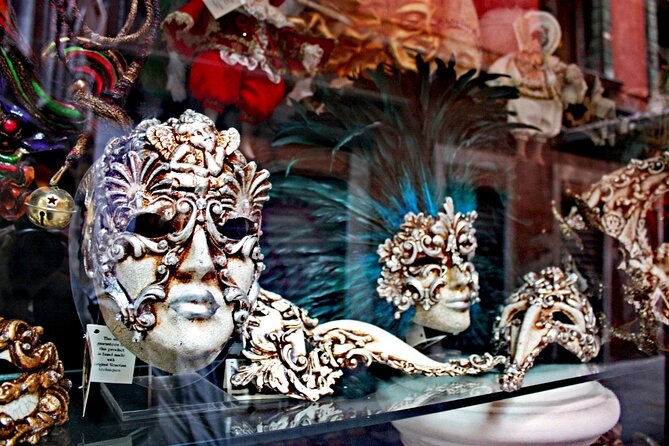
At the Ponte di Rialto area, you visit a traditional shoe shop with a strong recycling story. Instead of treating old materials as trash, the workshop turns them into practical components: bicycle tires become waterproof, hardwearing soles; jute sacks become linings; and fabrics, even rags from old clothes, become uppers.
That is a surprisingly emotional craft narrative. It connects thrift to design and turns necessity into technique. You’re not only looking at a product, you’re learning a way of thinking.
You’ll also hear about shoe styles like the Veneziane, inspired by 18th-century splendor of the Serenissima republic, embellished with velvet or bright oriental silks and hand-sewn. That blend of historical inspiration and modern recycling is exactly why this tour feels fresh.
Campo Manin Hats: Small Shop, Big Specialty
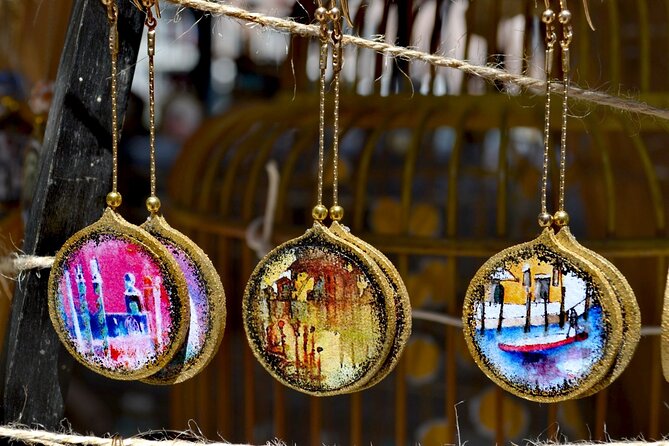
At Campo Manin, you meet Giuliana’s, a tiny styling shop known for its hat selection. This is not a generic gift counter. It’s a specialty shop, with hats for different lives and seasons: Panama hats, gondolier hats, Carnevale hats, waterproof options, woolly hats, and even wedding hats.
A detail I’d remember: since 1980, Giuliana has imported Panama hats directly from Ecuador. That makes the shop feel less like a tourist stop and more like a business with a consistent supply line and long-term expertise.
The shop is also officially recognized as a historic place of the Veneto Region. Again, that matters. It hints you’re not only buying, you’re participating in a continuing tradition.
Campo Santo Stefano and the Maestro Marmorizzatore: Color on Paper
Now you shift to something mesmerizing and very Venice. At Campo Santo Stefano, you meet a maestro marmorizzatore, a master papermaker focused on ancient paper techniques. Maestro here is both expertise and a respectful way of greeting older people in Venetian dialect.
This stop is about color transformation. The lagoon water’s shades change across the day, and the techniques aim to reproduce those lagoon colors on paper. You might see flower-themed sheets, and there’s also an original series featuring fish with smiling faces, petrified on paper like fossils.
Even if paper art is not your thing, this stop is worth it because it trains your eye. It shows how artists use chemistry-like methods and timing to create effects. That is “craft” in the broadest sense.
San Salvador Atelier: Sculpture, Glass Flowers, and Cut-Iron Dreams
Between Rialto Bridge and St. Marco square, at the Chiesa di San Salvador, you visit an atelier where a couple of artists have been working since 2007. The setting is described as precious and cozy, and the work is intimate: sculptures and jewelry, delicate glass flowers, dreamlike cut iron shapes, and wood pieces that feel like living trees.
This is one of the stops that tends to change how you think about display. The objects are small enough to feel personal, but unusual enough that you want to study them. It’s also a nice break from the more functional crafts like shoes and fabrics.
If you’re short on time and want only practical items, this might feel abstract. If you like art objects you can appreciate without needing them to solve a real-world problem, this is a standout.
Murano Jewelry: Handmade Beads and Lamp-Working Skills
At Ponte di Rialto again, you visit a shop producing jewellery in Murano glass. The key point is that it is executed entirely by hand using refined techniques from Venetian tradition.
You’ll see beads made by small local workshops, each with years of experience in Murano glass making, glass blowing, and lamp-working techniques. That is important context. Murano glass can look “same-ish” in photos, but the way beads are made affects their look and texture.
This stop is great value because it connects the craft process directly to what you see at eye level. You’re not just told it’s handmade. You get a tour of how that handmade work is organized.
Cannaregio Textiles and Soprarizzo Velvet on 18th-Century Looms
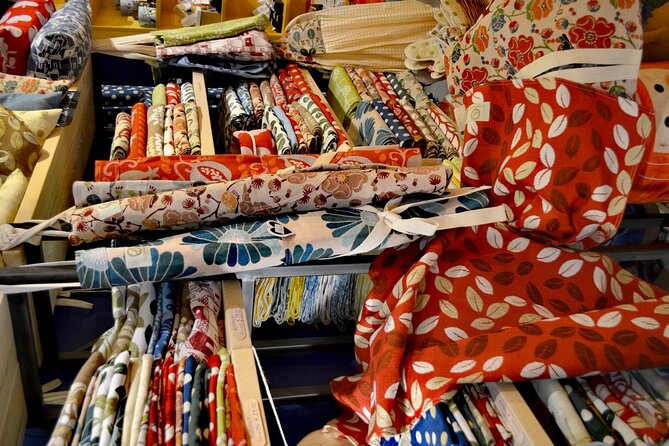
Finally, you end in Cannaregio with textiles. You visit a textile company making fine fabrics for furnishing and high fashion, including velvets, damasks, lampases, and brocatelles. One special fabric is soprarizzo velvet, which is still hand made.
Here the tour gets very specific and very cool. The soprarizzo production is still carried out on 18 looms of the 18th century, previously belonging to the silk guild of the Republic of Venice. That detail turns this from a generic “fabric store” visit into something historically grounded.
If you love textiles, you’ll enjoy the variety of materials and the idea that production can be both traditional and practical in modern interiors.
The main consideration: fabric stops can feel slow if you mainly came for small objects like jewelry or paper art. Still, textile people usually leave with at least one “I did not know that” insight.
Price and Value: What $182.17 Gets You
At $182.17 per person, you are paying for guided access and interpretation. This isn’t a standard city walking tour. You are getting multiple short visits to working craft environments, with a licensed guide and a route designed around production stories.
Where the value really shows is in the mix of crafts across specialties, plus the fact that admission is listed as free at each stop. You are not just paying for entry fees. You are paying for the guide who connects the dots between techniques, materials, and Venetian life.
Also, it is described as a private tour, with flexibility in pace and an option for group discounts. Private format matters in Venice because you get a clearer pace and a guide who can respond to what you care about, rather than forcing everyone into the same script.
Who This Artisan Workshop Tour Is Perfect For
This tour is a smart fit if you want Venice through crafts and makers. You’ll likely enjoy it if you like:
- buying gifts that come with a story, not just a logo
- seeing hand work and learning the “why” behind technique
- a short time window, since it is about 3 hours
- a guide who can adjust to your interests during the walk
It is also good if you want a different angle from the classic Venice itinerary. Instead of chasing only monuments, you’re learning how Venice stays Venice through working skills.
The only people who may feel underwhelmed are those who only want major museums and giant ticket attractions. This is a craft route, not a cathedral-and-castle marathon.
Should You Book Creative Venice?
Yes, I’d book it if you want an insider-feeling Venice day that focuses on hands-on craft culture. The route packs in textiles, ceramics, shoes, paper art, and Murano glass without dragging you across the city for a full day. And with Valerio Coppo, the tour is set up to feel friendly and real, not like a sales pitch.
If you hate shopping and want pure education, this still works because the emphasis is on how makers work and why their materials and methods matter. If you are the type who likes to linger, pick the spots that catch your eye, and then plan a bit of extra time in those neighborhoods afterward.
FAQ
How long is the Creative Venice craft tour?
It lasts about 3 hours.
Is pickup included?
Pickup is offered only if you book a private group. If not, you meet your guide at Campo San Giacomo di Rialto in front of the church near the fountain.
What language is the tour in?
The tour is offered in English.
Is this tour private?
Yes, it is described as a private tour or activity where only your group participates.
Are entrance tickets included for the stops?
The stops listed have admission tickets marked as free.
Is the experience suitable for most people and close to transit?
It lists that most people can participate, and it is near public transportation. Service animals are allowed.
Recently reviewed around Venice
- Skip the Line St. Mark’s Basilica Tour★ 3.5 · 5 reviews
- Shared Departure Transfer: Venice Hotels to Venice Train or Bus Station★ 3.5 · 73 reviews
- One-Day Venice: Skip-the-Line St. Mark’s Basilica, Walk & Gondola★ 4.0 · 20 reviews
- Another Side of the City: Discovering Authentic Venice★ 5.0 · 57 reviews
- Self Guided Tours Venice With 100 Captivating Audio Stories★ 5.0 · 3 reviews
- Secret Venice, an unusual walk – Private Walking Tour★ 5.0 · 61 reviews
- The Secret Venice + Cicheti & Wine Private Tour★ 5.0 · 21 reviews
- Venice Walking Tour with Audioguide on Your Smartphone★ 4.0 · 19 reviews
Workshops, compared.
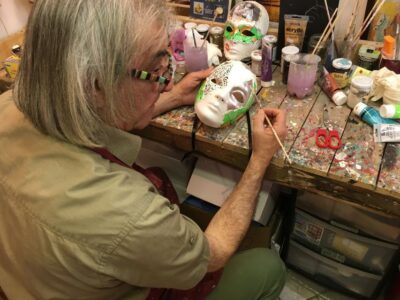
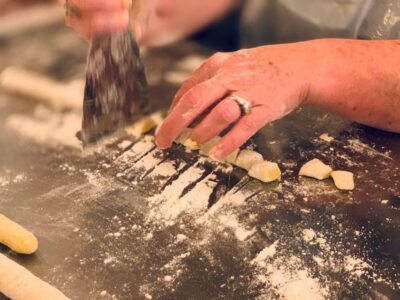
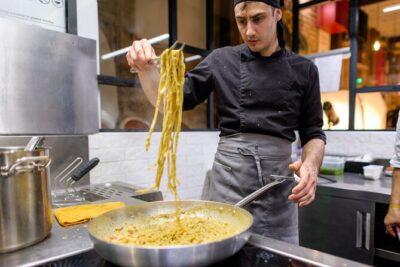
Pasta and Tiramisu Cooking Class with Wine in Venice
Read our review →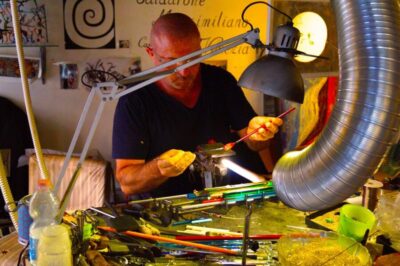
Create Your Glass Artwork: Private Lesson With Local Artisan
Read our review →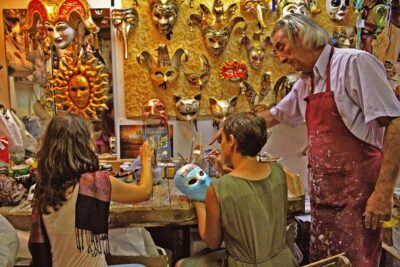
Venetian Carnival Mask Making Class in Venice, Italy
Read our review →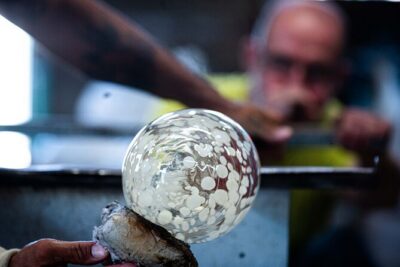
Murano Glass Factory Experience: A Workshop in Venice
Read our review →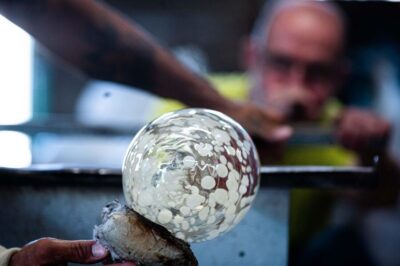
Browse the lists this tour appears in