
Reviewed · VENICE
Learn to Row in the Venice Canals
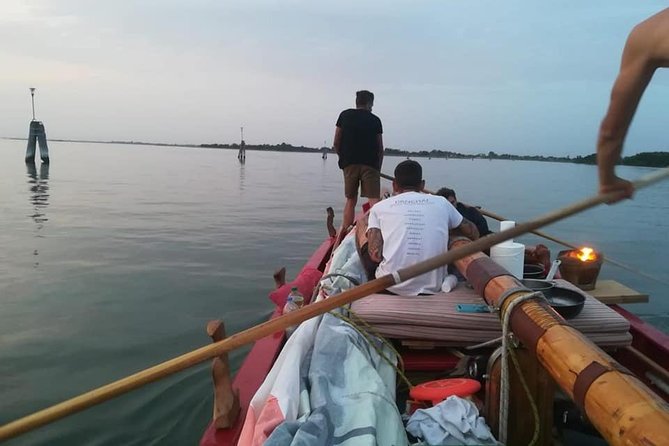
Venice is famous for gondolas, but the most fun way to see the city is by actually putting your hands on the oars. This canal rowing lesson is a hands-on, small-group way to explore Cannaregio from the water, with real teaching instead of just watching. You’ll learn the basics, then spend serious time moving through the canals at an easy pace, not stuck in a crowd.
I especially love two things. First, the instruction feels local and practical, with guides such as Stefano, Nicola, Emiliano, and Frederico teaching how rowing works for real. Second, you get to see a calmer side of Venice, gliding past neighborhoods and waterfronts where the sidewalk crowd thins out.
One thing to consider: this experience depends on good weather. If conditions are poor, you’ll be offered an alternate date or a refund, but you do want some flexibility in your schedule.
Key Highlights You Should Know Before You Go
- Hands-on rowing time: you row, not just sit and listen
- Small group size: maximum of 6 travelers, so you actually get coaching
- Local boat tradition explained: you learn how gondola-style boat handling works, including the forcola
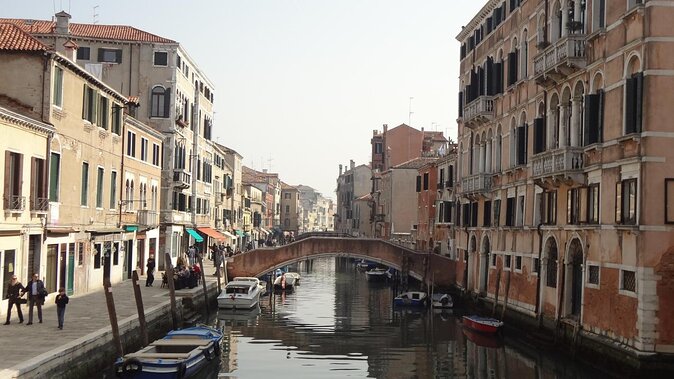
- Residential Cannaregio canals: a quieter perspective than the main tourist routes
- Stops that anchor the experience: church, ghetto area, waterfronts, and a Tintoretto-related landmark
- A mission you can feel: the intro includes the organization’s recovery work tied to traditional boating culture
The Venice Canals Feel Different When You Row Them
If you’ve only seen Venice from the sidewalk, you may be surprised how much the city changes when you’re at water level. Rowing slows things down in a good way. Bridges become checkpoints. Turns become little problem-solving moments. And instead of rushing between sights, you experience Venice as a working water system.
What makes this experience click is the combo of technique and context. You start with a brief introduction that covers traditional Venetian boats and the kind of preservation and recovery work the team is doing. Then you’re out on the water, learning the rhythm and control that gondoliers rely on.
Also, skipping the sidewalk scrum is real value. Cannaregio can feel like Venice’s “everyday” side, and the canals give you access to corners you simply cannot reach the same way on foot.
A practical note: the boats and the setting are not about performing. They’re about getting the basics right, then enjoying the canals at your own pace.
Other things people book in Venice:
- Venice: Doge’s Palace Reserved Entry Ticket
★ 4.6 · 42,716 reviews - Venice: Grand Canal Gondola Ride with App Commentary
★ 4.1 · 18,908 reviews - Boat Trip: Glimpse of Murano, Torcello & Burano Islands
★ 4.3 · 15,699 reviews
What You Learn in the First Minutes (And Why It Matters)
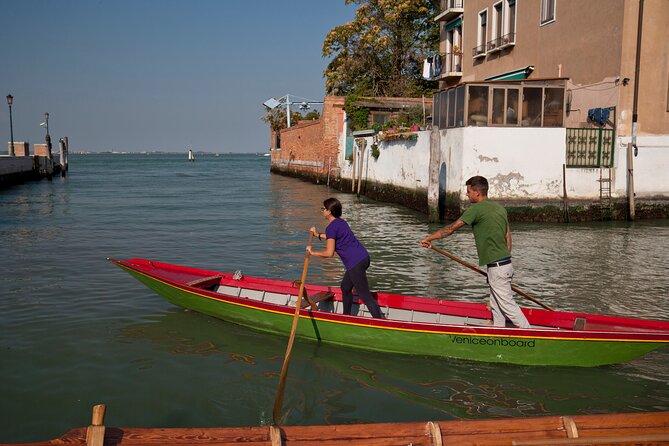
The lesson starts with an introduction to Venetian boats and how they’re handled. This is not just “history as trivia.” It sets you up for the rowing part, because technique changes how the boat moves, how you avoid small mistakes, and how you share space on narrow canals.
In the coaching, you get guidance on how to use the oar and how gondoliers handle their boats. One review mentions learning how gondoliers use the forcola, and that detail matters because it shows the guide is teaching real gondola logic, not a watered-down version. Even if you never become a gondolier, it helps you understand why certain motions feel smoother or why steering is more subtle than it looks.
Then comes the part most people actually came for, rowing yourself. Many reviews highlight that rowing looks easy but is a bit more complicated once you’re doing it for real. That’s good news, because the instructors adjust quickly. You learn fast, and soon the canals start feeling like your playground rather than a place you’re struggling to navigate.
Cannaregio by Water, Stop by Stop: What Each Pause Feels Like
You’ll row through a route that mixes quiet canals with recognizable landmarks from the water. Each named stop gives you a mental map, so you’re not just floating around without context.
Stop 1: Chiesa della Madonna dell’Orto
This church area works well as an early “orientation” moment. From the water, churches and their surrounding lanes look different, and the guide can use this spot to connect waterways with how people moved through Venice historically. For many first-time rowers, it’s also a good place to get comfortable with turns and spacing early on, before the canals get busier with boats in the distance.
Same city, a very different kind of day on the water:
- Venice: Grand Canal by Gondola with Live Commentary
★ 4.1 · 13,681 reviews - Venice: La Fenice Opera House Entry Ticket with Audio Guide
★ 4.6 · 11,742 reviews - Doge’s Palace & St. Mark’s Basilica with Terrace Access Tour
★ 4.7 · 10,697 reviews - Venice: Burano, Torcello & Murano Boat Tour w/Glassblowing
★ 4.4 · 10,245 reviews
Stop 2: Ghetto Ebraico
The Ghetto Ebraico stop helps the ride feel grounded in real Venice, not just postcard canals. The water-level view gives you a different scale sense, especially if you’ve only seen this part of Venice from streets. You’ll get context for why canals were the roads of the city, and it adds weight to the lesson because it’s not separated from Venice’s story.
A small drawback here: if you’re expecting only scenic drifting, the historical framing can be more engaging than you planned. That’s a plus for many people, but if your priority is pure sightseeing with minimal talking, you’ll want to settle in for a bit of explanation early in the route.
Stop 3: Fondamenta dei Ormesini
A fondamenta is waterfront space, and this stop type is where the trip turns extra relaxing. This is the sort of segment where you notice the canal’s pace. Instead of constant motion and crowds, you get calmer water, more time to focus on rowing rhythm, and a chance to take photos without fighting for position.
It’s also a good “practice zone.” Once you’ve got a handle on basic strokes, these stretches let you row with confidence.
Stop 4: Campo dei Mori
A campo gives you a recognizable “land base,” even though you’re traveling by water. The guide can point out how open spaces relate to the canal routes, which helps you understand why Venice grew the way it did. From the water, you see angles of buildings and the way boats slip under bridges and beside structures, which helps the city feel more navigable.
This stop can be especially satisfying if you like architecture and street patterns, because you’re getting a grounded view that still stays peaceful.
Stop 5: Casa del Tintoretto
This stop adds a cultural anchor to the rowing lesson. Even without going into deep details, a name tied to Tintoretto signals that you’re not just passing generic canals. You’re seeing Venice as a layered place where art, residents, and waterways are intertwined.
If you love art history, you’ll likely appreciate this final framing because it feels like the ride ends with context, not just a return trip.
Why This Is Better Value Than a Standard Gondola Ride
The price is listed at $95.54 per person for about 1 hour 30 minutes. On paper, that might still sound like “tour money,” but the value is in what you get: a skill lesson, time on the water, and a guide who teaches how the craft works.
A classic gondola ride often means 10 to 20 minutes of actual boat movement, then a lot of time spent waiting or following a set route with minimal interaction. Here, the focus is different. You’re not paying to sit and be transported. You’re paying to learn a real technique and enjoy the canals while doing it.
One review summed it up well: it felt much more fun and memorable than a bog-standard gondola ride in the center because the rowing part takes over your attention. You’ll also leave with a small sense of what gondoliers do, including how they handle the boat and how the tools work in motion.
Also, this tour supports an organization doing recovery work tied to traditional boating culture. That mission is part of the lesson, not just a vague slogan. If you care about preserving Venice beyond the gift shop version, you’ll feel that in the way the guides talk about their craft.
The Boat Lesson, the Photos, and the “How Did They Do That” Moments
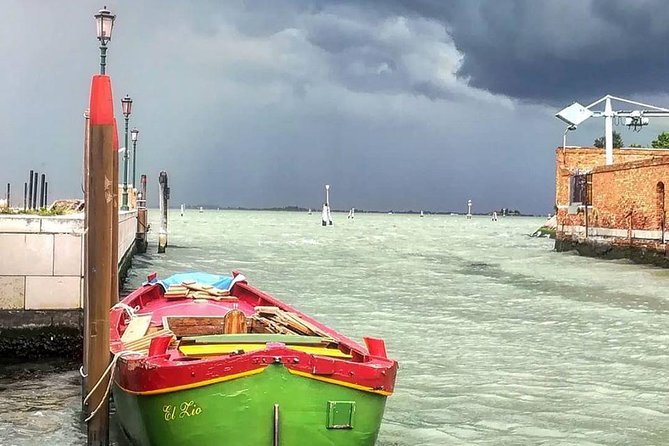
This is one of those Venice activities where you can measure success in photos and in muscle memory.
Many people mention that rowing produces great pictures, especially when you’re at the front of the boat and not just seated behind someone. But the real win is the confidence you build. You start tense, then you learn how the boat responds. Soon you’re taking turns, adjusting your stroke, and sharing the canal space like you belong there.
Even if you’re not athletic, you’re not doing a hard workout. Reviews describe it as not too strenuous, and most people can participate. Still, it is active enough that you’ll want to wear comfortable shoes and be ready to follow instructions. If you have hand or mobility limitations, you’ll want to check with the operator ahead of time since the activity involves rowing.
Meeting Point and Getting There Without Losing Time
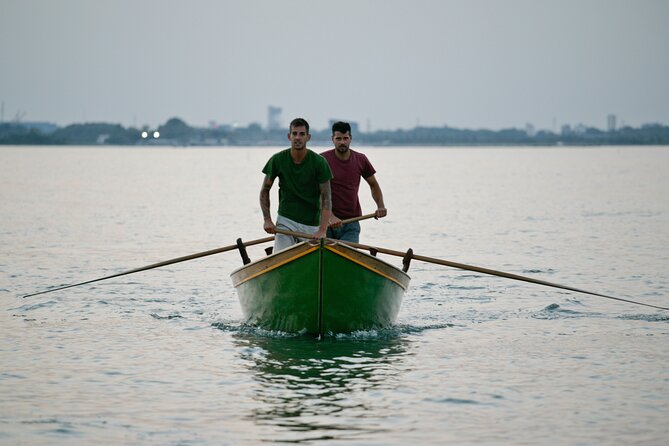
Your start point is at Cantiere Nautico Navale Casaril S.r.l. 3009/H, C. del Magazzen, 30121 Venezia VE, Italy. The activity ends back at the same meeting point.
The meeting spot is described as near public transportation, which is helpful in Venice because getting stuck in the wrong alley can cost you time. If you’re traveling with a group or planning connections, I’d pad your travel time so you can arrive calmly and not rush through water-level streets.
Group size matters too. With a maximum of 6 travelers, the check-in process tends to feel smoother. You’re not waiting in a huge crowd for your turn.
Who This Tour Best Suits (And Who Might Prefer Something Else)
This is a strong fit for:
- First-timers who want a real Venice activity, not just another walking loop
- Families with kids who enjoy hands-on learning (reviews mention everything from around age 10 through teen years and adults)
- People who feel gondola pricing isn’t worth it when most of the ride is short and you do not participate
- Anyone who wants quiet canals and a less tourist-heavy Venice view
It might be less ideal if:
- You only want passive sightseeing with no active instruction
- Weather disruption would ruin your day, since the experience requires good conditions
- You want lots of stops stuffed with long explanations and city-by-city sightseeing facts, because the ride prioritizes rowing technique
The sweet spot is people who like a mix of calm scenery and learning something small but real.
Weather, the Venice Day-Trip Access Fee, and Other Practical Gotchas
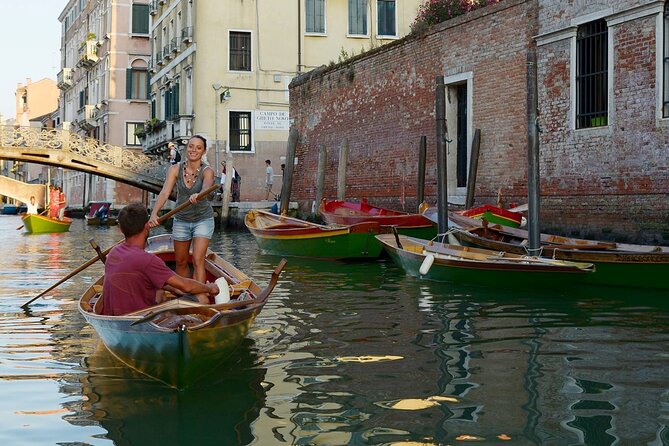
This experience requires good weather. If it’s canceled due to poor weather, you’ll be offered a different date or a full refund. That’s good, but it still means you should avoid booking this as your only Venice plan if you hate schedule changes.
Also, there’s a Venice access fee on certain dates. If you’re staying outside Venice and you’re visiting for the day, you may need to pay a €5 access fee on applicable days. Details and exemptions are linked through the official Venice access fee info at https://cda.ve.it. I recommend checking this before you commit, because it can affect the total cost of your day.
If you’re worried about cancellation risk, check your broader plan first. If you can shift your afternoon around, this becomes a safer bet.
Should You Book Learn to Row in the Venice Canals?
I think you should book this if your goal is to feel Venice instead of just see it. Learning the basics of rowing changes everything. You’ll glide through calmer canals in Cannaregio, get coached by locals who care about keeping the tradition going, and come away with a technique you can actually talk about long after you leave.
I’d skip it only if you want zero physical activity, or if your schedule is so tight that any weather change would throw off the rest of your trip.
For most people, this is one of those rare Venice experiences that feels both fun and meaningful, while also being better value than the big-ticket gondola option.
FAQ
How long is the Learn to Row in the Venice Canals experience?
It runs for about 1 hour 30 minutes.
Where does the experience meet?
The meeting point is Cantiere Nautico Navale Casaril S.r.l. 3009/H, C. del Magazzen, 30121 Venezia VE, Italy, and the activity ends back at the same point.
What language is the lesson offered in?
The tour is offered in English.
How big is the group?
The experience has a maximum of 6 travelers.
Do I need good weather?
Yes. The experience requires good weather. If it’s canceled due to poor weather, you’ll be offered a different date or a full refund.
How far in advance should I book?
On average, this is booked 60 days in advance.
Is a mobile ticket used?
Yes, the tour uses a mobile ticket.
Is there a Venice day-trip access fee?
On certain dates, day-trippers who are staying outside Venice may need to pay a €5 access fee. Check https://cda.ve.it for details and exemptions.
What is the cancellation policy?
You can cancel for a full refund up to 24 hours in advance. If you cancel less than 24 hours before the start time, the amount paid will not be refunded.
Recently reviewed around Venice
- Skip the Line St. Mark’s Basilica Tour★ 3.5 · 5 reviews
- Shared Departure Transfer: Venice Hotels to Venice Train or Bus Station★ 3.5 · 73 reviews
- One-Day Venice: Skip-the-Line St. Mark’s Basilica, Walk & Gondola★ 4.0 · 20 reviews
- Self Guided Tours Venice With 100 Captivating Audio Stories★ 5.0 · 3 reviews
- Secret Venice, an unusual walk – Private Walking Tour★ 5.0 · 61 reviews
- Another Side of the City: Discovering Authentic Venice★ 5.0 · 57 reviews
- The Secret Venice + Cicheti & Wine Private Tour★ 5.0 · 21 reviews
- Venice Walking Tour with Audioguide on Your Smartphone★ 4.0 · 19 reviews