Reviewed · TOURS
Giudecca Island Discovery Tour
Giudecca is Venice without the usual script. This small-group walk takes you off the main sights and into an island shaped by banishment, industry, and a newer wave of artists. Giudecca’s name even comes with a story that changes how you look at every corner.
I love how the guide, Valerio Coppo, connects the dots, from the island’s exile roots to the way old spaces now serve creative life. I also like the pacing: short, focused stop-and-look moments over about 2 hours, which keeps it relaxed instead of a sprint.
One possible drawback: you’ll spend plenty of time outside, and Giudecca can feel windy, especially in cool weather. Bring layers, even if Venice looks mild near the water bus routes.
Key things I’d mark on your mental map
- Max group size of 10, so your questions actually get answered
- A story-led route, starting with why Giudecca got its name from the idea of the judged
- Factories turned modern life, including Molino Stucky and Teatro Junghans
- A Palladio highlight, Chiesa del Santissimo Redentore and its famous July ritual
- Finish with lagoon payoff views, aimed toward San Marco and Punta della Salute
- Short stops throughout, with many moments you view from the outside as you learn what you’re seeing
Giudecca is Venice, but with a different rhythm
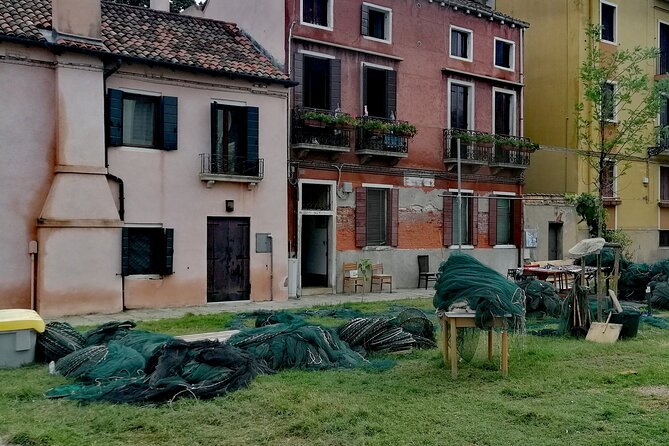
Most first-timers see Venice from the water bus and the main squares. Giudecca is different. You’re still in the Venetian Lagoon, still surrounded by that watery light, but the feeling shifts fast once you’re walking an island that fewer visitors think to explore.
What makes this tour especially appealing is the way it turns “a walk around an island” into a sense of place. You learn what used to be there, why people ended up there, and how buildings changed hands over time. That context matters, because otherwise you’re just passing impressive facades and pretty churches.
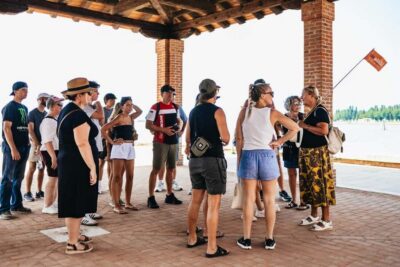
Also, the group size is small, up to 10 people. That’s not just a comfort issue. It means the guide can keep the pace human and tailor the explanations when questions pop up.
Other things people book in Venice:
- Venice: Doge’s Palace Reserved Entry Ticket
★ 4.6 · 42,716 reviews - Venice: Grand Canal Gondola Ride with App Commentary
★ 4.1 · 18,908 reviews - Boat Trip: Glimpse of Murano, Torcello & Burano Islands
★ 4.3 · 15,699 reviews
Zattere start: getting the Giudecca backstory in the first 15 minutes
You start at the Zattere area (Zattere 30133). From there, the tour builds the key idea of Giudecca: it has long been a place Venice used when it wanted certain people moved out.
The first big moment is the island’s name. You’ll hear that Giudecca does not come from the idea of Jewish inhabitants. Instead, the name is linked to a Venetian word, “zudega,” meaning the judged, tied to rebel aristocratic families banished there during the 9th century. It’s a small linguistic detail, but it gives you a lens. You stop seeing Giudecca as an optional side trip and start seeing it as part of how Venice managed power and conflict.
You also learn that, in more recent years, a different set of exiles arrived: artists who could no longer afford rents in central Venice for their lofts and studios. That shift helps you understand why you’ll see both old structures and newer creative uses as the tour continues.
Right away, you’re also introduced to the kind of Giudecca weather you’ll meet. Even in the best light, the island can be breezy. People talk about Giudecca as the isola delle foche, the island of seals, and it’s not hard to see why once the wind whips across the lagoon.
Fondamenta Sant’Eufemia: Veneto-Byzantine structure and a dramatic saint story
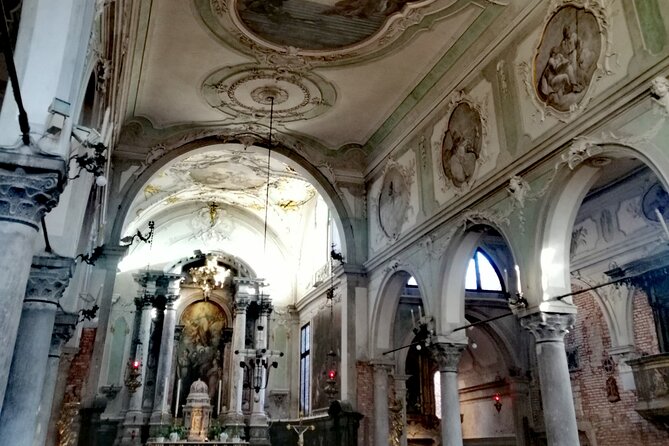
Next, you visit Fondamenta Sant’Eufemia. You’ll take in an AD 890 church with a simple Veneto-Byzantine structure that is dated from the 14th century.
The church is named after a Byzantine Christian martyr. The story is vivid and dark: the martyr was thrown to hungry lions, and when the lions bit off her hand, they still refused to eat her holy virgin flesh. Whether you care about religious symbolism or not, it’s the kind of local narrative that makes the building feel like a living part of the community, not just an exterior you photographed once.
This stop is short, about 15 minutes, so don’t expect a deep indoor study. Do expect orientation. You’ll learn how Giudecca’s sacred architecture sits alongside the island’s less graceful past.
Practical note: since you’re stopping quickly, wear comfortable shoes. You’re moving steadily from one context to the next, and the value is in how the meanings connect.
Molino Stucky at Hilton: the Neo-Gothic flour mill that became a hotel
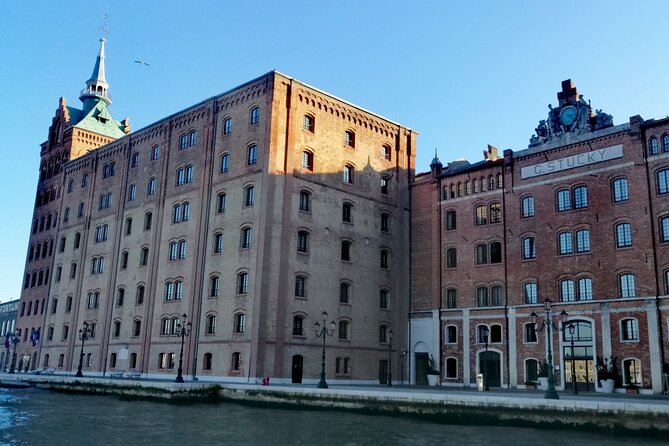
Then you’re at the Hilton Molino Stucky Venice. This is one of those buildings you can’t miss once it’s pointed out, a huge Neo-Gothic structure that once worked as a flour mill.
You’ll learn it was supplied by boats across the lagoon. It also operated as a pasta factory. Today, the same mass of architecture houses a luxury 5-star hotel.
Here’s why this stop is so useful for your day: it shows you that Giudecca didn’t just have “old buildings.” It had industrial buildings with real supply chains. Boats were part of the system. People relied on the lagoon not just for scenery, but for work.
You may not go inside on this walk, depending on what’s possible on the day, but even from the outside the scale teaches you something. The island is bigger than the postcards.
Same city, a very different kind of day on the water:
- Venice: Grand Canal by Gondola with Live Commentary
★ 4.1 · 13,681 reviews - Venice: La Fenice Opera House Entry Ticket with Audio Guide
★ 4.6 · 11,742 reviews - Doge’s Palace & St. Mark’s Basilica with Terrace Access Tour
★ 4.7 · 10,697 reviews - Venice: Burano, Torcello & Murano Boat Tour w/Glassblowing
★ 4.4 · 10,245 reviews
Fondamenta de le Convertite: an uncomfortable pocket of the island
At Fondamenta de le Convertite, you get lost in a quieter, less tourist-shaped part of the island. The focus here is on institutions and the way spaces were used.
You’ll pass by an organic prison market, adjacent to a women’s correction facility. It’s not the kind of stop that feels “fun,” and that’s exactly the point. Giudecca has held people who were sent away, and it has also held systems meant to control behavior.
The guide’s job in moments like this is to keep it factual and human, not sensational. If you’re sensitive to heavy themes, it helps to know this stop is included so you’re mentally ready.
The plus: you come away understanding that Giudecca’s story is not only art and architecture. It’s also about the hard parts of Venice’s choices.
Ex Convento Santissimi Cosma e Damiano: Artisti Artigiani del Chiostro
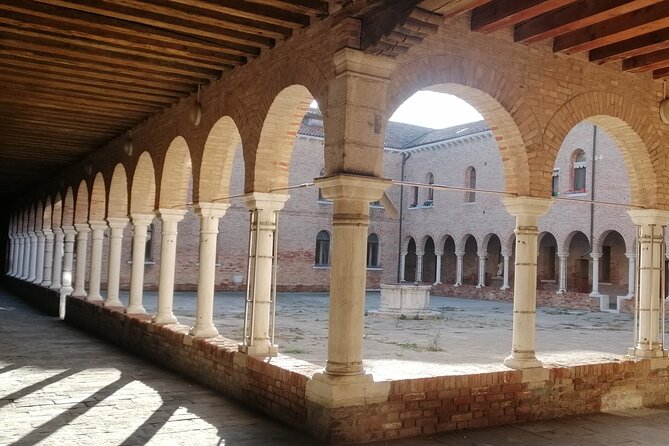
You’ll step into Artisti Artigiani del Chiostro, housed in the former monastery, Ex Convento Santissimi Cosma e Damiano.
Today it serves as a center for the promotion of local artists and artisans of all kinds. This is where the tour’s “new Giudecca” connects to the island’s older structure. You can see how religious space and community space can transform without losing the bones of the building.
For you, the benefit is simple: this is one of the only moments on the walk where creativity is not just talked about. It’s represented through the kind of center a former monastery became.
This stop also often feels like a breather. After factory scale and institutional history, you get a more human-scale setting. Even if you only spend a short time here, you’ll leave with a better sense of how Giudecca functions today.
Teatro Junghans: when a glass factory becomes living and performance
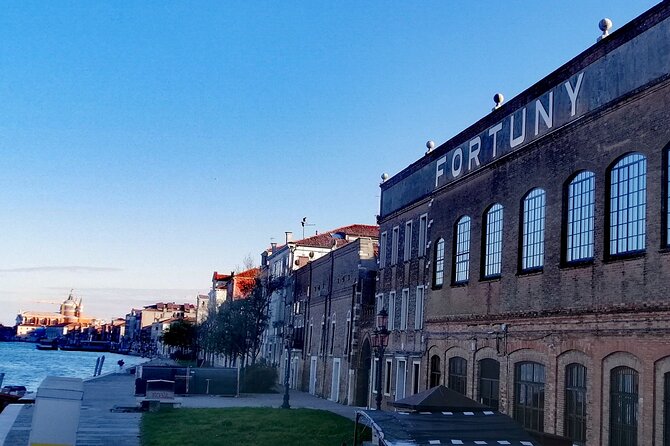
Next you see Teatro Junghans, a former factory for glasses that has been converted into a modern residential neighborhood and a contemporary theatre.
You’ll learn how the factory era left its mark, but the island didn’t freeze in time. The theatre faces the southern lagoon, which is a nice detail because it reminds you that the lagoon is not scenery, it’s a shaping force. Buildings were designed with it in mind.
For practical sightseeing, this is another “look and learn” stop. Even if you’re outside most of the time, you’ll understand how industrial work translated into a different kind of public space.
If you’re the type of person who loves re-use and adaptive change, you’ll appreciate this moment more than you might expect. It’s easy to think of old buildings as trapped in the past. Here, they become part of present-day life.
Redentore and Palladio: deliverance, plague memory, and a pontoon bridge ritual
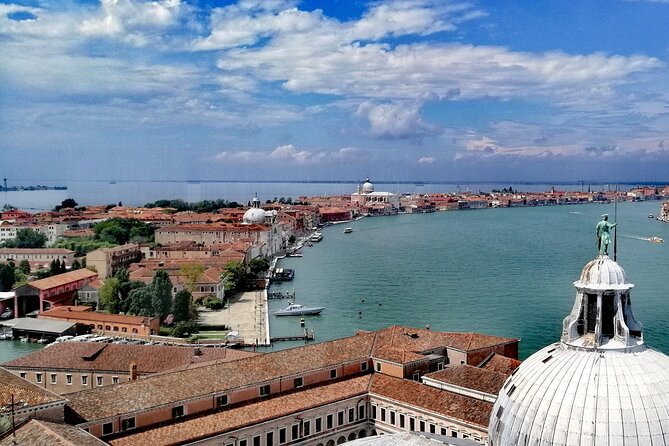
The highlight church on this walk is Chiesa del Santissimo Redentore, designed by Palladio.
You’ll hear it was built to celebrate the city’s deliverance from the black death. And you’ll get a unique Venice-style tradition: each July, Venetians make a pilgrimage across the canal to this church on a shaky pontoon bridge from the Zattere since 1578.
This is one of those stops where history isn’t dusty. It’s seasonal. It repeats. It keeps a memory alive in the way people gather and move across water.
Even if you don’t attend religious services, you’ll likely find this moment powerful because it connects architecture to lived community behavior. Venice survived waves of crisis, and the city marked that survival with public ceremony.
Villa Heriot: art nouveau views over the southern lagoon
After the big church stop, you head to Villa Heriot, an Art Nouveau villa off the beaten path.
Here you’re not just looking at style. You’re rewarded with breath-taking views over the southern lagoon. The tour uses this stop as the visual payoff, and it makes sense after the heavier themes earlier in the walk.
This is where you can pause, take photos if you want, and just let the horizon do its work. The island’s charm is not only in the buildings. It’s in how the lagoon frames everything.
Tip: if it’s windy, pick a spot that has some shelter. Hold your windbreaker tight. Lagoon air can feel like it has opinions.
Casa dei Tre Oci and the end viewpoint toward San Marco
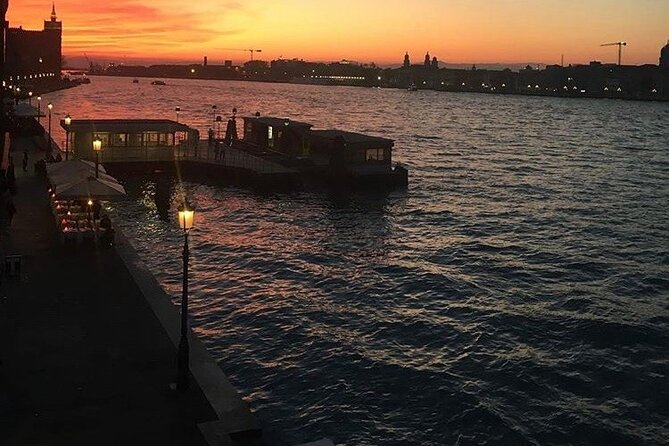
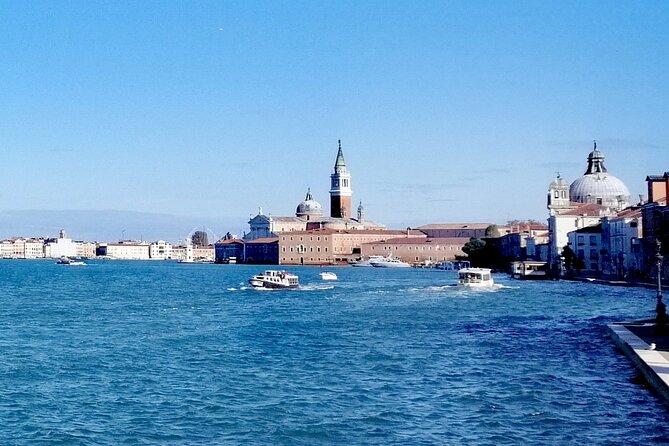
The tour ends at Casa dei Tre Oci. You get scenic views toward San Marco and Punta della Salute.
You also walk by a palace with a distinctive Neo-Gothic brick facade and three peculiar arched windows. It’s a nice way to close the day because it ties architecture back to the bigger view. You get details in the foreground, then the big postcard targets in the distance.
Finally, you finish at the Le Zitelle water bus stop (Fondamenta Zitelle). That matters because the end point is set up for you to continue your day without a confusing scramble.
If you’re trying to plan your Venice rhythm, this is a good move after the tour. Grab a drink nearby, or head back toward the main areas with a clearer sense of what you just saw.
Price and value: what you pay for, and what you get
At $163.64 per person for about two hours, this isn’t a bargain-bin tour. But it does make sense for the category you’re buying into.
You’re paying for:
- A tour leader and interpretive guide
- A small group size (maximum 10)
- Guided access to context in places you might otherwise overlook or misread
- Efficient stop pacing, so you cover a lot of meaning in a short time
There’s also a useful detail: the tour lists admission tickets as free at the stops. So the money you’re spending is primarily for guidance and the route, not for entrance fees at every stop.
One cost to keep in mind is transport. The water bus ticket to Giudecca is not included, and tickets are purchased on board. That means you should budget a bit extra when you plan your total day spend.
So, the value question is less about the math and more about your style of travel. If you enjoy context, if you want to understand what buildings used to do, and if you like asking questions, this tour can feel worth it. If you only want quick photos with minimal talking, you might find a self-guided walk cheaper and simpler.
Who should book this Giudecca Island Discovery Tour
This is a strong fit if you:
- Want a smaller, calmer side of Venice compared with the main-street crowds
- Enjoy history that explains why buildings exist, not just when they were built
- Like creative spaces and industrial re-use stories
- Prefer short stops with time to think, instead of a long march
It’s also family-friendly based on the experiences shared in the tour feedback, with guides able to involve children. If you’re traveling with mixed ages, that flexibility is a real advantage.
If you have limited mobility, the route includes walking around waterfront areas and along island paths, so you’ll want to consider your own comfort level. The tour does say most people can participate, and it allows service animals, but the walk is still a walk.
Should you book it or skip it?
I’d book this tour if you’re the kind of traveler who gets restless when Venice is only shopping and architecture photos. Giudecca rewards you when you understand the island’s logic, the exile stories, and the way old industrial structures turned into living and creative spaces.
I’d think twice if you hate breezy outdoor walks or you want a mostly inside experience. This tour is built on brief stops, strong storytelling, and views, so the outdoors is part of the product.
If you do book, go in with one mindset shift: don’t treat Giudecca as a side dish. Treat it as a whole different chapter of Venice. It makes the rest of your trip land better.
FAQ
How long is the Giudecca Island Discovery Tour?
The tour lasts about 2 hours.
What is included in the tour price?
It includes a tour leader and a nature and interpretive guide.
Is the water bus ticket to Giudecca included?
No. The water bus ticket is not included, and tickets will be purchased on board.
How many people are in a group?
The tour has a maximum of 10 travelers.
Where do we meet and where does the tour end?
You start at Zattere 30133 Venice and end at Le Zitelle, Fondamenta Zitelle 33, 30133 Venezia (the Le Zitelle water bus stop).
Are there admission tickets for the stops?
The tour details list admission tickets for the stops as free.
Is free cancellation available?
Yes. You can cancel up to 24 hours in advance for a full refund.
Is there an access fee for some visitors?
On certain dates, people staying outside of Venice who are visiting for the day may be required to pay a €5 access fee. Details and exemptions are available at https://cda.ve.it.
Recently reviewed around Venice
- Skip the Line St. Mark’s Basilica Tour★ 3.5 · 5 reviews
- Shared Departure Transfer: Venice Hotels to Venice Train or Bus Station★ 3.5 · 73 reviews
- One-Day Venice: Skip-the-Line St. Mark’s Basilica, Walk & Gondola★ 4.0 · 20 reviews
- Another Side of the City: Discovering Authentic Venice★ 5.0 · 57 reviews
- Self Guided Tours Venice With 100 Captivating Audio Stories★ 5.0 · 3 reviews
- Secret Venice, an unusual walk – Private Walking Tour★ 5.0 · 61 reviews
- The Secret Venice + Cicheti & Wine Private Tour★ 5.0 · 21 reviews
- Venice Walking Tour with Audioguide on Your Smartphone★ 4.0 · 19 reviews
Tours, compared.
Doge’s Palace & St. Mark’s Basilica with Terrace Access Tour
Read our review →
Burano, Torcello & Murano Boat Tour w/Glassblowing
Read our review →
Murano and Burano Boat Tour with Glass Factory Visit
Read our review →
Murano, Burano and Torcello Half-Day Sightseeing Tour
Read our review →
Murano & Burano Islands Guided Small-Group Tour by Private Boat
Read our review →
Murano & Burano Panoramic Boat Tour w/ Glassblowing
Read our review →
Murano, Burano, Torcello, and Glass Factory Tour
Read our review →