
Reviewed · VENICE
DA Venezia : Experience Padua like a local
This experience is interesting because Padua shines when you walk its center in the right order. You start in the fruit and herb squares, then move to civic landmarks, a covered food market, the old Jewish ghetto streets, the university area, and end at Prato della Valle and Il Santo.
What I like most is the small-group feel (up to 8 travelers) and the real taste of Padua at Caffè Pedrocchi or the historical market. In the past, guides like Camilla (excellent English and Italian) and Chiara (warm, very engaging) have helped people connect details to everyday city life.
One thing to consider: two big sights have admission not included, like the frescoed hall in Palazzo della Ragione and Palazzo Bo. You’ll still see the exteriors and learn the context, but you may want to budget extra if you want to go inside those specific rooms.
Key Highlights to Look for
- Up to 8 travelers, so you get time for questions, not just a rush past monuments
- Markets built into the route, including the covered market under Palazzo della Ragione
- Caffè Pedrocchi mint coffee tasting, with a stop built around a famous story of the café staying open
- A guided walk that connects squares to daily life, not just photo stops
- University landmarks in the same loop, including Palazzo Bo and the area of the oldest Anatomical Theater
- A full center-to-outskirts sweep, from the ghetto lanes to Prato della Valle
Why This 3-Hour Padua Walk Feels Like Getting Your Bearings Fast
Padua is one of those cities where the “big” sights make sense only after you understand the smaller structure around them. This tour is built for that. In about 3 hours, you get an efficient route through the historic core, with a guide who explains what each place meant and what it means now.
The pacing also matters. Each stop is short, around the time it takes to absorb a few key facts, get oriented, and move on. That makes the experience feel less like a lecture and more like walking with someone who knows how the streets work.
If you’re visiting from Venice for the day, this is a strong option because it doesn’t require a whole day in Padua. And if you’re already in town, it’s a smart way to build a mental map quickly, before you wander on your own.
Other things people book in Venice:
- Venice: Doge’s Palace Reserved Entry Ticket
★ 4.6 · 42,716 reviews - Venice: Grand Canal Gondola Ride with App Commentary
★ 4.1 · 18,908 reviews - Boat Trip: Glimpse of Murano, Torcello & Burano Islands
★ 4.3 · 15,699 reviews
Starting at Stazione FS di Padova, Then Hitting the City Squares
The tour meets at Stazione FS di Padova, Piazzale della Stazione 1. There’s also roundtrip transportation to the place of departure, which keeps you from burning time figuring out the logistics before the walk begins.
From the station area, the route leads you into Padua’s historic center where the squares do the heavy lifting. These are not random plazas. They are the city’s social engine: trade, celebrations, and civic drama all played out here for centuries.
Also, the tour is offered in English with a mobile ticket. That matters because you can focus on the streets instead of scrambling for instructions at each turn.
Piazza della Frutta and Piazza delle Erbe: Where Padua’s Trade Still Shows
Your first two stops are the heart of the traditional market geography.
Piazza della Frutta, Piazza del Peronio
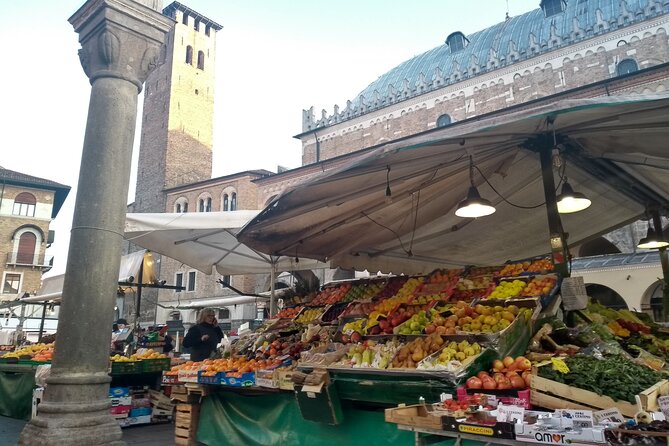
Piazza della Frutta, once also called Piazza del Peronio, has long been tied to food and commerce. The square sits under the dominating presence of Palazzo della Ragione, part of the broader Palazzo Comunale complex. In other words, commerce here was never a casual side activity. It was central, organized, and built into the city’s identity.
What you’ll notice while standing here is how the square connects to the rest of the walk. Even if you’re not shopping, the layout helps you understand why Padua felt practical to merchants and community life to residents.
Same city, a very different kind of day on the water:
- Venice: Grand Canal by Gondola with Live Commentary
★ 4.1 · 13,681 reviews - Venice: La Fenice Opera House Entry Ticket with Audio Guide
★ 4.6 · 11,742 reviews - Doge’s Palace & St. Mark’s Basilica with Terrace Access Tour
★ 4.7 · 10,697 reviews - Venice: Burano, Torcello & Murano Boat Tour w/Glassblowing
★ 4.4 · 10,245 reviews
Piazza delle Erbe, also known by older names
Next is Piazza delle Erbe. Like Piazza della Frutta, it was historically one of Padua’s main commercial squares. It also carries older names such as piazza delle Biade or piazza del Vino, showing how the focus shifted with what people sold and drank.
One contrast that helps: Piazza delle Erbe was more market-focused, while other nearby squares leaned more toward civic celebrations. You’ll feel the difference in the way the route sets up your eyes for what’s happening around you.
Both squares share the Palazzo della Ragione presence, so the walk gives you a repeat visual anchor. You end up seeing the complex in context, not as a single building you happened to pass.
Piazza dei Signori and the Clock Tower: Civic Padua Comes Into Focus
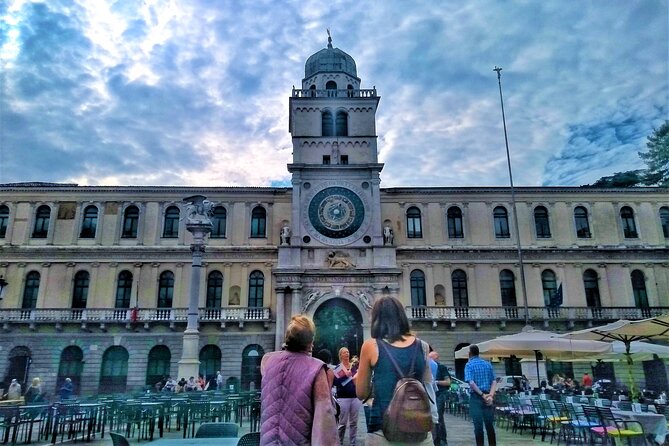
Then you shift from commerce to civic life at Piazza dei Signori. This is where Padua hosted civic celebrations, tournaments, and important public moments. The vibe is different because the square’s role was different.
Here, the centerpiece is the Clock Tower. Even if you don’t climb anything or go inside, standing in the square helps you understand how time, authority, and public life were tied together. For me, that’s what makes this stop valuable: it gives meaning to the stone.
If you love architecture and street design, this is also a nice moment to slow down for photos because the tower gives a clear vertical reference point.
Pedrocchi Café: The Mint Coffee Stop That Has a Story
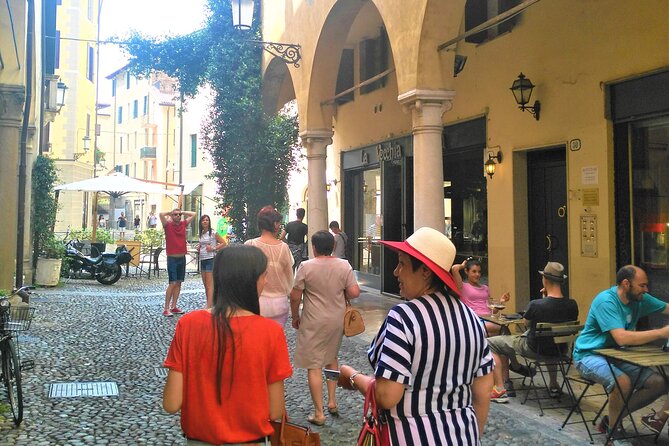
The walk then brings you to Pedrocchi Café, famous as the café without doors. It’s linked to a timeline that goes far back, staying open day and night from its inauguration in 1831 until 1916.
This is not just a sugar break. You taste Caffè Pedrocchi, described with a precise mix: 100% Arabica espresso, a fresh cream emulsion, mint in syrup, and a sprinkling of bitter cocoa.
Why this matters for your visit: mint coffee in Padua feels like a local tradition rather than a tourist novelty. And because the tour places it after the squares and civic stop, it works like a palate reset. You go from urban intensity to a short moment of stillness.
Even if coffee isn’t your thing, it’s worth trying once because the flavor is built from multiple parts, not just mint syrup.
Palazzo della Ragione and Il Salone: A Medieval Building With a Modern Market Role
Next you head to Palazzo della Ragione, built in 1218. The upper floor, called Il Salone, is known for a huge frescoed hall, described as one of the largest medieval halls in the world.
Here’s the practical bit: admission to Il Salone is not included. So you can still appreciate the structure and the way it organizes the squares, but if you want the full interior experience, you may need to add tickets separately.
That said, this stop still pays off because the tour uses the building to explain how Padua’s civic power and public commerce were intertwined. The palace is a divider between two market squares, meaning it’s not only impressive. It also functions.
Sotto il Salone: The Covered Market for Real Paduan Food Shopping
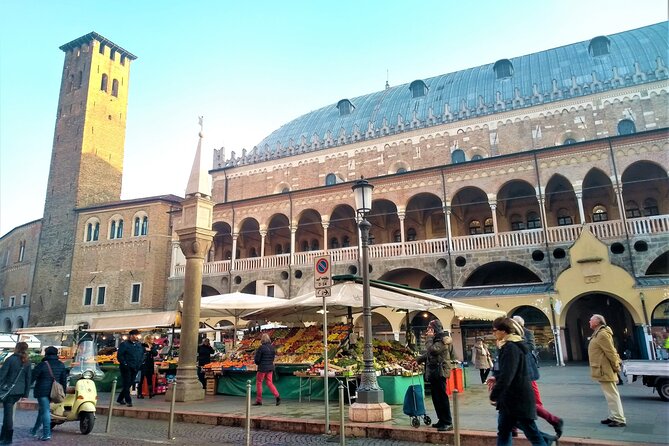
Right inside the same palace complex is the covered market Sotto il Salone. This is a key stop if you like seeing how locals eat and shop.
Think of it as a concentrated patch of traditional commerce where you’ll find specialty shops, including butchers and fishmongers, plus greengrocers and stalls selling oils, meats, cheeses, and other local staples.
What I like about putting this on the route is that it changes the pace. You’re no longer just reading plaques or admiring facades. You’re seeing the market world in a sheltered space.
Also, depending on the day and where the tasting is placed for your group, your included Paduan tasting could happen here (or at Caffè Pedrocchi). Either way, you get the idea of what people buy and enjoy.
Quartiere dell’Antico Ghetto Ebraico: Narrow Streets With Deep Context
Then the tour heads south toward Quartiere dell’Antico Ghetto Ebraico. This is a narrow-street labyrinth that forms the Jewish ghetto area.
The ghetto operated starting in 1603 and was abolished in 1797, under pressure linked to the French Revolution, when Jews were declared free and equal. That timeline is heavy, and the walk gives you the chance to understand it within the city’s street plan.
For your experience, the value is in how you move. You’re not just hearing a date list. You’re walking in a space shaped by centuries of policy and community life. It makes the story feel grounded.
If you want to be respectful and get more out of the stop, take a moment to look at the street turns and think about how people would have moved through here over time.
Palazzo Bo and the University of Padua: Academia Meets Public Streets
Next comes Palazzo Bo, the seat of the University of Padua, founded in 1222. The building still houses the Rectorate and the School of Law, and it’s also associated with the oldest Anatomical Theater in the world.
As with Il Salone, admission is not included, so you may not go inside during this specific tour. But the route still makes sense because seeing where the university sits helps you understand why Padua feels different from many other Italian cities. It isn’t only a place of pilgrims and markets. It’s also a place of learning that has been here a long time.
If you enjoy institutions and their physical footprints, this stop is a good anchor. You’ll see how the university’s legacy lives in the street-level experience.
Prato della Valle: The Large Square That Works Like an Outdoor Statues Book
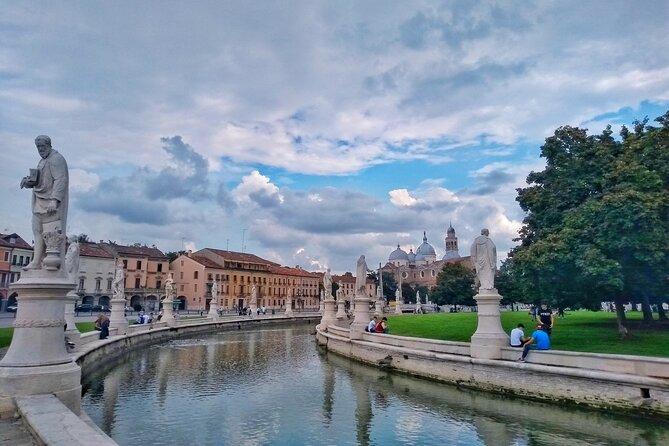
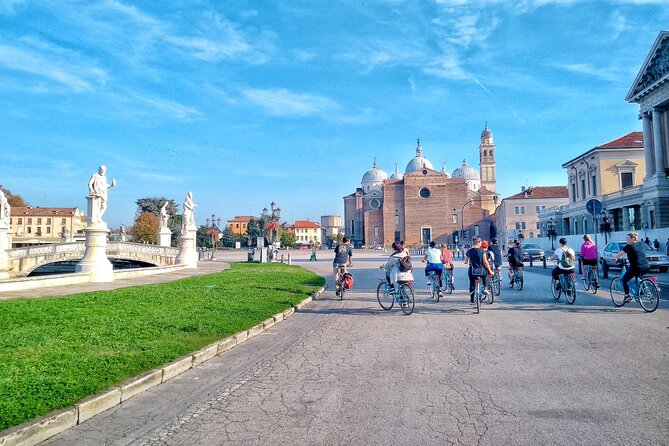
Then you move to Prato della Valle, the largest square in Padua and one of the largest in Europe. It’s famous for its 78 statues, and the tour frames it like an album of important figures tied to Padua.
This is one of those stops where the guide’s context helps you look longer. Without explanation, you might just see statues. With the guide’s framing, you start noticing the personalities and the idea of civic remembrance.
Even if you’re tired from walking, this is a good place to pause because the open space gives your eyes a break. You also get an easy moment to regroup before the final big religious landmark.
Basilica of St. Anthony (Il Santo): Pilgrimage Energy in a City Center
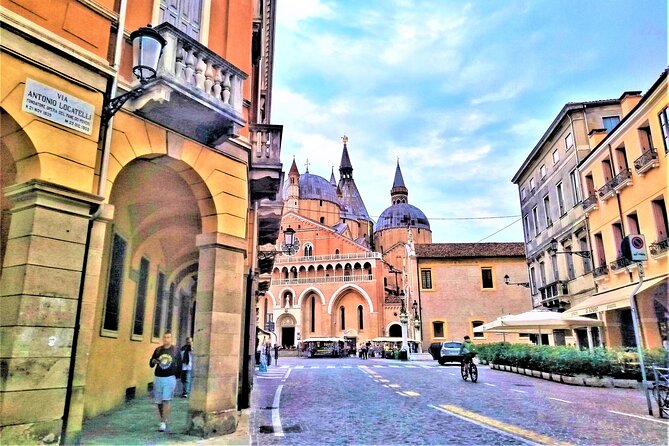
The tour ends at the Basilica of St. Anthony, also called Sant’Antonio and Il Santo. This basilica brings millions of pilgrims every year, mixing styles and cultures from around the world.
This stop is likely to feel emotional even if you’re not a religious traveler. The building’s purpose gathers people for reasons that go beyond sightseeing, and you can sense that as soon as you get close.
The tour keeps the focus practical. You don’t need to be an expert on religious art to appreciate why the site matters. You’ll have the basics, and you can decide what you want to do next on your own.
Price and Value: Why $130.18 Can Make Sense for This Route
At about $130.18 per person for roughly 3 hours, this isn’t a bargain-basement walk. But you are paying for a tightly planned route and a guided experience that combines several types of Padua all in one go.
Here’s what you effectively get for the price:
- A local tour leader and a guided walking route through major squares and landmarks
- Roundtrip transportation to the departure area
- A traditional Paduan tasting (either at Caffè Pedrocchi or at the Historical Market)
- The convenience of a mobile ticket and an English-speaking guide
- Insurance and technical organization from a certified travel agency
When I judge value, I look at how much friction you avoid. This tour reduces the need to plan a multi-stop mini-itinerary yourself, especially if you want markets plus historic monuments plus one special tasting without spending your limited time bouncing between spots.
Just remember the two notable exclusions: interior access to Il Salone in Palazzo della Ragione and Palazzo Bo is not included. If you care deeply about those interior experiences, factor in possible extra ticket costs.
Who This Tour Fits Best
This is a great match if:
- You want a compact, guided overview of Padua’s center in a few hours
- You like markets and food culture as much as monuments
- You value a small group experience, so the guide can answer questions
- You’re curious about how Padua connects commerce, civic life, learning, and pilgrimage
It’s also a decent choice if you have limited time, because the route hits major zones without needing a whole day.
If you’re someone who wants only museum interiors and long stays inside specific buildings, you might feel slightly impatient because some key interiors are not part of the included access.
Should You Book DA Venezia: Experience Padua Like a Local?
If you want Padua in a nutshell, with markets, mint coffee, historic squares, the ghetto quarter, and the basilica, this tour is easy to recommend. The pacing works for first-timers, and the tasting adds a sense of place you can’t get from photos alone.
I’d say book it if you appreciate a guided “walking map” style of travel and you’re open to spending most of your time outdoors and at market-level rather than inside every major building.
Skip it or plan extra time only if you specifically want included entry to Il Salone or Palazzo Bo, since admission there is listed as not included.
FAQ
How long is the Padua tour?
The tour lasts about 3 hours.
Where does the tour start and end?
It starts at Stazione FS di Padova, Piazzale della Stazione, 1, 35131 Padova PD, Italy, and it ends back at the same meeting point.
Is the tour offered in English?
Yes, it is offered in English.
Do I get a mobile ticket?
Yes. It includes a mobile ticket.
Is food or tasting included?
Yes. You get a typical Paduan tasting at Caffè Pedrocchi or at the Historical Market.
Is admission included for Palazzo della Ragione and Palazzo Bo?
No. Admission to Il Salone in Palazzo della Ragione is not included, and admission for Palazzo Bo is also not included.
What is the maximum group size?
The tour has a maximum of 8 travelers.
Is there any extra access fee on some dates?
On certain dates, people staying outside of Venice and visiting for the day may need to pay a €5 access fee. The tour notes that exemptions depend on the date, so you should check the applicable details.
What happens if the weather is bad?
The tour requires good weather. If it’s canceled due to poor weather, you’ll be offered a different date or a full refund.
Recently reviewed around Venice
- Skip the Line St. Mark’s Basilica Tour★ 3.5 · 5 reviews
- Shared Departure Transfer: Venice Hotels to Venice Train or Bus Station★ 3.5 · 73 reviews
- One-Day Venice: Skip-the-Line St. Mark’s Basilica, Walk & Gondola★ 4.0 · 20 reviews
- Another Side of the City: Discovering Authentic Venice★ 5.0 · 57 reviews
- Self Guided Tours Venice With 100 Captivating Audio Stories★ 5.0 · 3 reviews
- Secret Venice, an unusual walk – Private Walking Tour★ 5.0 · 61 reviews
- The Secret Venice + Cicheti & Wine Private Tour★ 5.0 · 21 reviews
- Venice Walking Tour with Audioguide on Your Smartphone★ 4.0 · 19 reviews