
Reviewed · HIDDEN VENICE TOURS
Walking Tour to Uncover the Hidden Venice
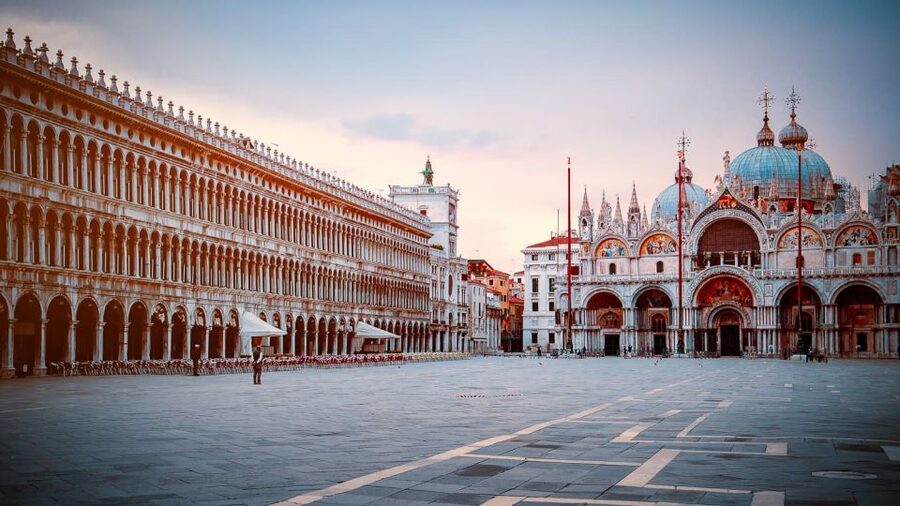
Venice is fascinating because it feels like a city built for wandering, then dared you to get lost on purpose. This walking tour is built for that mood, starting in the formal grandstand of St Mark’s and ending in the commerce street grid around Rialto. You get the big sights and also the in-between lanes that make Venice feel personal instead of packaged.
I really like two things about it. First, you have an official certified guide with a radio system, which helps you catch details in a crowd. Second, the pacing fits a short visit, with a tight route that mixes views, landmark exteriors, and smaller places like Campo SS. Giovanni e Paolo and the Mercerie. One drawback to plan for: it is not wheelchair or stroller accessible, and you will be outside at each stop with no entrance tickets included.
Key things you should know before you walk
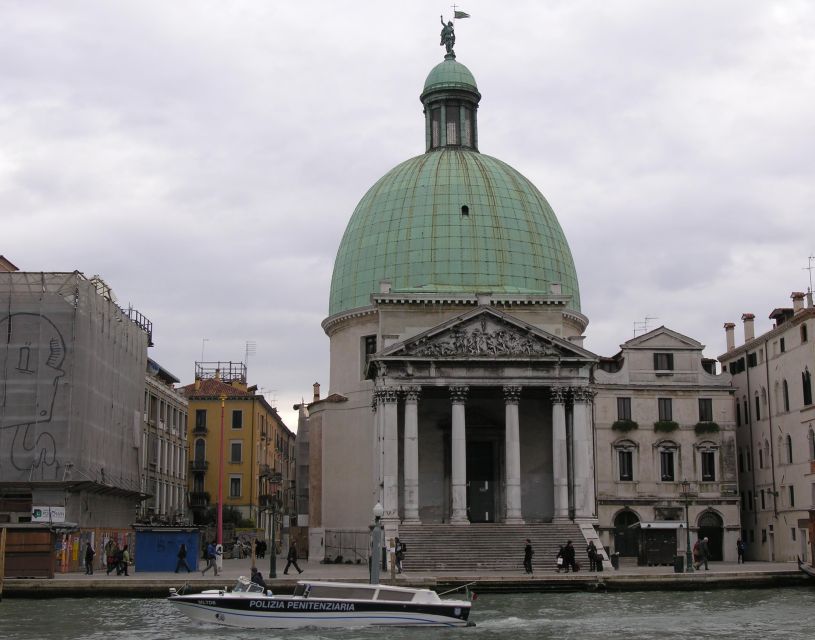
- St Mark’s to Rialto in 1.5 hours, so you get structure without spending your whole day in transit
- Panoramic viewpoints, including an ascent of the Campanile for sail-guiding history and skyline views
- Gothic power at Doge’s Palace, plus the story behind the fire and the Bridge of Sighs crossing
- Landmarks plus local texture, like Campo SS. Giovanni e Paolo and the Mercerie shopping street
- Marco Polo and Venice’s trade routes, tying legends to the city’s commercial engine
- Practical hearing support, since the tour provides a radio system for clearer guide commentary
Getting oriented at St Mark’s, where Venice shows off
The tour begins at Calle larga de l’Ascension 1256, at the meeting point outside the post office near St Mark’s Square and the Correr Museum. If you want to feel confident navigating Venice afterward, starting here makes sense. St Mark’s is the center of the old republic, and from the first few turns you can see how the city’s power and its water-based logistics shaped everything.
One of the best parts is the guide’s framing. You are not just looking at buildings, you are learning why Venice made certain choices: sea power, wealth, and control of movement. On tours like this, good guides also bring personal color. Past guides on this route have been praised for being from Venice and sharing small childhood details, like stories that turn familiar squares into real places in your mind. You do not need to be a history nerd, because the explanation stays tied to what you see under your feet.
More off-the-beaten-path tours of Venice:
- Venice: Rialto Bridge & Offbeat Unusual Venice Walking Tour
★ 4.2 · 3,538 reviews - Tour of The Real Hidden Venice
★ 5.0 · 2,006 reviews - Venice: Off the Beaten Path Private Gondola Ride
★ 4.3 · 703 reviews
St Mark’s Basilica area: mosaics, golden horses, and why people came
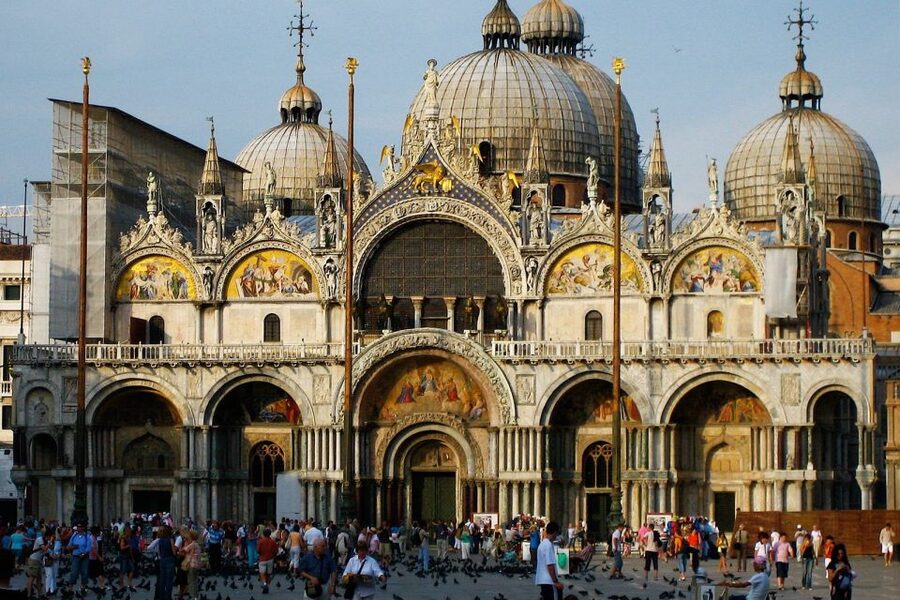
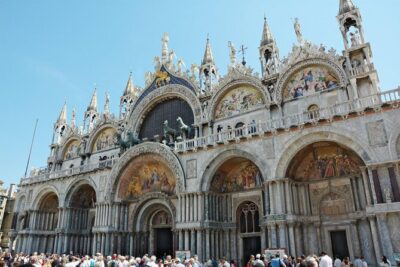
The walking route includes Saint Mark’s Basilica right at the start. Even if you do not go inside on this specific tour, you still get the payoff of seeing it as Venice intended: a statement piece. The mosaics and the famous golden horses are the kind of imagery that looks almost unreal from street level, and it helps to have context about why these details mattered to the republic’s image.
From a practical standpoint, this is where your comfort shoes get tested. The area is busy and tight, and you may pause for photos and narration. The radio system helps here, because you are competing with street noise and other tour groups. I also like that the guide is explaining at human scale, not reading from a script. You start noticing how Venice likes to mix sacred art with political theater.
Doge’s Palace: Gothic drama and the fire story
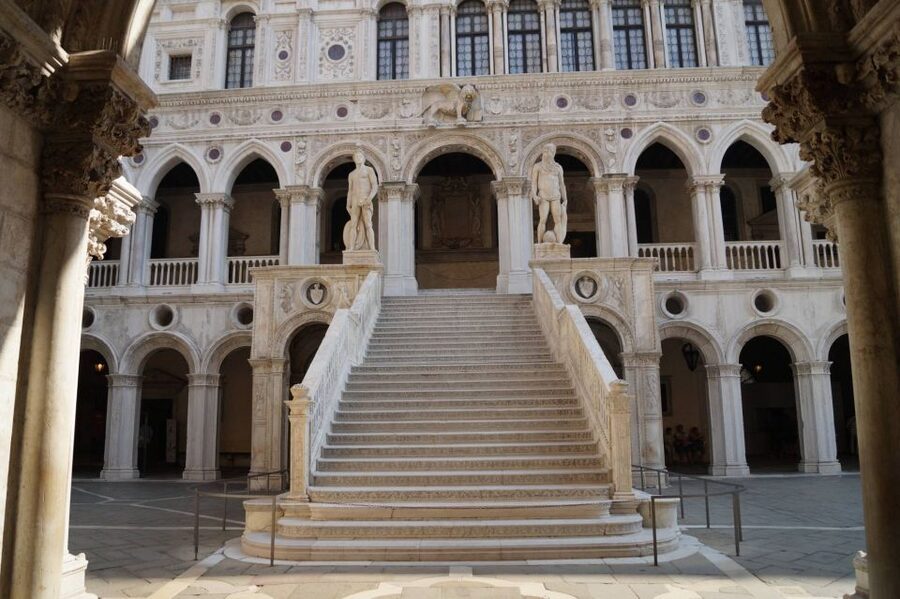
Next up is the Doge’s Palace, Venice’s “public face” of power. The palace is Gothic in style and meant to impress, but the real hook is how the guide connects the building to the republic’s governance and crises. You will hear about its history, including the devastating fire it endured. That detail changes how you see the structure, because you stop viewing it as just pretty architecture and start seeing it as something built, damaged, rebuilt, and symbolically reasserted.
And yes, you will likely get that photo moment where you line up the angles and think, okay, this is one of those cities where every corner becomes a viewpoint. The tour doesn’t just throw facts at you either. You walk with intent, then you pause to look, which is the best way to absorb Venice quickly without feeling like you are speed-running it.
Campanile for skyline views, and the lighthouse connection
A standout moment is the Campanile ascent. The guide ties this tower to its older purpose as a lighthouse guiding sailors. That detail matters because it reframes what you see from above. From the top, Venice becomes a pattern of rooftops, canals, and clustered neighborhoods, and you can start making sense of where you are in relation to the water lanes.
This is one of those segments where the tour earns its value. In 90 minutes, you do not get many chances for true “wow” views, so having a structured viewpoint is a big deal. The route also helps you understand why towers like this were important for navigation and communication, not just skyline decoration.
More walking tours of Venice:
- Venice Walking Tour and Gondola Ride
★ 3.5 · 3,630 reviews - Private 3 hrs Venice Tour: St Mark’s, Walking tour & Boat tour
★ 4.0 · 3,372 reviews - Venice: City Center Historical Guided Walking Tour
★ 4.2 · 1,873 reviews - Venice: Walking Guided Tour of the City Must-See Sites
★ 4.7 · 1,095 reviews
Bridge of Sighs and the in-between spaces people miss
The tour then crosses the Bridge of Sighs and continues into deeper architectural corners. Even if you have seen photos of the bridge, walking through the surrounding atmosphere is different. It’s narrow, surrounded by historic stonework, and the guide’s narration helps you connect the bridge to how Venice moved people and power.
What I like here is that you are not only chasing famous icons. You are learning to look at the space between them. Venice’s charm is frequently in the seams: the little turns, the half-hidden facades, the way a square suddenly opens up after a tight alley.
Campo SS. Giovanni e Paolo, Venice’s big church energy
One of the stops is Campo SS. Giovanni e Paolo, which the tour highlights as the largest church in Venice. This square gives you a different feel than St Mark’s. It’s still grand, but the atmosphere feels more like a working city and less like a single monumental stage.
If you like architecture, this is where it clicks that Venice is not one uniform style. You see shifts in how different eras expressed wealth and devotion, and the guide keeps the explanation anchored to what your eyes can catch in real time. You might also notice how crowds behave differently here. It’s the kind of place where you can stand for a moment, look around, and feel your sense of place improve.
Scuola Grande di San Marco: decorated beyond the obvious
The route includes the Scuola Grande di San Marco. This building is known for its decoration, and it’s one of the best examples of how Venice spread its identity across religious and civic institutions, not just palaces and cathedrals.
You do not need to be an art student to appreciate it. The key is that the guide points out what you would otherwise ignore. Look up, notice the ornamentation rhythm, and understand how these institutions signaled status and community. This stop is also a reminder that the “hidden Venice” vibe is often about attention, not secrecy. Venice’s details are there, but only a good guide pushes your gaze to the right places.
Marco Polo’s home and the legend-to-city link
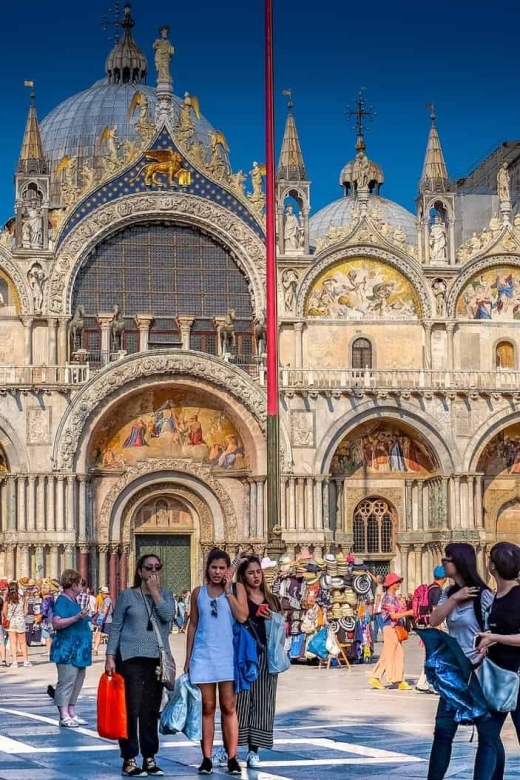
The tour includes Marco Polo’s house as a stop. Even if you only know Marco Polo as a name, this helps anchor him to a physical sense of place. You learn about the legendary explorer who called Venice home, and the guide uses that connection to show how stories became part of the city’s identity and reputation.
For me, this is one of the tour’s smartest moves. Legends can feel abstract. A location makes it real. It also gives you a reason to care about the surrounding streets, because suddenly you see how the city’s trade, navigation, and mythmaking reinforced each other.
Mercerie for commerce energy and everyday Venice
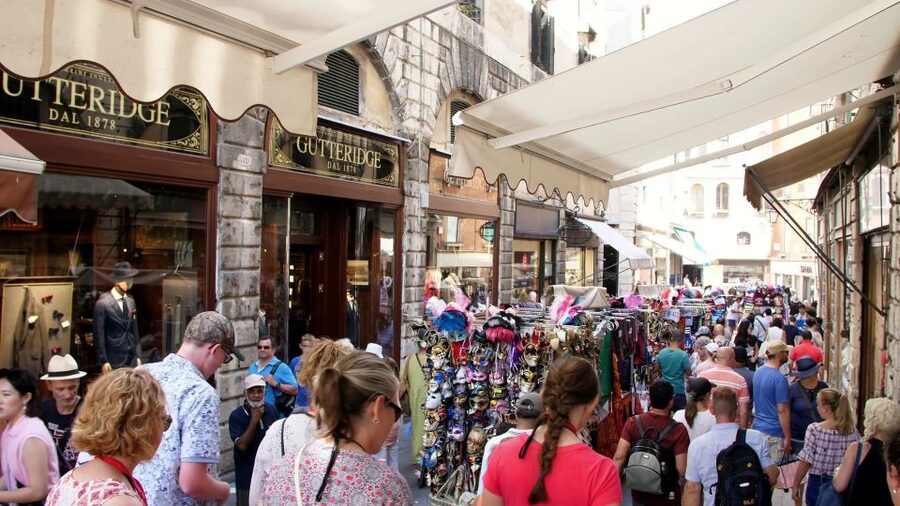
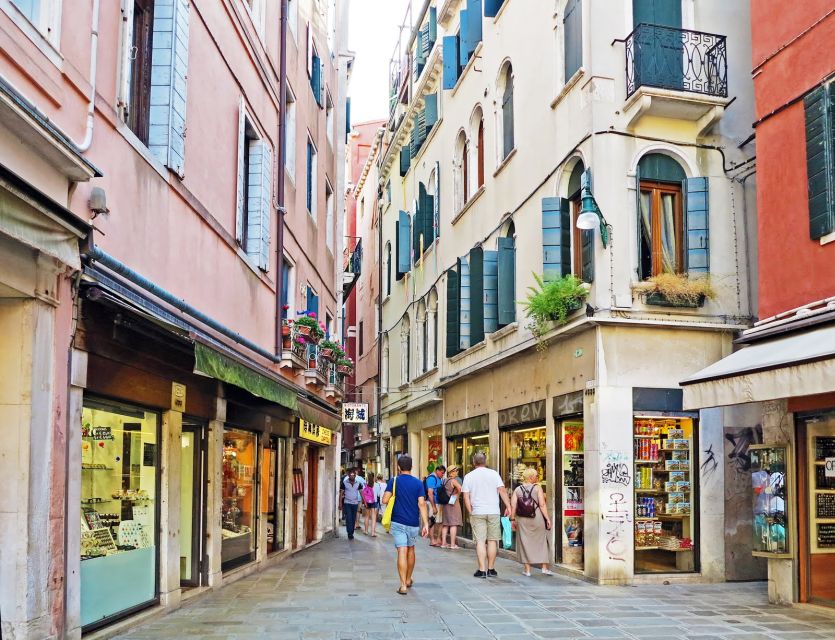
Then you head into the Mercerie, Venice’s historic commerce heart. This is where the tour stops being about the power of rulers and starts feeling closer to how money and goods moved through the city.
The Mercerie street vibe helps you understand why Venice’s waterfront mattered so much. Streets like these were about access to customers and the flow of business. You’ll pass through the kind of scene that looks touristy at first glance, but with a guided lens, it becomes about urban function. You stop seeing Venice as only museums and start seeing it as a city with habits and economic lifelines.
If you want a practical takeaway, this is where I think the tour pays off long after you finish. After the walk, you can return to the Mercerie area and shop or snack with better orientation, not just wandering with a map that never feels accurate.
Rialto Bridge: the symbol, the trade, the photos
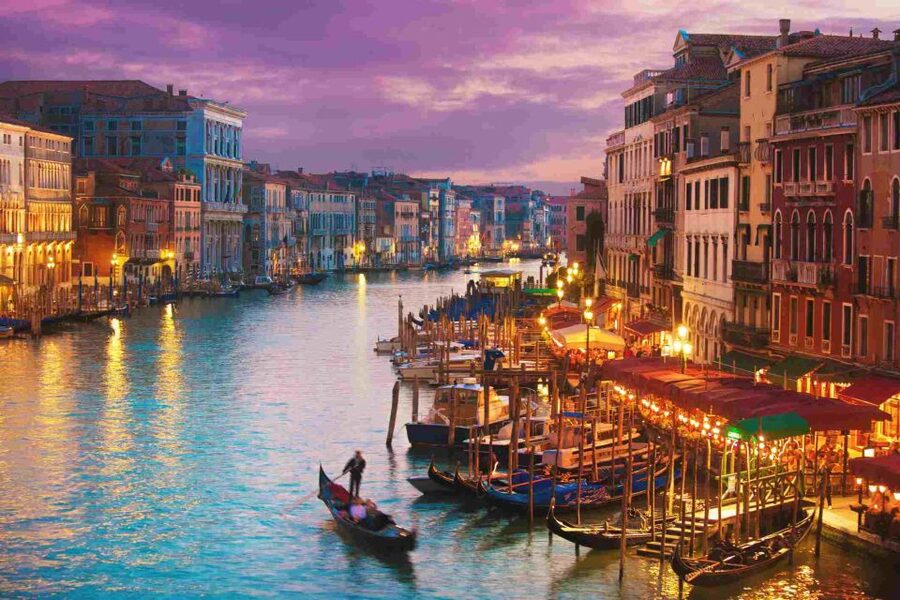
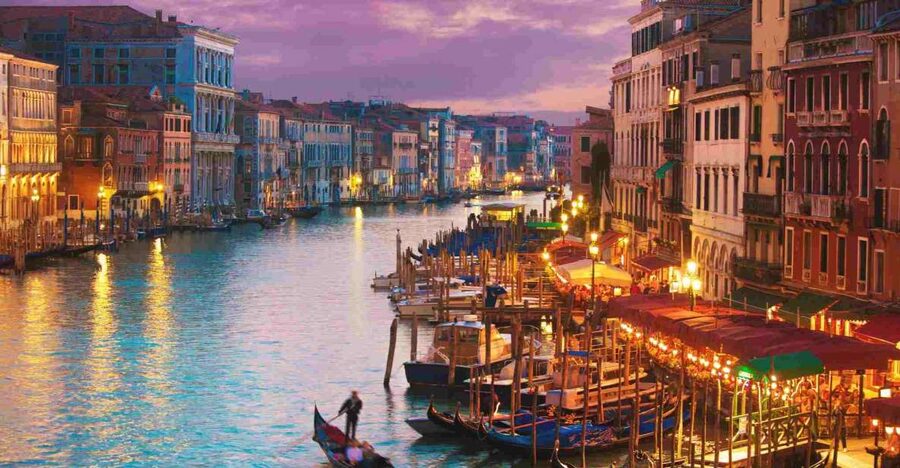
The route includes passing by the Rialto Bridge, a major symbol of Venice’s trade. Even if you have seen it in pictures, the bridge’s role becomes clearer when the guide connects it to the idea of crossing points for commerce. Rialto is one of those places where history is tied to movement, and movement is the point of Venice.
It’s a good spot to pause and absorb the scale. You see how the bridge frames water routes and how the surrounding lanes funnel people toward specific views. This is also a place where the crowd density can feel intense. If your patience runs low, just stick to a simple strategy: step aside for your photos, then let the flow pass before you try to linger.
Teatro La Fenice and the phoenix after ashes
Another stop in the route is Teatro La Fenice, described as a phoenix that rose from the ashes. That phrasing is perfect for Venice’s mindset. The city repeatedly rebuilds, and its identity includes the scars and the comebacks. Hearing that story while passing the theater adds emotional weight to a building that could otherwise feel like just another impressive facade.
Even if you do not enter, you can appreciate the symbolism. It’s also a reminder that Venice’s culture runs through performance and public gathering, not only churches and palaces.
Scala Contarini del Bovolo: the spiral staircase payoff
The tour concludes at the Scala Contarini del Bovolo, a unique gothic spiral staircase. The guide’s storytelling here helps you understand that this is not just a clever architectural trick. Staircases like this were functional and symbolic, turning vertical movement into a visible statement.
This finish has a nice rhythm. After the big squares and landmark heavy hitters, the staircase feels intimate, almost like a final surprise tucked into the route. You then return to Calle larga de l’Ascension 1256, where you can keep exploring on your own with a better sense of how Venice “routes” people from one meaning to the next.
Value for $51 in 90 minutes: why it feels efficient
At $51 per person for about 1.5 hours, the key value is not that you see everything. It’s that you get a guided line through the city’s most important visual and historical anchors, plus enough side-street texture to feel like you learned something real.
Here’s how I judge whether it is worth it:
- Time efficiency: You get a strong Venice sampler in a short slot, useful if you only have a morning or early afternoon.
- Hearing support: The radio system makes narration easier, especially in crowded squares.
- Outside-only viewing: Since entrance tickets are not included and the tour operates outside attractions, you are paying for guidance and orientation, not admissions.
- View moments included: Campanile ascent gives you a payoff that is hard to recreate solo without planning.
If you are the kind of visitor who likes to return later to the exact places you loved, this tour is a solid primer. If you want deep interior access everywhere, you will likely need to add separate ticketed visits on other days.
Practical tips that make the walk smoother
This walk rewards preparation more than speed. You want comfortable shoes, because Venice street surfaces can be uneven and you will stand for narration at several points. Bring your passport or ID card as well.
A few other realities to plan around:
- No strollers and no large bags, so travel light.
- No pets.
- It is not wheelchair or stroller accessible, so think about your mobility needs before booking.
- The itinerary is mostly outside attractions, and entrance tickets are not included, so if you are hoping to go in, you’ll need separate plans.
Also, keep an eye on timing. The meeting instruction is to arrive 15 minutes before departure time. Venice tours run on tight meeting windows, and you do not want to waste prime walking time.
Who should book, and who might prefer something else
This is a great fit if you:
- Have a limited amount of time and want a guided overview with serious anchor points like St Mark’s, Doge’s Palace, and Rialto
- Like architecture and city layout, not just museum artifacts
- Want local storytelling, with guides who can make famous sites feel less like postcards
It may not fit if you:
- Need wheelchair access or stroller-friendly routes
- Expect lots of interior visits, because the tour stays outside and tickets are not included
- Want a very long, slow wander, because 1.5 hours means a compact route and brief stops
Should you book “Hidden Venice” on foot?
I’d book it if you want the classic Venice headline sights paired with a guide who helps you notice what most people miss. The strong points are the guide quality, the radio system for clearer commentary, and the inclusion of meaningful viewpoints like the Campanile plus iconic crossings like the Bridge of Sighs.
Skip it or plan differently if you need accessibility support, or if you specifically want entrance-ticket experiences. If that’s you, you can still use this as a planning tool, then add ticketed visits on your own.
FAQ
How long is the walking tour?
The tour lasts about 1.5 hours.
Where do I meet the guide?
Meet in front of the post office near Correr Museum and St Mark’s Square. Look for the meeting point sign on the wooden kiosk at Calle larga de l’Ascension 1256.
What is included in the price?
You get an official certified guide, a radio system to hear the guide, and a guided city walking tour in Venice.
Are entrance tickets included for the attractions?
No. The tour operates outside each attraction and entrance tickets are not included.
Is the tour suitable for strollers or wheelchairs?
No. It is not wheelchair and stroller accessible, and it is not suitable for people with mobility impairments.
What should I bring, and are there restrictions?
Bring passport or an ID card and comfortable shoes. Strollers, luggage or large bags, oversize luggage, and pets are not allowed.
Recently reviewed around Venice
- Yummy Cooking Class In Venice★ 4.9 · 122 reviews
- VIRTUAL MUSEUM: Creature di Gomma – Venice Vintage Toys★ 4.7 · 3 reviews
- Venice: City Tour & Skip the Line for St. Mark’s Basilica★ 4.1 · 84 reviews
- Your evening in Venice – Legends&Ghosts&Aperitif★ 4.7 · 79 reviews
- Venice: Watercolor Painting Class at the Prisons Palace★ 4.7 · 27 reviews
- Wine Tasting in Venice★ 4.6 · 42 reviews
- Venice Walking Tour from St. Mark’s to Rialto Bridge★ 4.5 · 12 reviews
- Venice: Walking Tour & Gondola Ride★ 4.4 · 54 reviews
Hidden Venice Tours, compared.
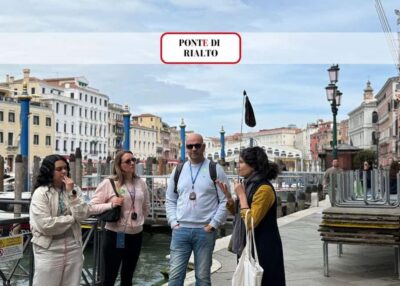
Rialto Bridge & Offbeat Unusual Venice Walking Tour
Read our review →

Venice Private Gondola Ride: Explore Hidden Canals and Sights
Read our review →
Venice 3,5 hrs tour: Doge’s Palace, St Mark’s and Hidden Gems
Read our review →
Local Secrets of Venice Tapas & Wine Walking Tour
Read our review →Browse the lists this tour appears in