
Reviewed · VENICE
Prisons’ Palace: Maleficia, Inquistion torture tools
Prisons’ Palace: Maleficia is interesting because it puts the Holy Office and centuries of witchcraft persecution into one focused visit, inside a historic prison complex near San Marco. I like the Prisons’ Palace setting and how it makes the story feel anchored in real places, not just a lecture.
I also like the audio guide approach, paired with display items like documents and reproduced instruments of justice. It gives you enough context to understand what you are looking at without needing a history degree first.
One consideration: the subject matter is heavy, and the experience is not recommended for limited mobility since it is not suitable for people with mobility impairments.
Key highlights at a glance
- Prisons’ Palace location right beside San Marco, close to Doge’s Palace
- Maleficia exhibition ticket with an audio guide in multiple languages
- Reproductions and documents tied to the Holy Office and witchcraft persecutions
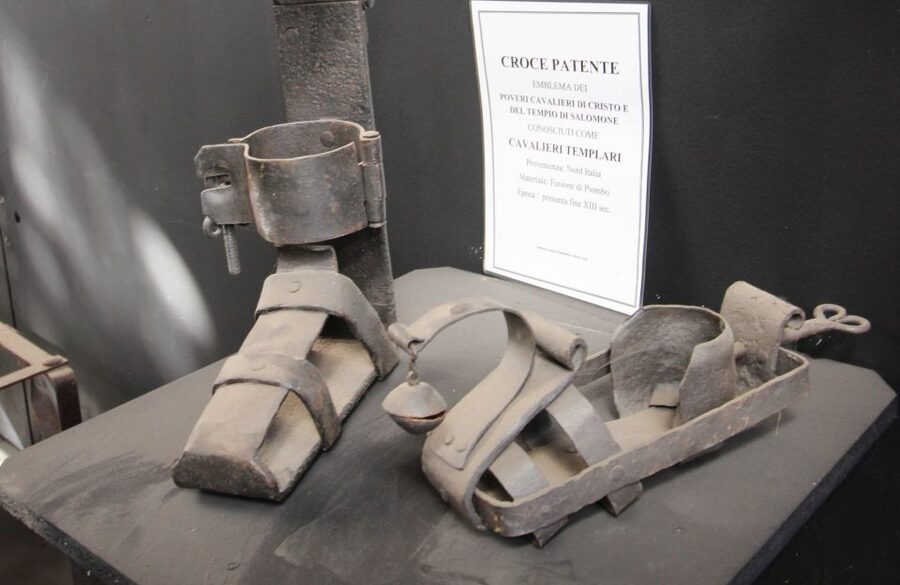
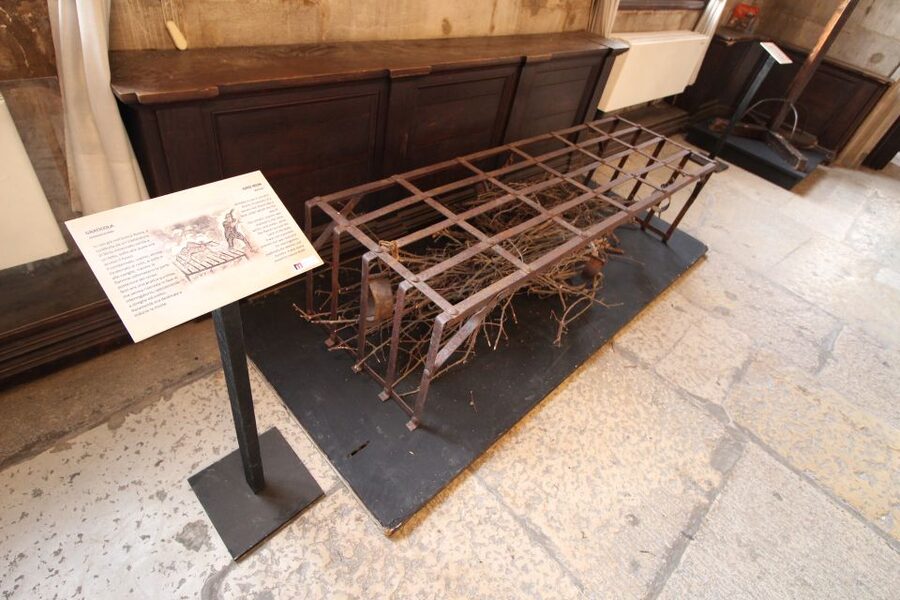
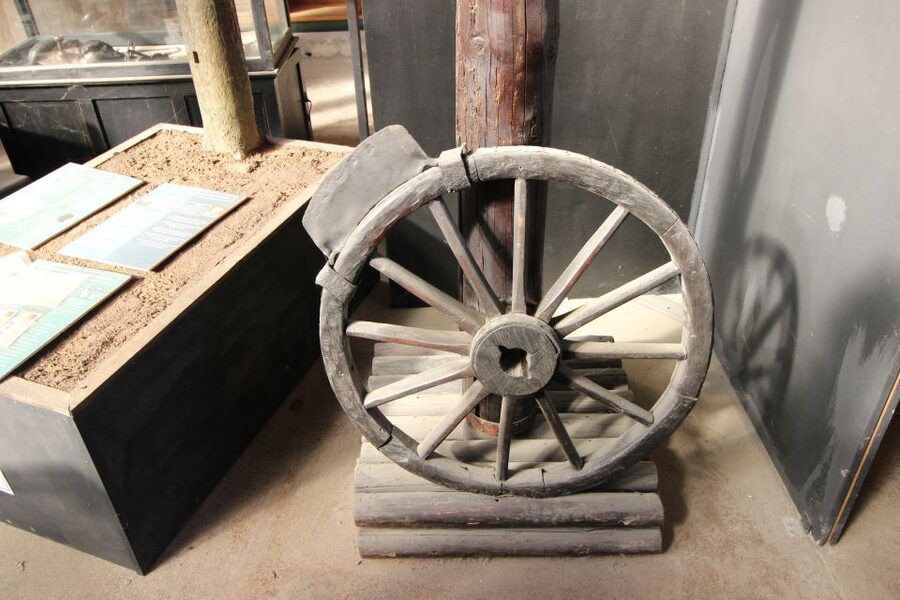
- Period instruments of justice including items described as a garrote, head crusher, whipping post, and pillory
- A cell for women accused of witchcraft, which adds an emotional historical focus
Finding the Prisons’ Palace near San Marco (and skipping the wrong entrance)
This is a convenient stop if you are already in the Doge’s Palace and San Marco Square area. The Prisons’ Palace sits close to San Marco Square, beside Doge’s Palace, and that helps a lot when you are trying to keep the day simple.
Here’s the key navigation tip: do not go to the entrance of Doge’s Palace. To reach the Prisons’ Palace, cross the bridge on the right side of Doge’s Palace entrance. If you walk in the wrong direction, you’ll lose time in a place where foot traffic can make you second-guess every turn.
Because the total visit is about 1 hour, getting the first five minutes right matters. You want to start inside with time to listen carefully to the audio guide and look at the displays at a relaxed pace.
Other things people book in Venice:
- Venice: Doge’s Palace Reserved Entry Ticket
★ 4.6 · 42,716 reviews - Venice: Grand Canal Gondola Ride with App Commentary
★ 4.1 · 18,908 reviews - Boat Trip: Glimpse of Murano, Torcello & Burano Islands
★ 4.3 · 15,699 reviews
What you really get for the $11 ticket and 1-hour time slot
At $11 per person, this is priced like a focused museum stop rather than a long guided tour. You’re not paying for a full afternoon program. You’re paying for a compact experience: entry to the Maleficia Museum plus audio commentary.
The included audio guide means you can set your own pace. You can stop where a document catches your eye, then move on before you feel rushed. With one hour, I recommend treating it like a “select your moments” visit, not an attempt to read everything word-for-word.
Also, you can skip the ticket line. In Venice, that helps more than you might think, because even short waits add up when you’re moving between sites.
Inside the Prisons’ Palace: why this setting matters
The Maleficia exhibition is housed in the Prisons’ Palace, with the display set in the context of what happened there between the 15th and 18th centuries. That timeframe is important. It tells you this is not only about “witch hunts” in general, but about the machinery of accusation and punishment that unfolded over generations.
What makes the location more than a backdrop is the way the exhibits link documents and instruments of justice to the prison setting. The displays are built around suggestive testimonies, documents, and objects, showing how the Holy Office used evidence, authority, and punishment to counter what it defined as wrongdoing.
You should expect a reflective tone. The exhibition is designed to make you think about suffering inflicted by the tribunal and what it meant for people who were condemned to death or torture during that era.
Maleficia Museum story: Holy Office documents and the idea of evidence
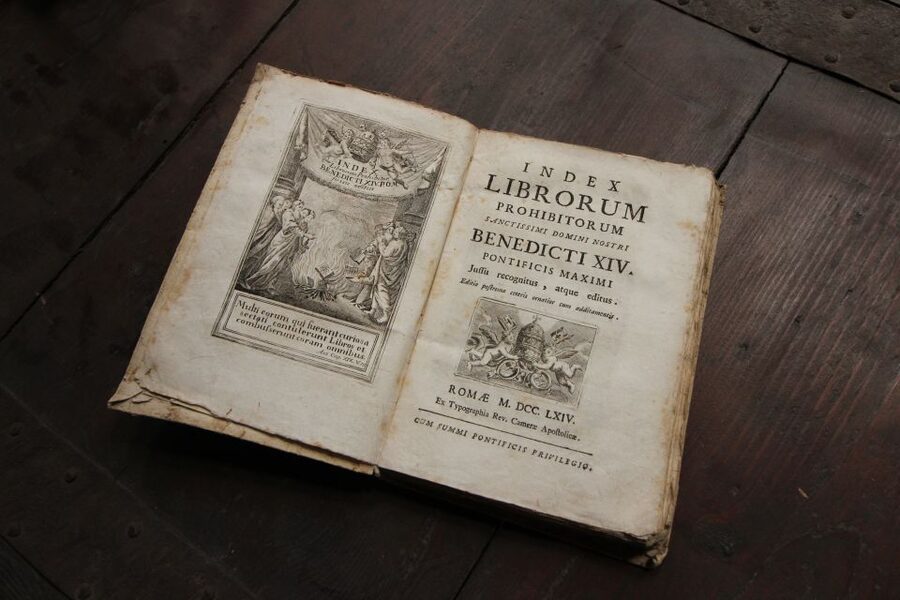
One of the most valuable parts of this visit is how it frames witchcraft persecution through the tools of an institution. You will see ancient documents used by the Holy Office in the persecution of witchcraft, along with reproductions and interpretive materials.
The exhibition is tied to the Maleficia theme, and it even references instruments described in a Maleficia book, according to the display information. That kind of “this is how they thought and acted” connection is what turns the content from spooky props into something more explanatory.
In plain terms, you get a sense that this was not random cruelty. It was a system with official language, categories, and procedures. Even if you only spend a few minutes listening closely, the audio guide style should help you connect the documents to the physical instruments on view.
Same city, a very different kind of day on the water:
- Venice: Grand Canal by Gondola with Live Commentary
★ 4.1 · 13,681 reviews - Venice: La Fenice Opera House Entry Ticket with Audio Guide
★ 4.6 · 11,742 reviews - Doge’s Palace & St. Mark’s Basilica with Terrace Access Tour
★ 4.7 · 10,697 reviews - Venice: Burano, Torcello & Murano Boat Tour w/Glassblowing
★ 4.4 · 10,245 reviews
The “instruments of torture” rooms: garrote, head crusher, pillory, whipping post
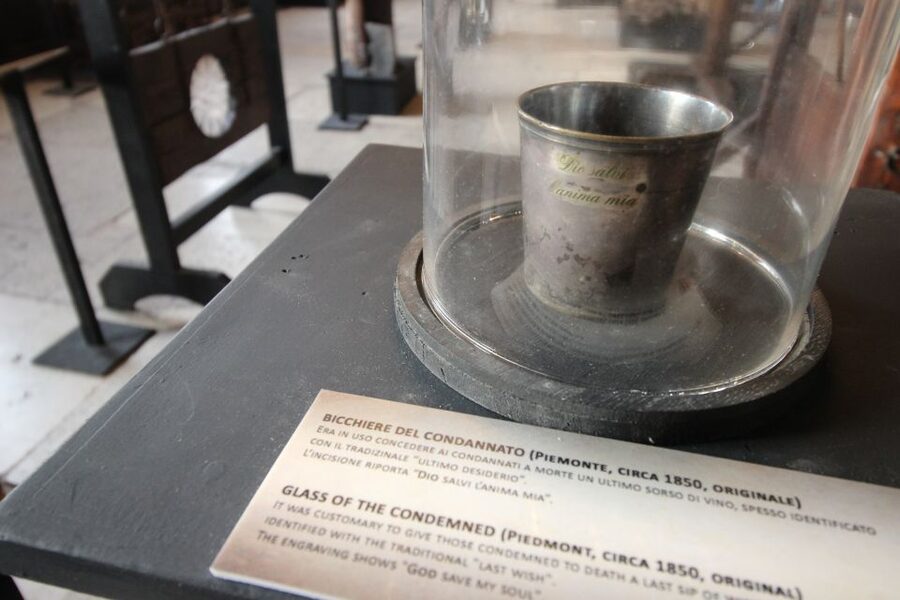
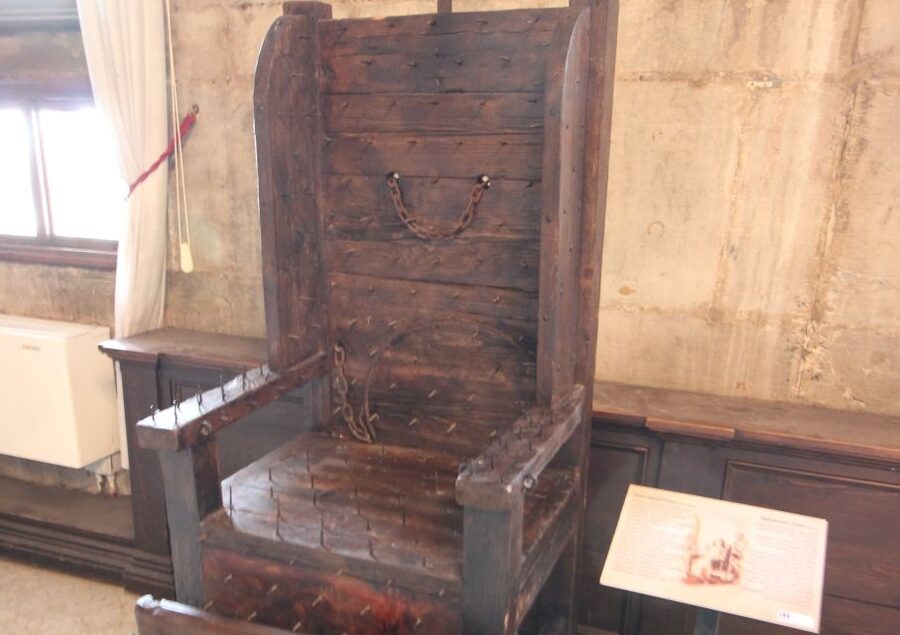
This is the section where the exhibition does not pull punches. You will encounter objects presented as instruments of justice associated with the Inquisition, including a garrote, head crusher, and a whipping post. You’ll also see an item described as a pillory.
A useful way to approach this: don’t rush past the labels. Even if you are not a history buff, take a second to read what the exhibit says each item was used for. The value here is understanding the logic of punishment as it was presented by the authorities at the time.
It’s also worth knowing that these are presented as instruments used in punishment, with the emotional weight of the topic built into the exhibition design. If you prefer lighter museum content, this is not that kind of visit.
Tip: keep your headphones or audio device at a comfortable volume and let the narration do the heavy lifting. You’ll get more from the exhibits if you use the audio commentary to guide your attention instead of trying to translate everything yourself.
Women accused of witchcraft: the cell and what it changes in the experience
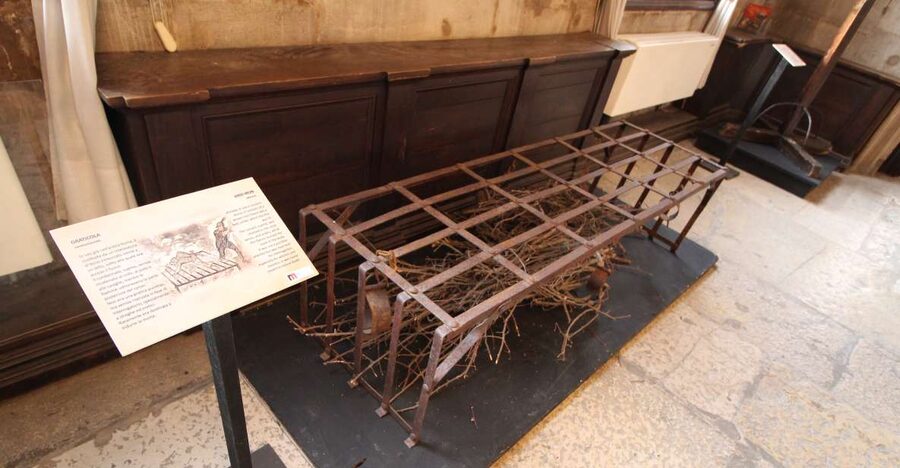
A standout element listed for the exhibition is a cell for women accused of witchcraft. That detail changes the tone of the visit in a meaningful way.
Instead of only thinking in abstract terms about institutions, you get a physical reminder of imprisonment and confinement. It encourages you to picture real people losing freedom under accusations labeled as evil spells or magical arts.
If you are the kind of visitor who wants history to feel personal, this is likely the emotional anchor of the one-hour visit. Even without reading every document, the cell segment gives the exhibition a specific human focus.
Casanova, famous accusations, and why the exhibition mentions big names
The exhibition information also notes that many women were condemned to death, and it mentions Giacomo Casanova as an example of a famous person accused of dabbling in magic and the occult.
This kind of reference can help you keep the story connected to the broader culture of the time. It reminds you that accusations could reach beyond the usual targets and into the lives of well known figures.
Just keep your expectations realistic: a mention like this is still part of a museum display. It is meant to add context, not replace a full biography. The value is the way it shows the reach of the tribunal’s mindset.
How to get the most from a 1-hour visit without feeling rushed
With only 1 hour, your best strategy is to plan your attention. You will likely see multiple artifact areas and document displays, plus the instrument-of-justice section and the cell.
Here’s how I’d structure it in your head before you enter:
1) Start with the documents and reproductions so you understand the institution’s role.
2) Then move into the instruments of justice so you can connect those objects to the earlier context.
3) Finish with the cell segment, since it tends to land emotionally and gives your visit a clear ending point.
Use the audio guide actively. If you let it play passively, you’ll miss the point of why the exhibition pairs certain objects with certain historical framing.
Also, the subject matter is intense. If you need breaks, pause near the less graphic displays and let the narration catch up to your pace. One of the advantages of an audio guide is that you can control the rhythm.
Opening hours and when to go for a calmer experience
The Prisons’ Palace is open from 10:00 AM to 5:00 PM. Since your visit is about 1 hour, you can build it into your day without squeezing. If you want the museum to feel less chaotic, consider going earlier in the day so you are not navigating crowds around San Marco later.
Plan your arrival time to match your energy. If you are already touring multiple sites that day, this one can feel heavier. It’s better as a central stop rather than something you add at the end when you are tired.
Price and value: is it worth $11 in Venice?
For $11 per person, you are paying for a tight package:
- Entrance ticket to the Maleficia Museum
- Audio guide commentary
- Skip the ticket line
In Venice, the cost of entry to sites can jump quickly. Here, the price is relatively modest for a museum experience tied to a specific historical theme and delivered through audio narration.
The real question is fit. If you want a short, focused visit that explains the Holy Office and witchcraft persecution through documents and instruments of justice, it is good value. If you want something light, or you prefer broad art or architecture coverage, you might find it too narrow or too dark.
The exhibition is also only about 1 hour. That means it is designed to be efficient. You won’t leave feeling like you spent half the day there, but you also won’t leave with a sense that it dragged.
What the ratings tell you about expectations
The experience has an average rating of 4.1 out of 5 from 66 reviews. That usually points to “solid, meets many expectations,” with some people wanting more.
One common kind of criticism in the provided feedback is that it could do more, with the sense that Venice has a lot to tell on the topic and the exhibition might not cover enough angles for everyone. The positive reaction centers on the visit being at the expected level, which suggests the museum largely delivers on what it sets out to do.
So you should treat this as a focused stop. It is not a massive, multi-day deep program. If your expectations match a compact one-hour museum visit, the odds are better that you’ll feel satisfied.
Who should book this, and who should skip
Book this if you:
- Like history shown through objects, documents, and institutions
- Want a short visit near San Marco Square
- Prefer an audio guide format so you can control your pace
- Are comfortable with themes related to persecution and torture instruments
Consider skipping if you:
- Want a family-friendly outing built around entertainment
- Strongly dislike museum content focused on torture or imprisonment
- Have limited mobility, since it is not recommended for people with mobility impairments
Also, if you are planning this right after another emotionally intense site, give yourself some mental space. This exhibition asks you to reflect on suffering and condemnation, and you’ll enjoy it more if you do not rush through it.
Should you book Prisons’ Palace: Maleficia?
If your goal is a compact, historically framed museum stop near San Marco, I think this is a good booking. The mix of documents, reproduced materials, and the audio guide makes it more than a quick look at props. At $11 for about 1 hour, it is also a reasonable value for Venice.
I would only skip it if the subject matter feels too heavy for your current trip mood, or if you need an option that works well with mobility limitations. Otherwise, go with a plan: arrive, take your time with the Holy Office context first, then walk through the instruments and the women’s cell segment. That order helps the exhibition make sense instead of feeling like separate exhibits.
FAQ
Where is the Prisons’ Palace meeting point?
It is close to San Marco Square beside Doge’s Palace. Do not go to the entrance of Doge’s Palace, cross the bridge on the right side of Doge’s Palace entrance to reach the Prisons’ Palace.
How long does this experience last?
The duration is 1 hour.
How much is the ticket?
The price is $11 per person.
What is included with the ticket?
You get an entrance ticket to the Maleficia Museum and commentary by audio guide.
Is there a skip-the-line option?
Yes, it includes skipping the ticket line.
What languages is the audio guide available in?
The audio guide is available in English, French, Italian, and Spanish.
What are the opening hours?
It is open from 10:00 AM to 5:00 PM.
Is this experience suitable for limited mobility?
It is not recommended for people with limited mobility, and it is not suitable for people with mobility impairments.
Is there free cancellation and reserve now, pay later?
Yes. You can cancel up to 24 hours in advance for a full refund. You can reserve now and pay later.
Recently reviewed around Venice
- Yummy Cooking Class In Venice★ 4.9 · 122 reviews
- VIRTUAL MUSEUM: Creature di Gomma – Venice Vintage Toys★ 4.7 · 3 reviews
- Venice: City Tour & Skip the Line for St. Mark’s Basilica★ 4.1 · 84 reviews
- Your evening in Venice – Legends&Ghosts&Aperitif★ 4.7 · 79 reviews
- Venice: Watercolor Painting Class at the Prisons Palace★ 4.7 · 27 reviews
- Walking Tour to Uncover the Hidden Venice★ 4.4 · 34 reviews
- Wine Tasting in Venice★ 4.6 · 42 reviews
- Venice Walking Tour from St. Mark’s to Rialto Bridge★ 4.5 · 12 reviews