
Reviewed · VENICE
New – Maleficia: Inquisition, Torture and Witchcraft between the centuries
This exhibition turns Venice’s shadowy legal world into something you can actually see. Maleficia: Inquisition, Torture and Witchcraft between the centuries brings together suggestive testimonies, documents, and objects tied to the Holy Office and its witchcraft persecutions. It is staged inside the Palazzo delle Prigioni, the historic Prisons’ Palace between the 15th and 18th centuries.
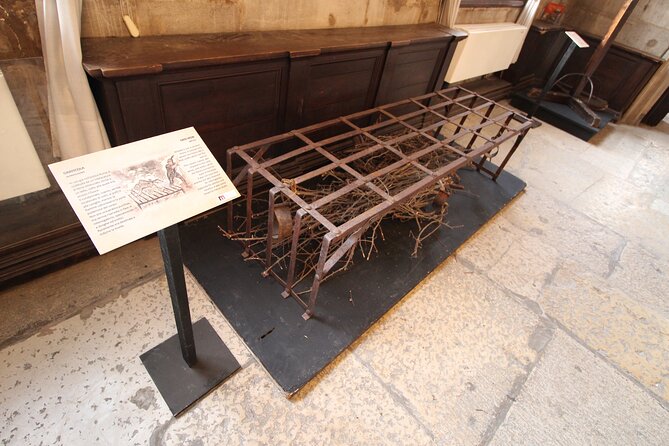
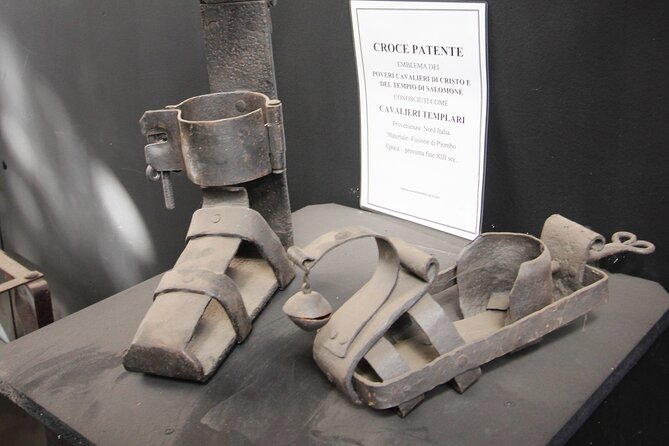
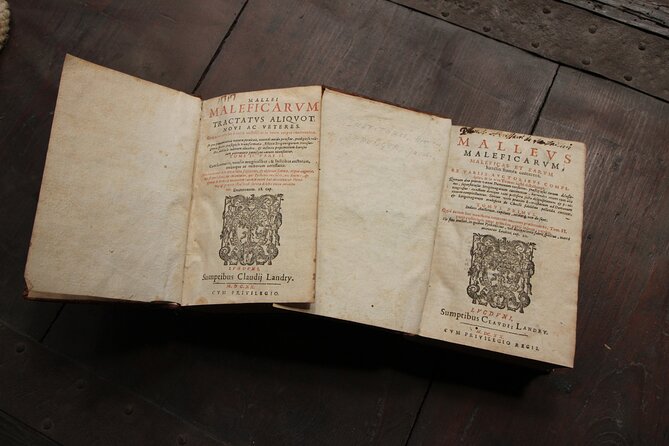
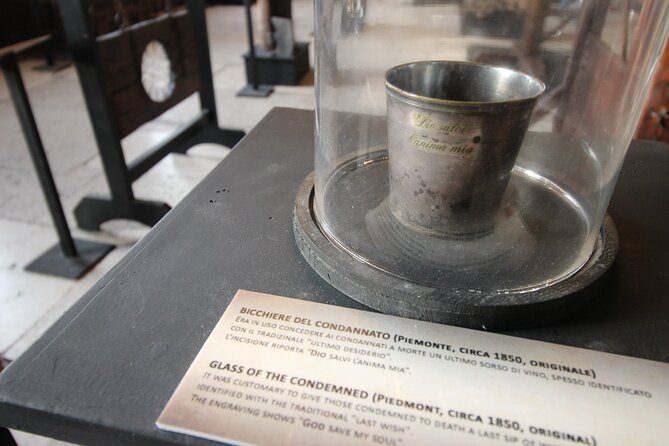
I love the way the visit uses original artifacts and reproductions to make the story feel concrete, not like vague courtroom legend. You are shown ancient papers connected to the tribunal’s work, plus instruments of justice meant to counter accusations of evil spells and magical arts.
One possible drawback: the subject matter is heavy. You should also be prepared for the exhibit to spend more time on justice and torture mechanisms than on witchcraft folklore as a whole, so if you want more mythology and less judicial process, you might feel the balance is a bit lopsided.
Quick highlights
- Prisons’ Palace setting: The exhibition is housed in the historic jail complex, not a modern hall.
- Documents plus objects: You see trial-related paperwork alongside instruments tied to justice.
- Small group feel: The tour runs with a maximum of 15 travelers.
- Guided walkthrough: Reviews mention an engaging, informative guide, and a visit that traces key prison locations.
- Consider the audio option: One review regretted skipping an audio guide, suggesting it adds value.
- Casanova appears in the mix: The exhibit references Giacomo Casanova being accused of magic and occult interests.
Maleficia Inquisition Exhibition: Why This Stops You in Venice
If you only chase romantic scenes in Venice, Maleficia is a sharp left turn. This is a history-and-justice exhibit built around the machinery of accusation, punishment, and coercion that marked the Serenissima Republic’s darker centuries. It is not aiming for comfort, and you should not treat it like a casual museum stop between canals.
I like that it stays grounded in what the tribunal used. You are not just told scary stories; you’re shown the kinds of materials and tools that helped authorities operate. The result is a visit that feels like you are reading the past with your eyes, not just hearing it.
And because it is inside the Palazzo delle Prigioni, the building atmosphere matters. When you walk through prison spaces and then look at period documents and instruments, your brain does the connecting work fast. That connection is where the exhibit earns its time.
Other things people book in Venice:
- Venice: Doge’s Palace Reserved Entry Ticket
★ 4.6 · 42,716 reviews - Venice: Grand Canal Gondola Ride with App Commentary
★ 4.1 · 18,908 reviews - Boat Trip: Glimpse of Murano, Torcello & Burano Islands
★ 4.3 · 15,699 reviews
Where You Go: Palazzo delle Prigioni Meeting Point on Riva degli Schiavoni
The tour starts at Circolo Artistico – Palazzo delle Prigioni, Riva degli Schiavoni 4209, 30122 Venezia VE. This is a very walkable area if you are already moving through central Venice, and the listing notes it is near public transportation.
Practical tip: Venice signage can be tricky, and one review mentioned that building signage can suggest a different exhibit. I’d treat this as a “arrive a few minutes early” moment. Bring your confirmation details and make sure the meeting point matches what you have in your voucher or ticket instructions, since the starting point matters.
The visit ends back at the meeting point, so you are not dealing with some long dispersal across the city. For a 1-hour experience, that makes your scheduling simpler.
Your 1-Hour Route Inside the Prison Palace
The schedule is straightforward: plan on about 1 hour for the guided visit. The focus is a single core stop, the prison complex exhibition area, so you are not hopping between multiple attractions.
This is also where you get the best value if you are short on time. You can still have a meaningful historical experience without committing a half-day to it. And because the group size is capped at 15 travelers, it should feel more controlled than the big-funnel tours that move at a sprint.
Stop 1: Circolo Artistico – Palazzo delle Prigioni (the main exhibition)
Here’s what you should expect when you reach the prison palace.
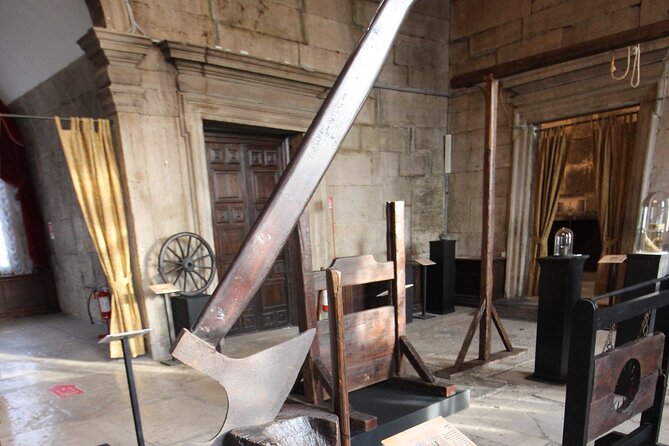
You start by exploring the exhibition spaces dedicated to justice and persecution. The display brings together documents used by the Holy Office in witchcraft persecution and instruments of justice employed to counter accused wrongdoing. The exhibit describes how, in this palace between the 15th and 18th centuries, the Tribunal of the Inquisition condemned people to death based on allegations of evil spells and magical arts.
What makes the experience interesting is the mixture of categories. You are not only looking at “trial papers” or only at “torture tools.” You see how the system is represented through both paperwork and physical artifacts. That pairing helps you understand how accusations became procedure, and procedure became punishment.
One detail I think you should mentally hold onto while you go: the exhibit asks you to reflect on suffering of those condemned to death and torture. That means it is not set up like an academic seminar, and it is not set up like a jump-scare haunted house either. It sits in the uncomfortable space between documentation and moral weight.
A note on content balance: one review said the visit gives a brief introduction to the Inquisition era, including techniques used to obtain confessions and punish crime, while referencing witchcraft in a more limited way. So, if your priority is witchcraft legends, you might find the witchcraft content less extensive than you hoped. If your priority is the legal machinery of accusations, you are likely to feel more at home.
Same city, a very different kind of day on the water:
- Venice: Grand Canal by Gondola with Live Commentary
★ 4.1 · 13,681 reviews - Venice: La Fenice Opera House Entry Ticket with Audio Guide
★ 4.6 · 11,742 reviews - Doge’s Palace & St. Mark’s Basilica with Terrace Access Tour
★ 4.7 · 10,697 reviews - Venice: Burano, Torcello & Murano Boat Tour w/Glassblowing
★ 4.4 · 10,245 reviews
The Artifacts and Reproductions Angle, and Why It Matters
The exhibition uses original artifacts and reproductions. That matters because original objects tend to feel more immediate and reproductions help you understand context without expecting you to recognize every symbol or mechanism instantly.
You also learn the exhibit is built around “suggestive testimonies, documents and objects.” In plain terms, you are looking at multiple evidence types, the way historical systems rely on different forms of proof. It is a reminder that fear and rumor were not just social emotions. They were converted into official pathways.
If you are the kind of traveler who likes to connect the dots between theme and setting, this is a strong match. The prison palace is already about incarceration and punishment. Then the exhibit shows how documents and tools supported that same system. When a place and a theme line up, your visit becomes easier to remember.
About the Guide, Audio Options, and How to Get More Out of It
This experience is described as a guided walkthrough, and reviews mention an excellent, engaging, informative guide. That’s a big deal for a topic like this, because it is easy for an exhibit to feel like it is listing objects. A good guide helps you understand what the objects meant, not just what they look like.
Audio can also change the experience. One review regretted skipping the audio guide, which is a hint that audio content likely adds context you might miss if you stick only to the spoken guidance. If an audio option is available when you arrive, I would consider it, especially if you want more background on the Inquisition era and the specific judicial logic behind what you’re seeing.
Finally, pacing matters in a site like this. The tour is only about an hour, so your best strategy is to go in with a flexible mindset. Spend time reading a few key display sections instead of trying to absorb everything at once.
Group Size, Comfort, and Practical Timing in Venice
The tour runs with a maximum of 15 travelers. That tends to help in two ways. First, it keeps the explanation more personal than a giant crowd tour. Second, it usually means you can ask questions or at least catch up if the group slows.
The listing also notes mobile ticket entry and that confirmation is received at booking. So you should be set once you have your digital ticket ready on your phone.
For timing, this is a 1-hour slot. In practical terms, I’d use it as a mid-morning or mid-afternoon plan when you want to cool down from walking in the heat or when you need a break from scenery overload. It is also a good choice if your Venice days are packed, because you get a complete experience without the “one more stop” trap.
COVID-19 Safety and Cleanliness Measures
The operator states it follows Covid-19 national directives, with frequently cleaned touchpoints and small groups. In other words, they’re aiming for basic cleanliness and reduced crowding.
This is not the type of attraction where you need to worry about long queues if you are there at a typical time. One review noted there wasn’t queuing when they arrived, which is the kind of day you should hope for. Still, Venice can be unpredictable, so keep a small buffer in your schedule.
Price, Value, and Who This Visit Fits Best
At $11.56 per person, this is priced like a short museum-style experience. For the setting, one hour duration, and what it covers, that can feel like strong value.
Where the value comes from is the combination of:
- A historic prison palace location
- An exhibition focused on real documents and justice instruments
- A small-group guided format
If you love Western legal history, art history tied to institutions, or the uncomfortable realities of how accusations got enforced, you’ll likely feel satisfied for the time you spend.
Who might love this most:
- History-minded travelers who want specifics, not generic storytelling
- People curious about how religious courts intersected with political authority
- Visitors who enjoy museums with a strong place-based setting
Who may find it less ideal:
- Travelers expecting a mostly witchcraft-themed experience in the folklore sense
- Anyone who prefers light or purely educational museum stops
- People who get uncomfortable with topics involving torture and confessions, even when presented in a historical, documented way
Common Issues to Watch For Before You Go
This is where I’d be a bit careful, based on the kinds of problems people reported.
First, the meeting place can be confusing if signage appears to point to a different exhibit. If you’re arriving on foot, take an extra few minutes to orient yourself at the Circolo Artistico – Palazzo delle Prigioni entrance area before you assume you’re at the wrong spot.
Second, ticket language can cause stress. One concern in feedback suggested misunderstanding about what the booking includes, but the listing also indicates a mobile ticket and that the admission ticket is included. So, I’d focus on having your phone ticket ready and checking that you understand whether you are receiving an admission entry via mobile or just a guided meeting point.
If you’re anxious about logistics, keep your confirmation info handy and aim to arrive early. It’s the simplest way to protect your time in Venice.
Should You Book Maleficia in Venice?
I’d book it if you want a short, guided, place-based history stop inside the Prisons’ Palace, and you’re curious about the way institutions used documents and tools to enforce accusations. The small group size and the guide-driven format can make this more than a quick scan of displays.
I would skip or rethink if you are mainly chasing witchcraft lore and stories, or if the topic of torture and confessions is not something you want to spend an hour with, even in a museum context.
If you’re on the fence, here’s my practical rule: pair it with one lighter Venice activity the same day. Keep the emotional pacing of your trip balanced, because this one is designed to make you think about suffering and justice under pressure.
FAQ
Where does the tour start?
The tour starts at Circolo Artistico – Palazzo delle Prigioni, Riva degli Schiavoni 4209, 30122 Venezia VE, Italy.
How long is Maleficia: Inquisition, Torture and Witchcraft between the centuries?
The duration is about 1 hour.
What is the price per person?
The price is $11.56 per person.
Does the ticket include admission?
Yes. Admission Ticket Included is listed for the experience.
Is it a mobile ticket?
Yes, the experience uses a mobile ticket.
What is the group size?
The tour has a maximum of 15 travelers.
Can I get a refund if I change my mind?
Yes. It is refundable until 24 hours before the visit. Free cancellation is offered, with a full refund if you cancel at least 24 hours in advance.
Is there an extra Venice access fee?
On certain dates, travelers staying outside Venice may need to pay a €5 access fee. You can check which days apply, and possible exemptions, at https://cda.ve.it.
Is the tour near public transportation?
Yes. The listing says it is near public transportation.
Does the experience follow health and safety rules?
The operator states the tour runs according to Covid-19 national directives, with frequently cleaned touchpoints and small groups.
Recently reviewed around Venice
- Yummy Cooking Class In Venice★ 4.9 · 122 reviews
- VIRTUAL MUSEUM: Creature di Gomma – Venice Vintage Toys★ 4.7 · 3 reviews
- Venice: City Tour & Skip the Line for St. Mark’s Basilica★ 4.1 · 84 reviews
- Your evening in Venice – Legends&Ghosts&Aperitif★ 4.7 · 79 reviews
- Venice: Watercolor Painting Class at the Prisons Palace★ 4.7 · 27 reviews
- Walking Tour to Uncover the Hidden Venice★ 4.4 · 34 reviews
- Wine Tasting in Venice★ 4.6 · 42 reviews
- Venice: Walking Tour & Gondola Ride★ 4.4 · 54 reviews